Best Wine Fridge for Home Use in 2026 | Ultimate Guide
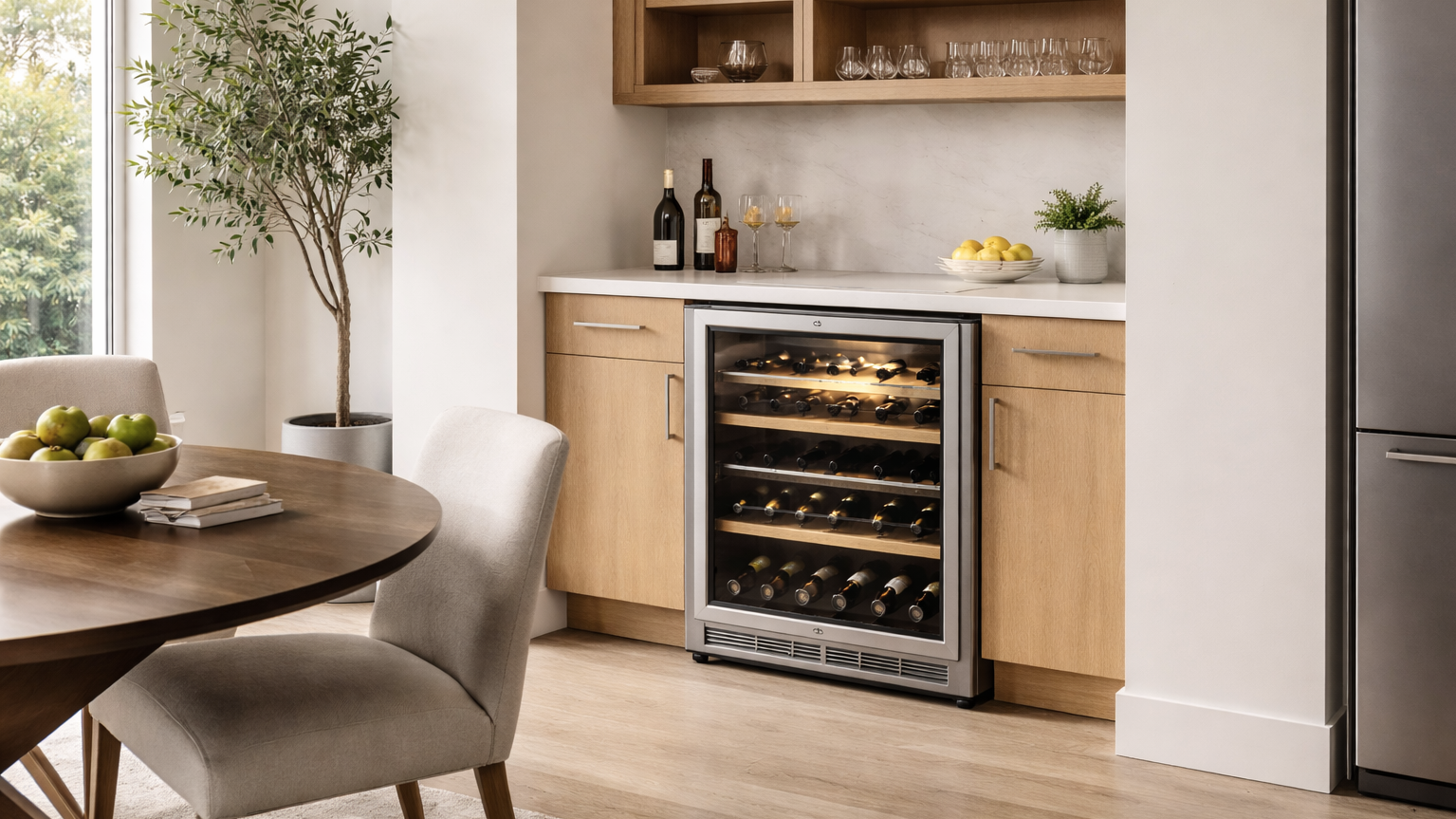
Best Wine Fridges for Real Homes
If you store wine on a kitchen counter or in a regular fridge, you're already losing something.
Most home environments aren't built for wine. Kitchens spike in temperature during cooking. Living rooms heat up in the afternoon sun. Standard refrigerators run around 35–38°F — too cold — and strip humidity down to levels that dry out corks over time.
Wine doesn't need perfect conditions. It needs consistent ones.
The reason 55°F shows up constantly in wine storage guides isn't arbitrary. That range slows the chemical reactions that age wine without suppressing aromatics or accelerating breakdown. The real threat isn't being a degree or two off — it's the repeated swings between warm and cold that quietly erode structure and flatten what you paid for.
If you're regularly buying bottles above $20–30, a wine fridge stops being an upgrade and starts being basic protection.
This guide focuses primarily on Wine Enthusiast models because they're built around wine-specific engineering — temperature zoning, humidity control, UV-filtering glass — rather than adapted from general appliance design. A handful of other models are included where they cover layouts or budgets Wine Enthusiast doesn't address well.
Affiliate Disclosure: This post may contain affiliate links. As an Amazon Associate and through other affiliate programs, I earn from qualifying purchases at no additional cost to you.
What Actually Matters in a Wine Fridge
Temperature Stability
Look for:
• Compressor-based cooling
• UV protected glass
• Minimal vibration
• Tight temperature variance
Thermoelectric systems struggle in warm kitchens or variable climates. Compressor systems maintain consistency under real household conditions.
Single vs Dual Zone
Single zone makes sense if you primarily age wine.
Dual zone makes sense if you both store and want wine ready to serve.
Most households benefit from dual zone flexibility.
Important note: most dual zone units operate on a single compressor with separated airflow. That is standard and efficient.
If you want a deeper explanation of how these systems work and which one actually makes sense for your home, see our guide to single zone vs dual zone wine fridges.
Built-In vs Freestanding
This is where installation mistakes shorten lifespan.
Freestanding units vent from the rear or sides and require airflow clearance.
Built-in units vent from the front and are engineered for cabinetry.
Never enclose a rear-venting unit inside cabinets.
If you want a deeper review and how to choose the right type for your space, see our guide to best built-in wine fridges.
Best Wine Fridges for Home Use
These models are selected based on temperature reliability, build quality, ventilation design, and realistic home use.
Best Overall: Wine Enthusiast 32 Bottle Dual Zone MAX Compressor Wine Cooler
Capacity: 32 bottles
Cooling: Compressor
Zones: Dual
Installation: Freestanding
This is the balanced choice for most homes. Thirty two bottles is meaningful without dominating a room.
The MAX compressor system maintains steady temperature even when ambient room conditions fluctuate. Dual zones allow separation for reds and whites without sacrificing long term.
What it does well:
Holds temperature steadily
Compact enough for most homes
Straightforward controls
Strong value for dual zone capacity
Where it falls short:
Not designed for built in cabinetry
Capacity assumes standard Bordeaux bottle shapes
Important Note: If you collect Burgundy or Champagne bottles, reduce stated capacity by roughly twenty percent.
Best Built-In: Wine Enthusiast Prestige S 24" Dual Zone Undercounter Smart Wi-Fi Wine Cellar
Capacity: 46 bottles
Cooling System: Compressor-based
Zones: Dual zone with independent temperature ranges
Installation: Front-venting, built-in ready
Connectivity: Wi-Fi enabled with app temperature monitoring
Shelving: Adjustable wood-trimmed racks
Door: UV-protected, insulated glass
Why This One Stands Out
If you are integrating wine storage into cabinetry and want something that feels intentional, this is the step up model.
The front ventilation allows flush installation under standard 24 inch cabinetry. The dual zones allow proper long-term storage in one section and near-service temperatures in the other.
The Wi-Fi feature is not a gimmick. It allows remote temperature monitoring and alerts if internal conditions shift, which adds peace of mind if the unit is installed in a secondary residence or a less climate-controlled area.
What It Does Well
• True built-in engineering with front exhaust
• Strong compressor stability even in warmer kitchens
• App-based monitoring and alerts
• Clean stainless finish that integrates easily
Where It Falls Short
• Higher price tier
• Capacity assumes Bordeaux-style bottles
• Smart features require initial setup
Installation Note: Even built-in units require front airflow clearance. Do not block the grille at the base of the unit. Confirm cabinet cutout dimensions carefully before ordering.
Best Slim Option: Wine Enthusiast 15-Inch 29-Bottle Dual Zone Wine Refrigerator
Capacity: 29 bottles
Cooling: Compressor
Zones: Dual
Installation: Built-In or Freestanding
Narrow footprint units are ideal for apartments or tight kitchen layouts.
Despite the smaller width, this model offers dual zone control and front venting, making it viable for both built-in and freestanding use.
What It Does Well
• Slim 15 inch width
• Dual zone flexibility
• Modern design
Where It Falls Short
• Tighter shelving for larger Burgundy bottles
• Limited expansion room
Best Value Under $400: Ivation 28 Bottle Compressor Wine Cooler
Capacity: 28 bottles
Cooling: Compressor
Zones: Single
Installation: Freestanding
For smaller collections or first time buyers, this model delivers reliable temperature control without unnecessary features.
It does not offer dual zone flexibility, but for those storing mostly reds at one consistent temperature, that may not matter.
For buyers prioritizing price under $1000, a compressor-based freestanding unit from brands like Ivation or NewAir can be a practical entry point.
The key is compressor cooling. Avoid thermoelectric models in variable climates.
What it does well:
Affordable entry into compressor cooling
Stable internal environment
Compact footprint
Where it falls short:
Single zone only
Basic shelving design
This is practical storage, not a design centerpiece.
Wine Fridge Comparison Snapshot
| Model | Capacity | Zones | Installation | Smart | Best For |
|---|---|---|---|---|---|
| Wine Enthusiast 32-Bottle MAX | 32 Bottles | Dual Zone | Freestanding | No | Balanced everyday storage |
| Wine Enthusiast Prestige 24” | 46 Bottles | Dual Zone | Built-In, Front Venting | Wi-Fi Enabled | Cabinet integration |
| Wine Enthusiast 15” Slim | 29 Bottles | Dual Zone | Built-In or Freestanding | No | Small kitchens & apartments |
| 28-Bottle Compressor Cooler | 28 Bottles | Single Zone | Freestanding | No | Budget entry option |
Are Wine Fridges Worth It?
If most of your bottles cost more than $20, stable storage protects that investment.
The cost of heat damaged wine accumulates quietly. Aromatics fade. Structure softens. Aging potential shortens.
A wine fridge does not improve wine. It prevents unnecessary decline.
For collectors, the decision is straightforward. For regular drinkers, it becomes a quality control decision.
Frequently Asked Questions
How long do wine fridges last?
A well ventilated compressor wine fridge typically lasts eight to twelve years. Overheating from poor installation shortens lifespan significantly.
Can I store red and white wine together?
Yes. Long term storage at 55°F works for both. Dual zone units simply allow different serving temperatures.
Can I install any wine fridge in a cabinet?
No. Only models labeled built in or front venting should be enclosed in cabinetry.
Final Assessment
It handles reds and whites simultaneously, runs reliably over the long term, and doesn't require the careful placement that thermoelectric models do. Freestanding units are the easier choice for most layouts. Built-in models make sense when you're working within cabinetry and want a cleaner look — but only if the ventilation is handled correctly during installation.
When you're narrowing options, prioritize in this order: ventilation design, then capacity, then aesthetics. Getting the first one wrong creates heat buildup that defeats the purpose of buying a wine fridge in the first place.
If you're still deciding between freestanding and built-in, our built-in wine fridge guide covers that tradeoff in detail. If protecting open bottles is part of the equation, the wine preservation systems comparison is worth a look.
Continue building your setup:
•Wine Fridges Explained - How to Choose the Best One
• Best Wine Fridge Under $500 That’s Actually Worth Buying
• Best Large Wine Fridges for Serious Collectors (150+ Bottles)
• Best Wine Bar Cabinets For Small Spaces
• Common Wine Questions People Are Too Embarrassed to Ask