Common Wine Terms Explained (Without the Wine Snobbery)
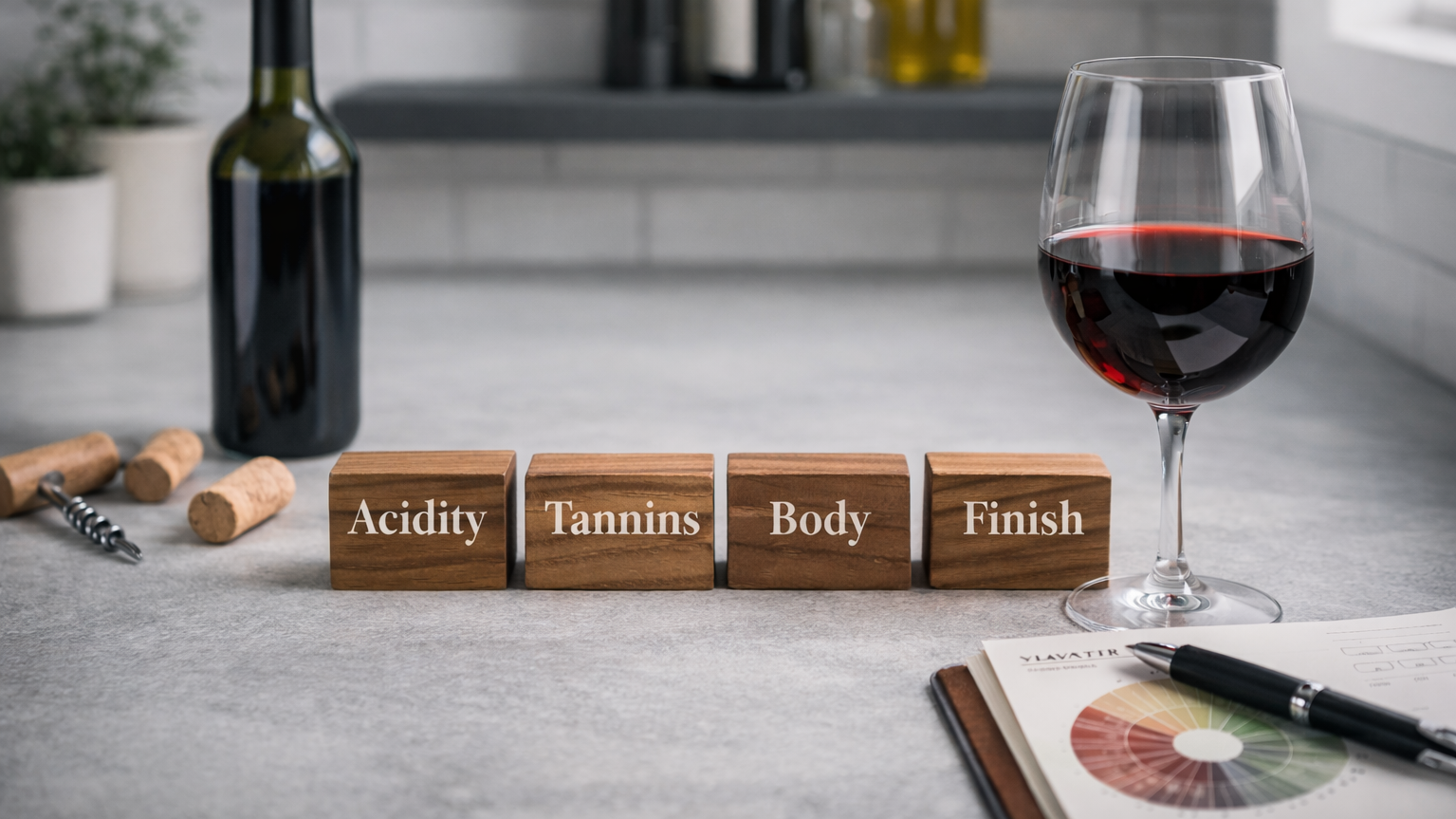
Wine terminology can sometimes feel intimidating, especially for newer wine drinkers. Many common wine terms simply describe aromas, flavors, or textures in the glass.
Understanding a few basic terms makes wine much easier to talk about and enjoy.
You do not need to memorize a complicated tasting vocabulary to appreciate wine. In fact, most tasting notes are simply describing what the wine feels like in your mouth and how long the flavors last. Knowing the basics can help you describe what you like to a sommelier at a restaurant or a wine shop attendant, its a great way to find new wines to love.
In this guide, we will break down some of the most common wine tasting terms so you can confidently understand what people mean when they describe a wine.
Affiliate Disclosure: This post may contain affiliate links. As an Amazon Associate and through other affiliate programs, I earn from qualifying purchases at no additional cost to you.
In This Guide
• Common wine tasting terms
• What acidity means in wine
• What tannins actually feel like
• How body changes the wine experience
• What the finish of a wine tells you
Common Wine Tasting Terms Explained
Wine descriptions often focus on four core characteristics: acidity, tannins, body, and finish. These elements help explain how a wine feels in your mouth and how balanced it is overall.
Once you understand these basics, reading wine reviews and tasting notes becomes much easier.
What Are the Basic Wine Tasting Terms?
The four most common wine tasting terms describe how a wine feels in your mouth and how the flavors behave after you drink it.
Acidity: The Refreshing Crispness in Wine
Acidity is the bright, refreshing quality that makes your mouth water when you sip a wine.
High-acid wines feel crisp and lively, while low-acid wines feel softer and rounder.
White wines typically show acidity more clearly, but many red wines rely on it for balance as well.
Examples of higher-acid wines include:
• Sauvignon Blanc
• Riesling
• Pinot Noir
• Chianti
If a wine ever tastes “fresh,” “zesty,” or “crisp,” the acidity is likely doing the work.
Acidity is also one of the reasons wine pairs so well with food. It cuts through richness and keeps the palate refreshed.
Tannins: The Drying Sensation Mostly Found in Red Wine
Tannins create the drying feeling you may notice on your gums or tongue right after drinking certain red wines.
They come primarily from grape skins, seeds, and oak aging.
A good way to understand tannins is to think about the feeling of strong black tea. That slightly grippy sensation is very similar.
Wines known for noticeable tannins include:
• Cabernet Sauvignon
• Nebbiolo
• Bordeaux blends
• Barolo
Not all tannins are harsh. In well-balanced wines, tannins provide structure and help the wine age over time.
Body: How Heavy or Light a Wine Feels
Body describes the overall weight or richness of a wine in your mouth.
Think of it like the difference between skim milk and whole milk. Both are milk, but one feels lighter while the other feels fuller and richer.
Wine generally falls into three body categories:
Light-bodied
• Pinot Grigio
• Beaujolais
• Gamay
Medium-bodied
• Merlot
• Chardonnay
• Sangiovese
Full-bodied
• Cabernet Sauvignon
• Malbec
• Zinfandel
Body is influenced by alcohol level, grape variety, and winemaking style.
Finish: How Long the Flavors Last
The finish refers to how long the flavors linger after you swallow the wine.
A short finish disappears quickly, while a long finish continues evolving and lingers on the palate for several seconds post swallow.
Higher quality wines often have a longer finish, with flavors that slowly fade rather than disappearing immediately.
You may hear people describe a wine as having:
• a short finish
• a smooth finish
• a long, lingering finish
This is simply describing the final impression the wine leaves behind.
Why These Terms Matter
Understanding these four characteristics makes it much easier to describe what you like in a wine.
For example, you might discover that you enjoy wines with:
• bright acidity
• softer tannins
• medium body
• a longer finish
That knowledge helps you choose wines more confidently when browsing a menu, talking to a sommelier, or shopping for a bottle.
| Wine Term | What It Means |
|---|---|
| Acidity | The crisp, refreshing quality in wine that makes your mouth water. |
| Tannins | The drying sensation on your gums or tongue, mostly found in red wines. |
| Body | How light or heavy a wine feels in your mouth. |
| Finish | How long the flavors of a wine last after swallowing. |
Other Common Wine Words You Might Hear
Aroma
The smell of the wine. Aromas can include fruit, herbs, spices, flowers, or even earthy notes.
Dry
A wine with little to no residual sugar. Most traditional wines people drink are usually dry or dry leaning.
Sweet
A wine that contains noticeable residual sugar, creating a sweeter taste.
Balanced
When acidity, tannins, alcohol, and fruit all work together without one element overpowering the others. (The number one goal of a winemaker)
Complex
A wine with multiple layers of aroma and flavor that evolve as you taste it.
How to Practice Recognizing These Wine Terms
Understanding wine terminology becomes much easier when you taste wine with these concepts in mind.
Try this simple tasting exercise:
Take a sip of wine and notice if your mouth waters or wants to pucker (acidity).
Pay attention to whether your gums feel dry or if it feels like the enamel is worn off your teeth or your lips feel like they are catching on them (tannins).
Think about whether the wine feels light or rich (body).
Notice how long the flavors stay after swallowing (finish).
After trying this a few times, wine descriptions will start making much more sense.
Why Wine Reviews Use These Terms
Wine writers, winemakers, and sommeliers use tasting terms to communicate what a wine feels like and how it behaves with food.
For example:
A wine described as high acidity with light body will likely feel crisp and refreshing.
A wine with strong tannins and full body will feel richer and more structured.
These descriptions help people choose wines they are more likely to enjoy.
Over time, you may even find yourself naturally using these terms when talking about wine with friends.
FAQ
Do I need to memorize wine terminology?
Not at all. The goal is simply to recognize a few basic terms so wine descriptions feel less confusing.
Why do red wines have tannins but most white wines do not?
Tannins come primarily from grape skins. Red wines ferment with the skins, while most white wines do not, which is why tannins are much more noticeable in reds.
Does a longer finish mean a wine is better?
Not always, but many higher quality wines tend to have longer, more complex finishes.
Related Guides
If you’re learning more about wine basics, these guides may help:
• Wine Serving Temperature Guide (PDF)
• Best Opened Wine Preservation Systems