How to Store Wine Without a Wine Fridge or Cellar: Simple Storage Tips
Most people think they’re storing wine correctly.
They’re not.
The good news is you don’t need a wine fridge or a cellar to fix it. You just need to avoid a few common mistakes that quietly ruin bottles faster than you think.
Affiliate Disclosure: This post may contain affiliate links. As an Amazon Associate and through other affiliate programs, I earn from qualifying purchases at no additional cost to you.
In This Guide
• What actually damages wine (and what doesn’t matter as much)
• The best places to store wine in a normal home
• Where people accidentally ruin wine
• How long wine lasts without a fridge
• When it’s actually worth upgrading your storage
The 4 Things That Actually Affect Wine
Most storage advice gets repeated without explanation. Here’s what’s actually happening inside the bottle.
1. Heat (the biggest problem)
Heat speeds up chemical reactions in wine.
Think of it like this:
At cellar temp, wine ages slowly and predictably
At warm temps, it ages fast and unevenly
Above ~70°F, you start accelerating aging in a way that flattens fruit and structure.
From a winemaking perspective, heat is the fastest way to make a good wine taste tired.
2. Temperature Swings (more damaging than you think)
Wine doesn’t just care about temperature. It cares about consistency.
A steady 65°F is safer than:
• 55°F at night
• 75°F during the day
Those swings expand and contract the liquid and air in the bottle, which can slowly compromise the seal and push oxygen in.
3. Light (especially sunlight)
UV light can break down compounds in wine, especially in clear bottles.
This is why:
• most quality wines use darker glass
• wine shops keep bottles out of direct sunlight
A bright kitchen counter near a window is one of the worst places you can store wine.
4. Oxygen (after opening)
Unopened wine is mostly protected.
Once opened, oxygen becomes the clock.
That’s where preservation tools come in, not storage location.
Key Takeaways:
If your wine is cool, dark, and stable, you’re doing 90% of what actually matters.
Most storage mistakes come from breaking one of those three rules.
The Best Places to Store Wine at Home
If you don’t have a wine fridge, you’re looking for a space that is:
• Cool (ideally between 55–65°F)
• Dark (away from sunlight)
• Stable (minimal temperature swings)
• Out of the Way (away from vibration)
In real homes, that usually means:
Closets
One of the best options.
Interior closets stay:
• dark
• insulated
• stable
They’re basically a low-effort version of a wine cellar.
Lower Kitchen Cabinets
Not perfect, but often good enough.
Just make sure they are:
• away from the oven
• not next to the dishwasher
Heat sources matter more than the room itself.
Pantries
Great option if they stay relatively cool.
Especially good in:
• apartments
• smaller homes
Basements (if you have one)
This is the closest thing to ideal.
Naturally:
• cooler
• darker
• more stable
Where People Accidentally Ruin Wine
These are the “seems fine, actually terrible” spots.
On Top of the Refrigerator
This might be the worst common storage spot.
Why:
• heat rises
• the fridge vents warm air
• constant vibration
You’re basically slow-cooking your wine.
Near Windows
Sunlight + heat = damage.
Even indirect light over time can degrade wine.
Next to Appliances
Ovens, dishwashers, and even coffee machines create heat cycles.
Wine sitting nearby gets those temperature swings daily.
Garage Storage
Unless it’s climate controlled, garages are brutal:
• hot in summer
• cold in winter
• constant swings
Fine for a day. Not for storage.
Short Term vs Long Term Storage (This Is the Real Distinction)
This is where most people get confused, and where bad advice usually starts.
Short Term (weeks to a few months)
You’re completely fine using:
• a closet
• cabinet
• pantry
Most everyday wines are designed to be consumed young anyway.
Medium Term (3–12 months)
Still manageable without a fridge, if conditions are stable.
This is where consistency matters more than exact temperature.
Long Term (1+ years)
This is where a wine fridge starts to make sense.
Not because your wine will instantly go bad…
…but because:
• slow aging matters
• temperature consistency compounds over time
Do You Actually Need a Wine Fridge?
Most people don’t. But there are a few clear signals.
You should consider one if:
• you’re holding bottles for over a year
• your home runs warm (70°F+)
• you’re buying nicer bottles you don’t want to risk
• you’re starting to build a small collection
Otherwise, a good storage spot is enough.
Helpful Tools That Make Storage Easier
Even without a fridge, a few small things help a lot:
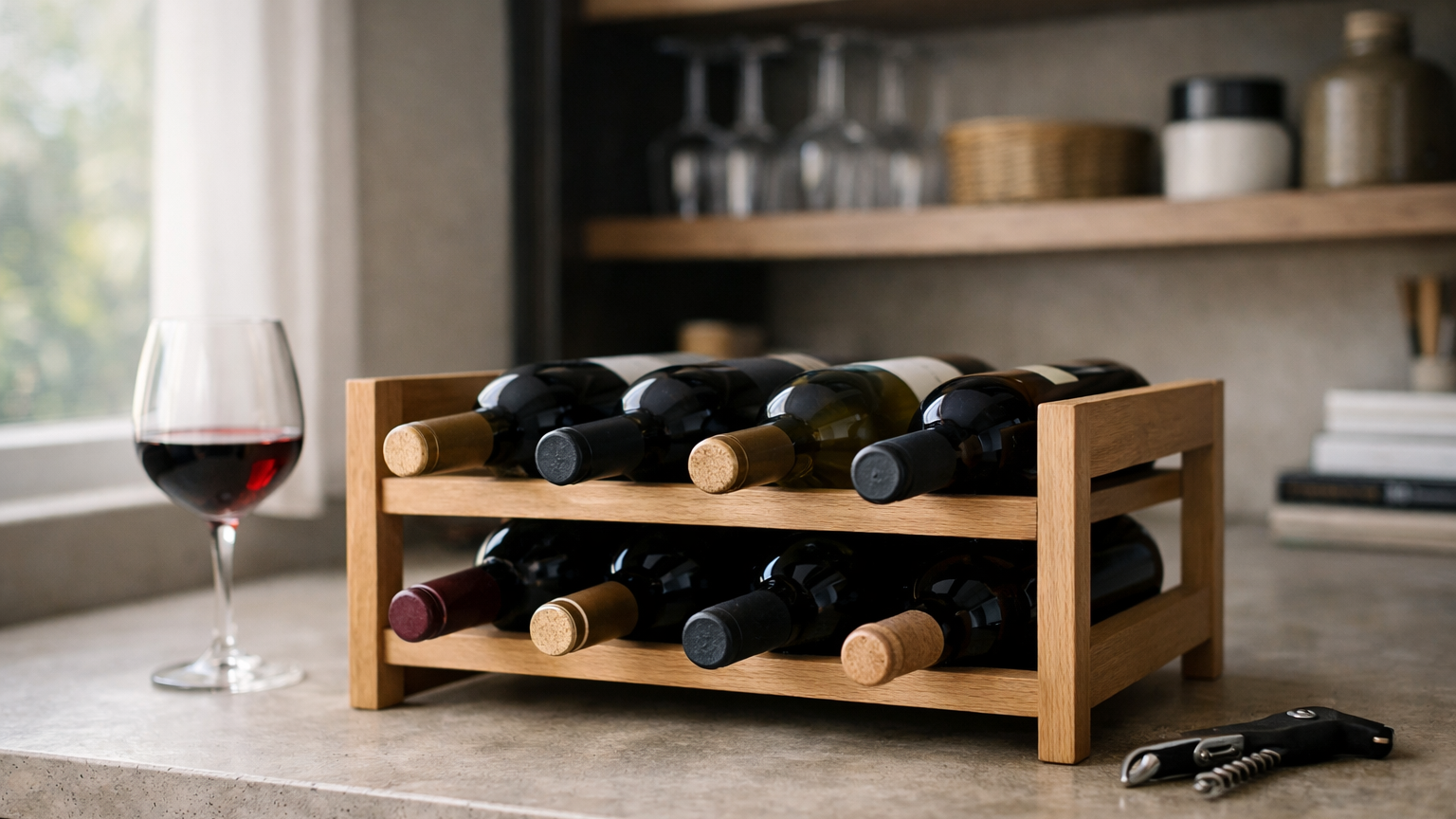
• A simple wine rack (keeps corks from drying out)
• Bottle tags or a tracking app (so nothing gets forgotten)
• Preservation tools for open bottles
These don’t replace proper storage, but they make it easier to manage.
Storage Guidelines at a Glance
| Factor | Ideal Condition | Why It Matters |
|---|---|---|
| Temperature | 55–65°F | Prevents premature aging |
| Light | Dark storage | UV light can damage wine |
| Humidity | Moderate humidity | Prevents corks from drying |
| Vibration | Minimal | Vibration can disturb aging |
FAQ
Should wine be stored on its side?
For cork-sealed bottles, yes.
Storing wine on its side helps keep the cork slightly moist, which maintains a proper seal over time.
Screw cap bottles don’t need this and can be stored upright.
Can you store wine in the fridge long term?
Not ideal.
Regular refrigerators are colder and drier than what wine prefers. Over time, this can dull flavor and dry out corks.
For a few days or even a couple of weeks, it’s fine. For longer storage, a more stable environment is better.
How long can wine last without a wine fridge?
Most everyday wines will be completely fine for several months if stored in a cool, dark, and stable place.
The key is consistency, not perfection.
If you’re holding bottles longer than a year, that’s when a wine fridge starts to make more sense.
What temperature is too hot for wine?
Anything consistently above about 70°F will start to speed up aging in a way that can flatten flavor and structure.
A brief warm day won’t ruin a bottle. But constant heat over time will.
Does room temperature ruin wine?
Not immediately.
Wine stored at typical room temperature will still be drinkable, especially in the short term. But warmer conditions will shorten its lifespan and reduce complexity over time.
Where is the best place to store wine in a normal home?
Look for a spot that is:
• cool
• dark
• stable
In most homes, that usually means an interior closet, a lower cabinet away from heat, or a pantry.
Is it bad to store wine near the kitchen?
It depends on where.
Areas near ovens, dishwashers, and refrigerators tend to have heat and temperature swings, which are not ideal.
A cabinet away from those appliances can still work well.
Do you need a wine fridge to store wine properly?
Most people don’t.
If you’re drinking bottles within a few months and storing them in a reasonable spot, you’re already doing enough.
A wine fridge becomes useful when you want more control, longer storage, or you’re building a small collection.
Final Take
You don’t need perfect storage. You just need to avoid the obvious mistakes.
A cool, dark, stable spot will protect most wines far better than people expect.
If you’re starting to hold bottles longer, or your home tends to run warm, that’s when a wine fridge becomes worth considering. It’s less about luxury and more about consistency.