How to Taste Wine Like a Pro: A Beginner’s Guide from a Winemaker
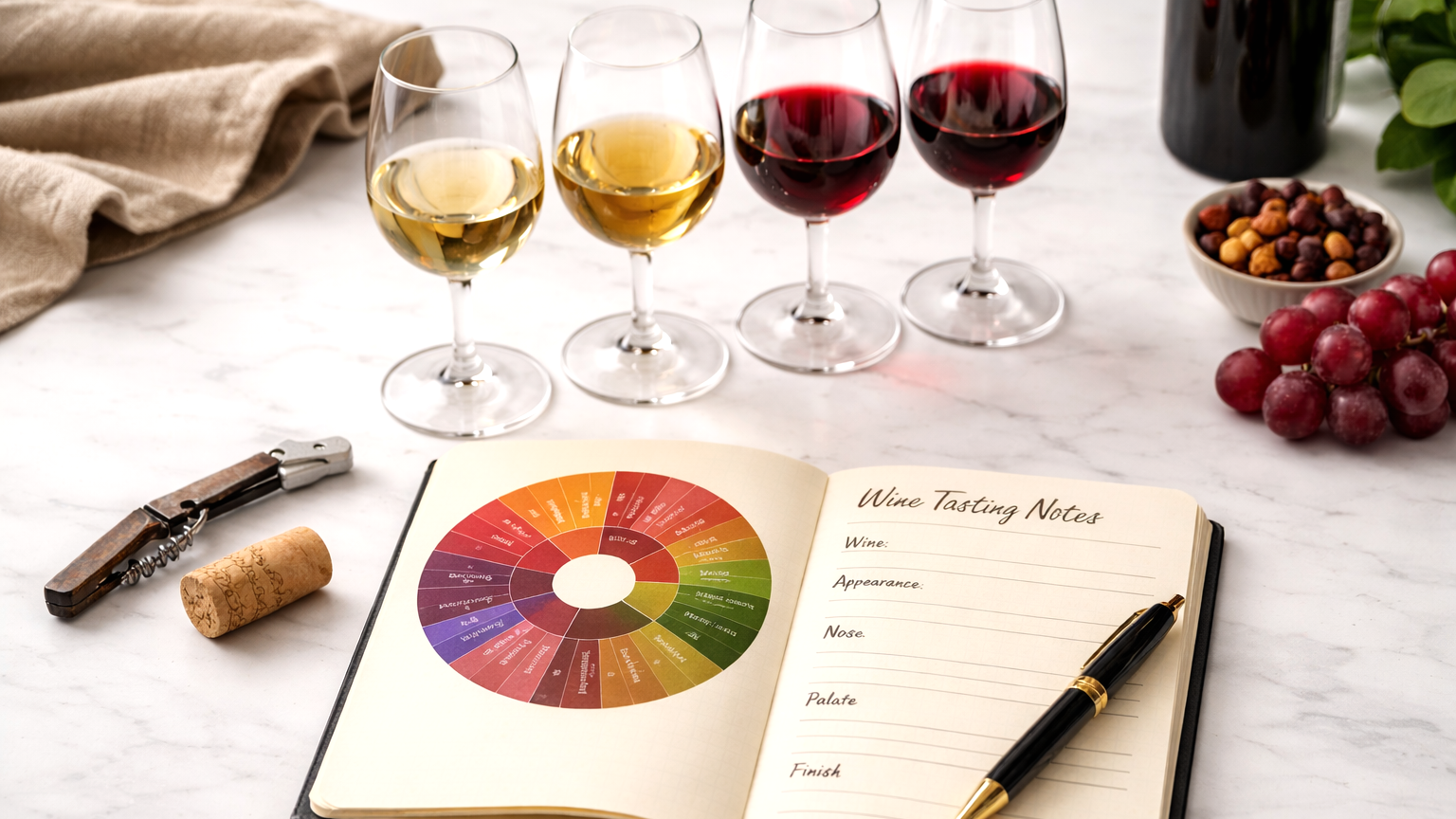
Wine tasting can seem intimidating at first, but the actual process professionals use is surprisingly simple.
Most winemakers, sommeliers, and wine buyers follow the same basic method. The goal isn’t to overanalyze the wine. It’s simply to slow down and notice a few key things in the glass.
In wineries, this same approach is used during blending trials and barrel evaluations to understand how a wine is developing over time.
Once you know what to look for, smell for, and how to notice it on your palate, tasting becomes much easier and far more interesting. You don’t need formal training to do it.
Many wine tasting guides mention the four steps but stop at simply naming them. What they often miss is explaining what you should actually be looking for in the glass. In this guide, we go a step further and highlight the small details that make wine tasting start to click.
Affiliate Disclosure: This post may contain affiliate links. As an Amazon Associate and through other affiliate programs, I earn from qualifying purchases at no additional cost to you.
In This Guide
In this beginner friendly wine tasting guide, you’ll learn:
• The simple 4 step method professionals use to taste wine
• What wine color can and cannot tell you about a bottle
• Why identifying aromas can feel difficult at first
• A practical way to train your sense of smell outside of wine tasting
• How to recognize sweetness, acidity, tannins, and body on the palate
• What different tannin textures feel like and what they can reveal about aging
• Why the finish often reveals how well a wine is put together
The 4 S’s of Wine Tasting
You may have heard the phrase “the 4 S’s of wine tasting” before:
See
Swirl
Smell
Sip
It’s a simple framework many tasting rooms and wine classes use to help beginners remember the basic steps.
But those four words only scratch the surface.
In this guide, we’ll use the same structure while going a bit deeper into what each step actually tells you about the wine and how to recognize the sensations you’re experiencing in the glass.
Think of it less like memorizing rules and more like collecting clues about the wine.
Step 1: See - Look at the Wine
Start by observing the wine in your glass.
Hold the glass at a slight angle over a white surface and notice the color and clarity. Appearance won’t tell you everything about a wine, but it can offer a few early clues.
Color Intensity
Darker wines usually come from grapes with thicker skins.
For example, Cabernet Sauvignon and Syrah often appear deep purple or almost opaque, while grapes like Pinot Noir tend to be lighter and more translucent.
This doesn’t determine quality, but it can hint at the style of wine you’re about to taste.
Hue (The Shade of Color)
The tone of the color can sometimes hint at age.
Young red wines often show vibrant ruby or purple tones. As they age, the color gradually shifts toward garnet and eventually brick red near the edge of the wine.
White wines evolve too. Younger whites are often pale straw or slightly greenish, while older wines deepen toward gold.
Clarity
Most wines should appear clear and bright in the glass.
A cloudy appearance can sometimes indicate sediment, bottle age, or occasionally a potential fault.
However, some wines are intentionally unfiltered or minimally filtered, which can leave a slight haze or natural sediment in the bottle. This is normal and doesn’t necessarily indicate a problem.
A Quick Note About “Wine Legs”
After swirling the wine, you might notice streaks running down the inside of the glass. These are commonly called legs or tears.
A very common misconception is that legs indicate wine quality.
They don’t.
Legs mostly reflect alcohol content and viscosity, not whether the wine is good. Wines with higher alcohol often show more pronounced legs regardless of quality.
This happens because alcohol evaporates faster than water, which briefly changes the surface tension of the liquid on the glass and causes the droplets to form and run downward.
How Much Appearance Really Matters
Appearance is worth noticing, but it’s usually the least important part of evaluating a wine.
Color can give a few hints, but it rarely determines whether a wine is enjoyable.
Aroma, flavor, balance, and finish tell you far more about what’s actually happening in the glass.
Think of appearance as the opening clue, not the verdict.
Step 2: Swirl the Wine
Gently swirl the wine in your glass to expose more of the liquid to oxygen. This helps release the volatile aromatic compounds, making the wine’s aromas easier to smell.
If you're new to swirling, the easiest method is to keep the base of the glass on the table and make small, gentle circular motions with your hand. It keeps things controlled and prevents accidental spills.
Step 3: Smell the Wine
Aroma is where most of a wine’s character lives.
Give the glass a gentle swirl to expose more of the wine to oxygen. Then bring the glass to your nose and take a slow smell.
The most helpful approach is to start broad rather than trying to identify exact aromas immediately.
Ask yourself simple questions first:
Does it smell fruity?
Floral?
Herbal?
Spicy?
Oaky?
Once you place the wine into a category, the specific aromas become easier to recognize.
Why Wine Aromas Can Be Hard to Identify
One reason aromas can feel frustrating at first is that our brains usually rely on visual context to identify smells.
If you smell a strawberry while looking at a strawberry, your brain instantly connects the two.
But when you smell a glass of wine, you’re experiencing aromas without the visual clue.
That’s why many people have the familiar experience of thinking:
"This smells familiar… but I can’t quite place it."
My Trick to Getting Better at Aromas
One of the best ways to improve your sense of smell has nothing to do with wine.
Start paying attention to aromas in everyday life.
When you’re grocery shopping, smell the items you put in your cart in the produce section.
When you’re cooking dinner, notice herbs and spices.
When you’re outside, notice things like fresh cut grass, wet concrete after rain, or the earthy smell after a storm.
You’d be surprised how many people, if blindfolded, couldn’t clearly distinguish the smell of a strawberry from other berries without seeing it.
The key is to create the word association in your brain.
When you smell something distinctive, label it mentally:
“This is what basil smells like.”
”This is what strawberries smell like.”
”This is what fresh cut grass smells like.”
You’re strengthening the link between the aroma and the word that describes it, which makes those aromas much easier to recognize and recall later in a wine.
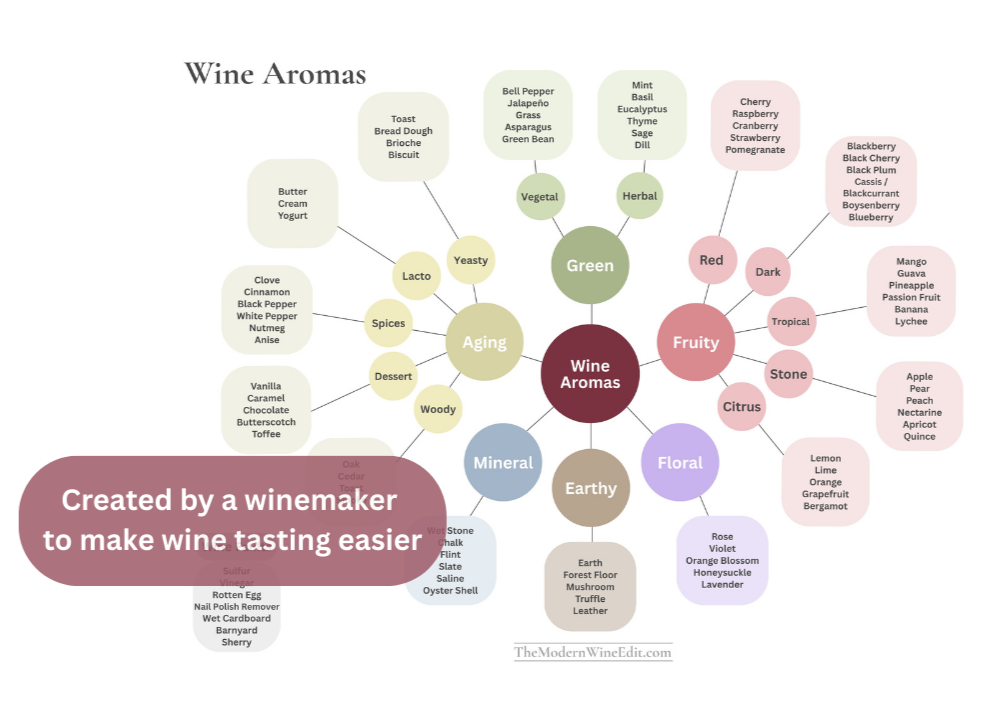
Use an Aroma Guide
If you’re just starting out, using an aroma wheel or aroma guide while tasting can be extremely helpful.
It gives you a structured list of common wine aromas so your brain has somewhere to start when identifying what you smell.
Step 4: Sip - Taste the Wine
Finally, take a small sip and let the wine move across your palate before swallowing.
Professional tasters usually focus on four structural elements when tasting wine:
Sweetness
Acidity
Tannins
Body
These elements shape how a wine feels in your mouth.
Sweetness
Most wines you encounter will be dry, meaning they contain little to no residual sugar.
If a wine does contain sweetness, you’ll usually notice it immediately on the tip of your tongue.
A helpful comparison is the difference between unsweetened iced tea and sweet tea. Even a small amount of sugar instantly changes how the liquid feels in your mouth, think viscosity.
Sweetness softens acidity and tannin, which is why sweeter wines often feel rounder and smoother.
Acidity
Acidity gives wine its fresh, mouthwatering quality.
The easiest way to recognize acidity is by noticing where your mouth begins producing saliva.
Higher acidity wines usually trigger watering along the sides of your mouth and underneath your tongue.
Think about what happens when you bite into a lemon, a tart green apple, or sour candy. Your mouth reacts instantly.
That same sensation happens in wine.
Wines with bright acidity often feel:
crisp
refreshing
lively
Lower acidity wines feel softer and broader, more like the difference between fresh lemonade and lemonade that has been slightly diluted.
Acidity is one of the most important elements in wine because it keeps the wine balanced and prevents it from tasting flat.
Tannins
Tannins are most noticeable in red wines and create a drying sensation in your mouth.
You’ll usually feel tannins along your gums, teeth, and inside your cheeks, especially after swallowing.
A classic comparison is strong black tea. If you’ve ever had over-steeped tea that left your mouth feeling slightly dry, that’s tannin. Tannins bind to the proteins in your saliva, reducing its lubricating effect and creating that drying, slightly grippy feeling on your gums and cheeks. It’s essentially the opposite of mouth-watering acidity.
Different wines can have very different tannin textures.
Fine or Silky
These tannins feel smooth and polished. You notice structure in the wine, but the drying sensation is gentle.
The feeling can be similar to drinking black tea with a small splash of milk, where the texture feels soft rather than sharp.
Firm or Structured
These tannins have more presence and grip along your gums and cheeks.
It’s similar to the sensation of plain black tea without milk, where the drying effect is noticeable but still balanced.
Structured tannins are common in younger wines that may soften with time.
Grippy or Chalky
These tannins feel more textured and drying.
A common comparison is very strong black tea or the sensation of unsweetened cocoa powder drying out your mouth.
Wines with chalky tannins can feel slightly rough when young but often soften as the wine ages.
Dusty or Powdery
These tannins feel lighter and more delicate.
The drying sensation is still there, but it’s subtle, almost like a fine powder across your gums rather than a strong grip.
What Tannins Can Tell You About Aging
Tannins also influence how a wine evolves over time.
Young wines with firm or grippy tannins may feel tight at first. Over time, those tannins slowly soften and integrate, which is one reason many red wines become smoother with age.
If a wine shows very strong structure and noticeable tannin, it may benefit from additional bottle age.
Wines with soft, gentle tannins are usually meant to be enjoyed sooner.
Body
Body refers to the weight of the wine in your mouth.
A simple comparison is milk:
Light-bodied wines feel closer to skim milk.
Medium-bodied wines feel more like whole milk.
Full-bodied wines feel richer, closer to cream.
Alcohol, tannin, and flavor concentration all contribute to body.
Balance
One of the easiest ways to tell if a wine is well made is whether it feels balanced.
Balance simply means that no single element dominates the wine. The sweetness, acidity, tannins, alcohol, and fruit all work together rather than competing with each other.
A simple rule of thumb I often use is this: if one element jumps out of the glass and slaps you in the face, the wine probably isn’t very balanced.
For example:
• If acidity is too high, the wine can taste sharp or sour.
• If tannins dominate, the wine may feel aggressively drying.
• If alcohol is too strong, the wine can taste hot or burning.
In a balanced wine, everything feels integrated. You still notice the acidity, tannins, and fruit, but none of them overwhelm the others.
That harmony is what makes a wine feel complete.
A Small Trick Professionals Use
You may notice experienced tasters do something that looks a little unusual after they sip wine. They gently draw a small amount of air through the wine while it’s in their mouth.
This technique spreads aromas across your palate and into your nasal passages, making flavors easier to detect. Wine professionals call this retronasal smelling, which simply means sensing aromas through the back of your nose while the wine is in your mouth.
It’s similar to how aromas become stronger when you swirl wine in the glass. The same idea works once the wine is on your palate.
You don’t need to exaggerate it. Even a small breath of air across the wine can make the flavors more noticeable.
If you’ve ever heard someone make a quiet slurping sound while tasting wine, this is why.
Once the wine is swallowed or spat, pay attention to what happens next. The length and character of those lingering flavors is what tasters call the finish.
Don’t Forget the Finish
After swallowing, pay attention to what happens next.
A wine with a longer finish will continue leaving flavors and sensations in your mouth for several seconds.
You might still notice fruit, spice, acidity, or a gentle tannin grip lingering on your gums.
A short finish disappears quickly. A harsh finish might leave bitterness or excessive dryness.
Experienced tasters often pay close attention to the finish because it can reveal a lot about a wine’s balance and structure. In well made wines, the flavors tend to linger and evolve for several seconds after swallowing rather than disappearing quickly.
The Goal Isn’t Perfection
Wine tasting isn’t about giving the “correct” answer.
It’s about paying attention to what you see, smell, and feel in the glass.
The more wines you taste, the easier it becomes to recognize aromas, textures, and styles you enjoy.
And that’s ultimately the whole point.
More Wine Guides
If you’re learning more about wine, these beginner friendly guides can help you go deeper:
• Common Wine Terminology Explained – Simple explanations for common wine words you’ll hear in tasting rooms and restaurants.
• Best Wine Preservation Systems That Actually Work – How to keep opened bottles fresh longer and which systems are worth using.
• How to Store Wine Without a Wine Fridge – Practical ways to store wine safely at home even if you don’t have a dedicated wine cooler.
• Best Wine Fridges for Home Use – A guide to choosing the right wine refrigerator for your space and budget.