Haunted Vineyards & Ghostly Cellars: 5 Wine Stories for Halloween
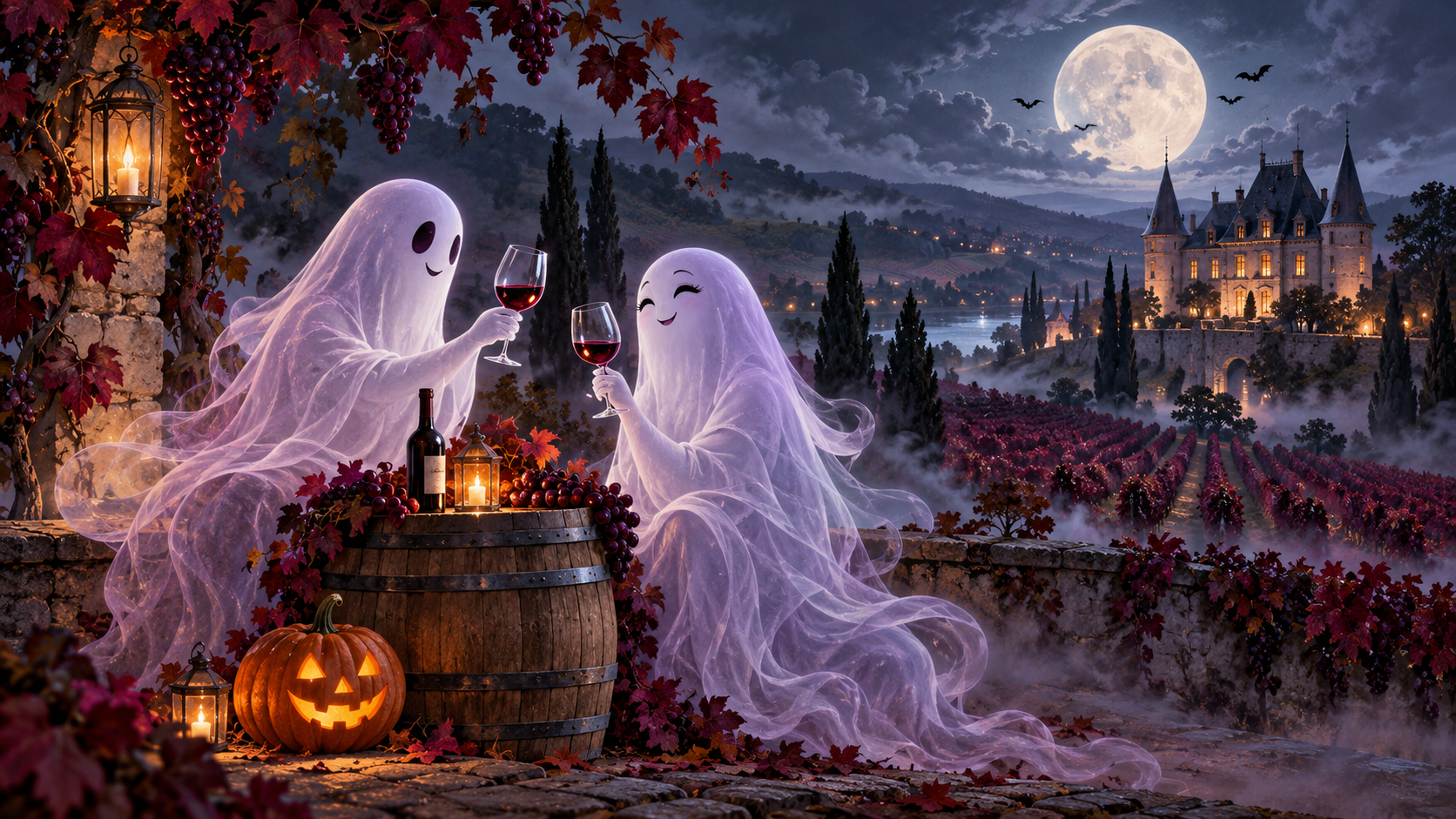
Happy Halloween!
Old wine cellars are good places for ghost stories. Low light, thick walls, stairs that disappear into the dark, and enough quiet that a single footstep gets your attention. Wine country also has no shortage of old buildings, which helps. Add a château with a resident apparition, or a winemaker who sold the devil as a security system, and you have a Halloween evening.
Here are five wine estates with stories worth telling. Some are folklore that has been retold so many times nobody agrees on the details. Others come from the people who work there. None of the hauntings are proven. The places and their wine are real.
We start in the Loire Valley, head to a notorious Chilean cellar, stop twice in the Finger Lakes, and finish in Napa.
| Wine Estate | Location | The Story |
|---|---|---|
| Château de Brissac | Loire Valley, France | The Green Lady |
| Casillero del Diablo | Chile | The Devil in the Cellar |
| Belhurst Castle | Finger Lakes, New York | Isabella, the Lady in White |
| Miles Wine Cellars | Finger Lakes, New York | The Vanishing Couple |
| Beringer | Napa Valley, California | Footsteps in the Wine Caves |
An itinerary through wine-country folklore and reported hauntings.
Château de Brissac, France: The Green Lady
Seven stories and 204 rooms give a ghost plenty of places to hide. Brissac sits above manicured grounds in the Loire Valley, and its towers look like they were designed with a haunting in mind. The resident spirit is La Dame Verte, the Green Lady.
She is traditionally identified as Charlotte de Valois, the daughter of King Charles VII, who married Jacques de Brézé. In the usual telling, Jacques finds her with another man and kills them both. Charlotte then stays on at the château, dressed in green.
Accounts differ on where you'll find her. Some say the chapel tower, some say a bedroom, some say only on stormy nights. The green dress is the one constant. All of this is folklore, not documented history.
The wine is easier to verify. The estate has 26 hectares of vineyards, mostly producing AOC rosé, and you can taste in the stone-vaulted cellar. There's also a small commemorative vineyard planted in 2002 to mark five centuries of the Cossé-Brissac family at the château, across from the family mausoleum. A cellar tasting and a ghost story at the same address is a good way to start. Whether or not she shows, you may check the windows on your way out.
Casillero del Diablo, Chile: The Devil Behind the Cellar Door
Don Melchor Concha y Toro had a locked gate and a problem. According to the winery's own account, someone kept getting past it. Bottles from his private cellar were going missing, and the thief clearly had taste.
So he started a rumor that the devil lived down there.
It worked because it changed the odds. A thief can weigh the risk of getting caught by the owner. Weighing the risk of meeting something supernatural in the dark is harder. Every echo and odd shape in that cellar suddenly had a sinister explanation, and the darkness did most of the guarding.
This is the only haunting on the list where the ghost is a marketing decision. There's no restless former resident. There's a collector who understood how quickly uncertainty turns into fear.
The name Casillero del Diablo, "the Devil's Cellar," carries the story onto every bottle, and it's still central to the brand. To be clear, this is the producer's origin legend. Its appeal is in the telling, not in any evidence that something otherworldly lived there.
If you knew the devil was invented to scare you off, would you go down alone? Maybe. You'd probably still leave the bottles where they were.
Belhurst Castle, New York: Isabella, the Lady in White
Belhurst Castle sits on Seneca Lake and has two things a Halloween story needs: a grand old mansion and a rumored secret passage. Add an opera singer who supposedly died trying to escape through it, and a lakeside tasting gets a bit more atmosphere.
Isabella is said to appear in white. Her story is a forbidden romance and a failed escape with her lover through a tunnel. In some versions they're running from the authorities, in others from her furious husband. The details move around, but she always dies in the passage and, according to the legend, stays near the lake.
The tunnel is what makes it work. It promises a way out, and in Isabella's story it's where she gets stuck. People report a woman in white walking the shoreline, which reads like an escape that never finished.
The story is baked into the property. Belhurst is on New York's Haunted History Trail, and even the spa is named after her. The trail's listing calls her the castle's best-known ghost, which says something about the legend's reach but nothing about what happened to her.
On the wine side, the castle houses Belhurst Estate Winery. You can enjoy the architecture and the lake without believing a word of it. A distant figure near the water might hold your attention a little longer, though.
Miles Wine Cellars, New York: The Couple Who Disappear
Also on Seneca Lake, Miles Wine Cellars has a quieter story about two figures who look completely normal until they don't.
On the winery's website, Doug Miles describes seeing a man in black and a woman in white standing on the porch. As he walked toward them, they vanished. That sequence is the unsettling part: you see company, you start to greet them, and no one is there.
The same account includes a former resident's childhood memory of a friendly man and woman who used to visit her room. One theory was that they were a young couple who died tragically at the house. The owners say they can't confirm that. Who the couple are, if they're anyone, is still open.
Beringer, California: Footsteps in the Wine Caves
Closing time can make a familiar building feel different. The guests are gone, the talking has stopped, and a sound you'd have ignored an hour ago suddenly needs explaining.
At Beringer in Napa Valley, assistant hospitality manager Mykee Ramos was closing the wine caves when he heard footsteps deeper in the tunnel. He assumed coworkers were messing with him. Then texts came in confirming they'd already left. The footsteps kept going. Ramos left too.
The winery's collection of staff stories includes more. In the Rhine House, built by co-founder Frederick Beringer in 1884, employees describe a wine glass that fell and rolled across the floor without breaking. It's been nicknamed "Frederick's Poltergeist," though tying it to Frederick is part of the story, not an explanation. Members of the culinary team also report seeing apparitions in the executive dining room during early prep and late closes.
Their response is the best detail in the whole piece. Before turning off the last lights, they say, "Good night house." People keep working and allow for the possibility that they have company. It seems like a sensible habit.
A Few Questions About Haunted Wineries
Are these wineries actually haunted?
The stories here are legends and attributed accounts, not verified evidence. Some come from owners or staff, and others exist in competing versions. A story can matter to a property's identity whether or not the haunting is real.
Is a "ghost winery" the same as a haunted winery?
No. In Napa, "ghost winery" usually means a historic winery that went out of use, often around Prohibition. Some have since been restored. A ghost winery tour may give you plenty of architectural history and zero apparitions.
One Last Glass
A woman at a château window. Two figures on a porch. Footsteps past the last person you can see. Those are the details that stick, and they'll be ready the next time someone opens a bottle and asks for a good ghost story.
Pick a favorite, pour something, and let the conversation run a while. You might find yourself listening more closely once the house goes quiet.
Which of these would you visit after dark?
Related Guides:
Best Walkable Wine Towns For a Weekend Trip (US Version)
Bucket List Wine Hotels Around the World
Best Places to Stay for Wine Tasting: