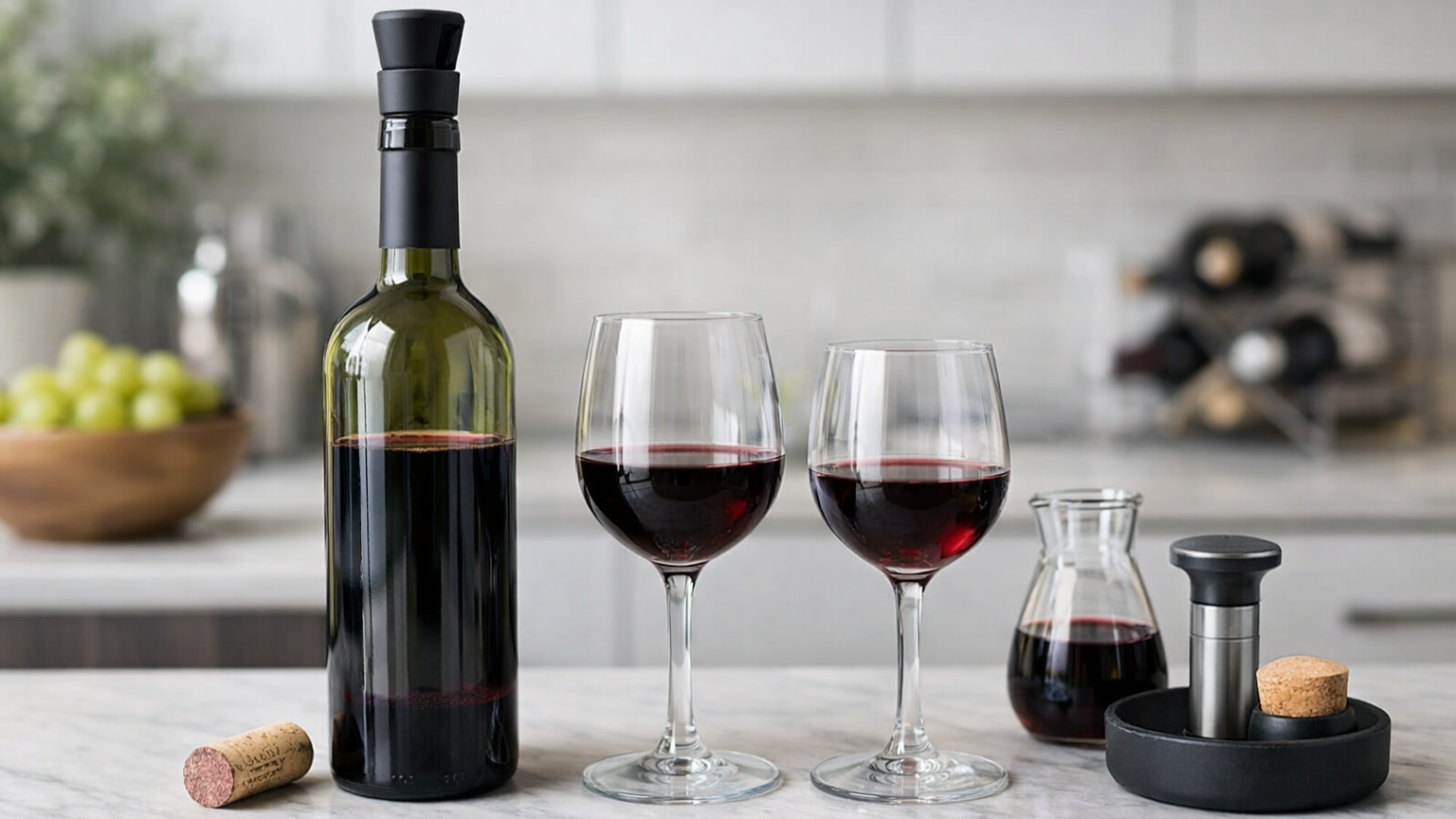
Wine does not instantly go bad after opening. But it does start changing right away.
The moment you pull the cork, oxygen begins interacting with the wine. Aromatics fade, fruit softens, and structure slowly breaks down. Some wines hold up for days. Others lose their character within hours.
The key is knowing what to expect and how to slow it down.
Affiliate Disclosure: This post may contain affiliate links. As an Amazon Associate and through other affiliate programs, I earn from qualifying purchases at no additional cost to you.
The Short Answer (Quick Reference)
If you just want the quick version, here’s what to expect:
| Wine Type | How Long It Lasts | Best Storage Method |
|---|---|---|
| Red Wine | 3–5 days | Recork and store in a cool place (refrigerate if possible) |
| White Wine | 3–5 days | Refrigerated with a stopper |
| Rosé | 3–5 days | Refrigerated with a stopper |
| Sparkling Wine | 1–3 days Best within 24h | Champagne stopper + refrigeration |
| Fortified Wine | 2–4 weeks | Recorked, cool storage |
That’s the baseline. Now here’s what’s actually happening behind the scenes.
What Happens After You Open Wine
Once a bottle is opened, oxygen starts changing the wine immediately.
At first, this can actually help. A little oxygen can open up aromas and soften structure. That’s why decanting works.
But after that initial window, things move in the opposite direction:
Fresh fruit fades
Aromatics dissipate
Acidity softens
Tannins lose structure
Eventually, the wine tastes flat, dull, or slightly sour.
This is not a flaw. It’s just chemistry doing its thing.
How Long Each Type of Wine Really Lasts
Not all wines behave the same after opening. Structure, alcohol, and style all play a role.
Red Wine
Most red wines last 3 to 5 days after opening.
Full-bodied reds with more tannin and structure tend to last longer. Think Cabernet Sauvignon or Syrah.
Lighter reds like Pinot Noir or Gamay fade faster and are usually best within 2–3 days.
If you notice the fruit disappearing and the wine tasting muted, it’s past its peak.
White Wine
White wines also last about 3 to 5 days, but they are more sensitive.
They rely heavily on aromatics, which fade quickly. Once those are gone, the wine feels flat even if it hasn’t technically “gone bad.”
Always store white wine in the fridge after opening.
Rosé
Rosé behaves almost exactly like white wine.
Expect 3 to 5 days, with best quality in the first couple days.
Fresh, fruit-driven rosés fade the fastest.
Sparkling Wine
Sparkling wine is the most fragile once opened.
It typically lasts 1 to 3 days, but realistically:
Day 1: great
Day 2: acceptable
Day 3: noticeably flat
The issue isn’t oxidation. It’s loss of carbonation.
A proper Champagne stopper helps, but this is still a short window.
Fortified Wine
Fortified wines like Port, Sherry, or Madeira last much longer.
Because of higher alcohol levels, they can last 2 to 4 weeks or more after opening.
Some styles, like Madeira, can last even longer.
Signs Wine Has Gone Bad
Wine does not become unsafe to drink in a few days. But it can become underwhelming, then unpleasant.
Look for:
Dull or muted aroma
Loss of fruit character
Flat or lifeless palate
Slight vinegar-like smell
If it smells off and tastes worse, it’s time to move on.
How to Make Wine Last Longer
You cannot stop oxidation completely, but you can slow it down significantly.
Refrigeration (Yes, Even for Red Wine)
Cool temperatures slow chemical reactions.
Even red wine benefits from being refrigerated after opening. Just let it warm slightly before drinking.
This is one of the easiest ways to extend a bottle’s life by a couple days.
Reseal the Bottle Properly
Leaving a bottle open is the fastest way to ruin it.
At minimum:
reinsert the cork
or use a basic wine stopper
This limits oxygen exposure immediately.
Use a Wine Preservation System
If you regularly open bottles and do not finish them, this is where things get noticeably better.
Vacuum systems remove air. Gas systems replace oxygen. Coravin systems let you pour without fully opening the bottle.
These can extend wine from a few days to several days or even weeks, depending on the system.
If you want a breakdown of what actually works, see:
The Best Wine Preservation Systems That Actually Work
When It’s Still Worth Drinking (and When It’s Not)
A realistic way to think about it:
Day 1–2: peak quality
Day 3–4: still enjoyable, slightly faded
Day 5+: depends on the wine
If the wine still smells good and tastes balanced, it’s fine to drink.
If it feels flat or lifeless, its fine to drink from a health perspective, but is it worth your time?
If it starts to smell like vinegar, it’s better used for cooking than drinking.
Common Mistakes That Ruin Open Wine Faster
Most people shorten the life of their wine without realizing it.
The biggest mistakes:
Leaving the bottle uncorked
Storing it at room temperature
Keeping it near heat or sunlight
Not refrigerating whites and rosés
Ignoring how quickly sparkling wine fades
Fix these, and your wine will last noticeably longer.
FAQ
Can you drink wine 7 days after opening?
Sometimes, but quality is usually significantly reduced. Most wines are best within 3–5 days.
Does wine go bad in the fridge?
No. Refrigeration actually helps preserve wine by slowing oxidation.
How long does red wine last unrefrigerated?
Typically 1–3 days before noticeable decline. Refrigeration extends that window.
Does expensive wine last longer after opening?
Not necessarily. Structure matters more than price. A bold, structured wine may last longer than a delicate one.
Can you freeze leftover wine?
Yes, for cooking use. Freezing will affect texture and flavor for drinking, but it’s fine for recipes.
Related Guides
If you’re building a better setup at home, these will help:
Final Thoughts
Opened wine does not need to be rushed, but it does have a window.
Most bottles will give you a few good days. After that, it becomes a question of quality, not safety.
A few simple habits like refrigeration and resealing go a long way. And if you open bottles regularly, the right preservation system makes a noticeable difference.