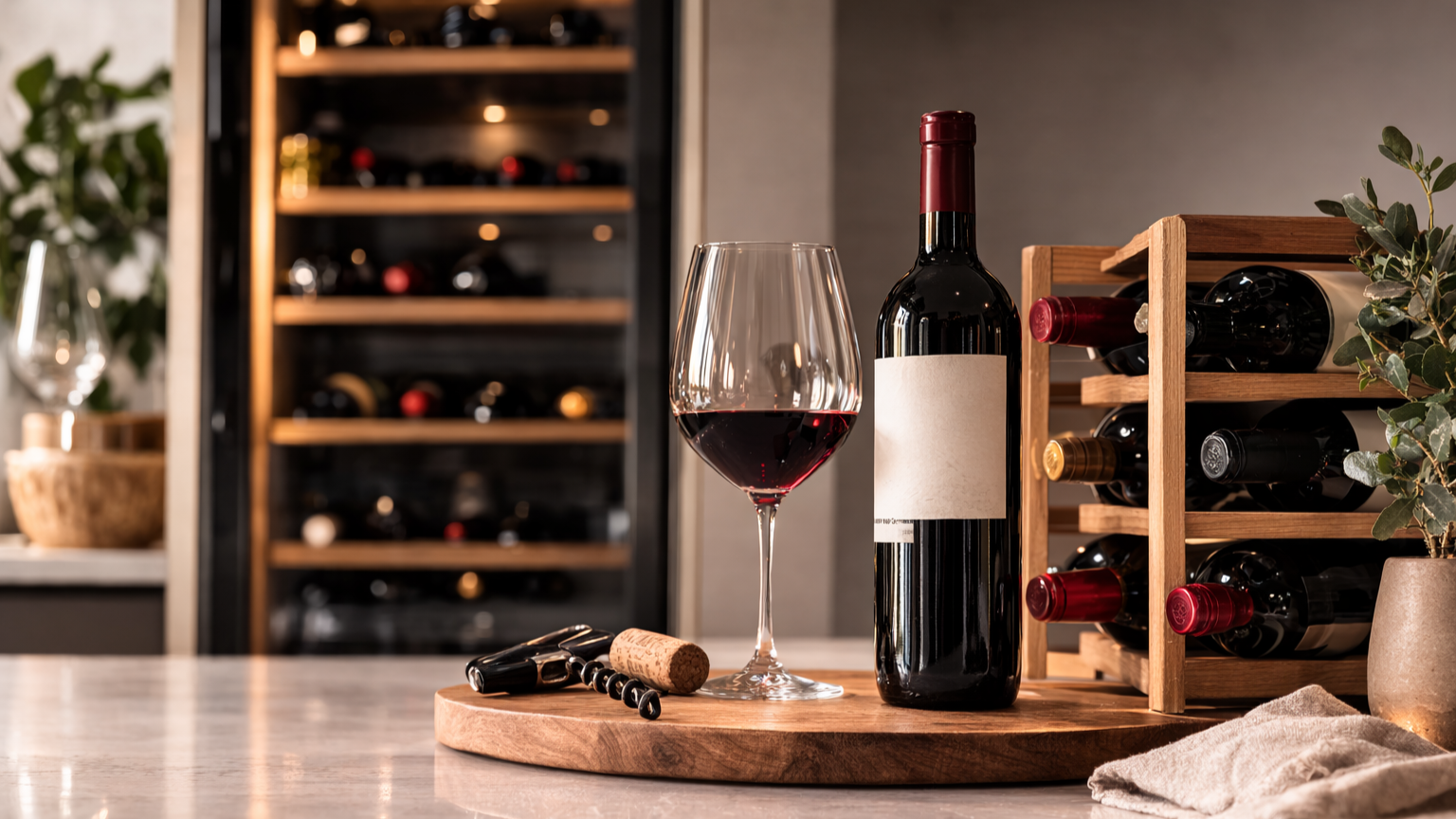
Wine is more sensitive than most people realize. Heat, light, vibration, and oxygen all slowly change how wine tastes over time.
That does not mean you need a professional wine cellar. Most people store wine at home perfectly well with a few simple adjustments.
Good wine storage simply means protecting bottles from excessive heat, sunlight, and large temperature swings so the wine can age the way it was intended.
This guide walks through everything you need to know about storing wine at home, whether you keep a few bottles on a kitchen rack or a larger collection in a wine fridge.
Affiliate Disclosure: This post may contain affiliate links. As an Amazon Associate and through other affiliate programs, I earn from qualifying purchases at no additional cost to you.
In This Guide
• The four things that damage wine
• Ideal wine storage temperature
• When you need a wine fridge
• How long different wines can age
• Common wine storage mistakes
• Simple storage setups that actually work
Complete Wine Storage Resource Library
- Wine Fridge Reviews
Best Wine Fridge for Home Use - Built-In Wine Fridges
Best Built-In Wine Fridge for Modern Kitchens - Wine Fridge Basics
Single Zone vs Dual Zone Wine Fridges - Small Space Storage
Best Countertop Wine Fridges for Apartments - Wine Preservation
Best Wine Preservation Systems That Actually Work - Storage Mistakes
Wine Storage Mistakes That Ruin Bottles
The Four Things That Damage Wine
Wine changes slowly over time. That is part of what makes it interesting. But certain environmental factors speed up that process in ways that flatten flavor and aromatics.
The four biggest threats to wine storage are heat, light, vibration, and oxygen exposure.
Heat
Heat is the fastest way to ruin a bottle.
Wine stored above about 70°F ages much faster than intended. Aromas fade, fruit becomes stewed, and the wine can lose its balance.
Extended heat exposure can even push wine to taste cooked or tomato-like.
Light
Direct light slowly breaks down delicate aroma compounds.
Sunlight is the worst offender, but strong indoor lighting can also have an effect over long periods. This is why many wine bottles are made from dark glass.
Vibration
Constant vibration keeps wine moving and disrupts the slow chemical reactions that happen during aging.
This matters most for wines you plan to keep for years. Short term storage is usually fine.
Oxygen
Once a bottle is opened, oxygen begins interacting with the wine.
Aromatics fade first. Fruit becomes muted. Eventually the wine tastes flat.
That is why wine preservation systems can help extend the life of opened bottles.
Ideal Wine Storage Temperature
Temperature matters more than almost anything else when storing wine.
Most homes are warmer than ideal wine storage temperatures, which is why wine fridges have become the easiest way to maintain stable conditions.
Wines are happiest stored around 55°F (13°C).
This temperature slows aging while still allowing wine to evolve gradually.
For everyday home storage, the most important goal is stability rather than perfection.
If your storage area stays between 50°F and 65°F without large swings, wine will generally be fine.
Sudden temperature fluctuations are far worse than being a few degrees off.
For an quick, printable storage and serving temperature reference, see our Wine Temperature Guide here.
Humidity and Wine Storage
Humidity mainly matters for long term cork health.
If the air is extremely dry, corks can slowly shrink and allow oxygen into the bottle.
Professional cellars often aim for 50–70% humidity.
For most homes, this is rarely a major concern unless bottles are stored for many years.
Where to Store Wine at Home
You do not need a dedicated cellar to store wine well.
Most people use one of these three setups.
1. A Wine Fridge
Wine fridges offer the most reliable storage environment.
They maintain consistent temperature and protect bottles from light and vibration.
If you regularly keep more than a few bottles at home, a wine fridge quickly becomes the easiest solution.
If you are comparing models, see our full guide to the best wine fridges for home use.
2. A Cool Interior Closet
Closets located near the center of a home often stay cooler and more stable than kitchens.
This can work well for people who buy wine by the case or store bottles for a few months.
Avoid closets near water heaters or laundry appliances.
3. A Wine Rack in a Stable Room
Wine racks are perfectly fine for shorter term storage.
The key is location.
Avoid places that experience heat buildup such as:
• above the refrigerator
• near ovens or dishwashers
• next to sunny windows
A shaded corner of a dining room or living room is usually much better.
For more in depth ideas, see our How to Store Wine Without a Wine Fridge guide here.
Where You Should Not Store Wine
A surprising number of common household spots expose wine to heat and temperature swings.
If you want wine to taste the way it was intended, avoid storing bottles in these locations.
On Top of the Refrigerator
This is one of the most common wine storage mistakes.
Heat from the refrigerator compressor rises upward and warms anything sitting above it. The constant vibration from the appliance also keeps the wine moving.
Over time, both factors accelerate aging and flatten flavors.
Near the Oven or Stove
Kitchens experience large temperature swings while cooking. Bottles stored near an oven or stove repeatedly heat and cool, which speeds up chemical reactions in the wine.
In Direct Sunlight
Sunlight slowly breaks down aroma compounds and can noticeably change the flavor of wine.
Even indirect sunlight over long periods can have an effect.
In the Garage
Garages often experience the largest temperature swings in a home.
During summer, temperatures can climb well above what wine tolerates comfortably. Winter can also bring temperatures low enough to affect aging.
Next to Dishwashers or Laundry Appliances
Appliances that produce heat and vibration can disrupt wine over time, especially if bottles are stored for aging.
How Long Wine Actually Lasts
Most wines are not meant to age for decades.
In reality, many bottles are best enjoyed within a few years of release.
Proper storage conditions can significantly extend these timelines, while heat and light exposure can shorten them dramatically.
| Wine Style | Typical Drinking Window |
|---|---|
| Rosé | 1–2 years |
| Light White Wines (Pinot Grigio, Sauvignon Blanc) | 1–3 years |
| Chardonnay | 3–7 years |
| Pinot Noir | 3–8 years |
| Merlot | 5–10 years |
| Cabernet Sauvignon | 7–20+ years depending on quality |
| Fortified Wines (Port, Madeira) | 20+ years |
Should Wine Be Stored on Its Side?
For cork sealed bottles, storing wine on its side helps keep the cork lightly moist.
This prevents the cork from drying out over long periods.
For wines sealed with screw caps or synthetic corks, bottle position matters much less.
Do You Need a Dual Zone Wine Fridge?
Many wine fridges advertise dual temperature zones.
For most households, the decision is simple.
Single zone works well if you mainly store wine long term.
Dual zone makes sense if you want wine ready to serve immediately at different temperatures.
If you want a deeper breakdown, see our full guide on single zone vs dual zone wine fridges.
Built-In vs Freestanding Wine Fridges
Installation style matters more than people expect.
Freestanding wine fridges vent heat from the rear or sides and need airflow around them.
Built-in wine fridges vent from the front and are designed to sit inside cabinetry.
Placing a rear-venting fridge inside cabinets is one of the fastest ways to shorten its lifespan.
If you are planning a kitchen installation, see our guide to built-in wine fridges for modern kitchens.
Common Wine Storage Mistakes
A few small habits ruin more wine than anything else.
Storing wine on top of the refrigerator
This is one of the warmest places in most kitchens.
Heat from the compressor rises directly into bottles.
Leaving wine in direct sunlight
Even short exposure can noticeably change flavor.
Large temperature swings
Moving wine repeatedly between warm and cold environments accelerates aging.
Keeping bottles far too long
Many wines simply fade if stored past their ideal drinking window.
For a more in depth guide, see 10 Wine Storage Mistakes Most People Make (And How to Avoid Them)
When a Wine Fridge Actually Makes Sense
You probably benefit from a wine fridge if you:
• regularly keep more than 10–15 bottles
• buy wine by the case
• age wine for several years
• want wine ready to serve at the correct temperature
For casual drinkers with a few bottles at a time, a cool dark storage spot can work perfectly well.
FAQ
What temperature should wine be stored at?
Around 55°F is considered ideal. Anywhere between 50°F and 65°F with stable conditions is generally fine.
Is it bad to store wine in the kitchen?
It depends on the location. Avoid heat sources such as ovens, dishwashers, and the top of the refrigerator.
Does wine go bad if stored upright?
Short term storage is fine. Long term storage is better on its side for cork sealed bottles.
Do expensive wines need special storage?
Yes. The more ageworthy the wine, the more stable temperature becomes important.
Related Guides
If you want to improve your home wine setup, these guides can help:
Best Wine Fridges for Home Use
Best Large Wine Fridges for Serious Collectors (150+ Bottles)
Best Built-In Wine Fridges for Modern Kitchens
Single Zone vs Dual Zone Wine Fridges