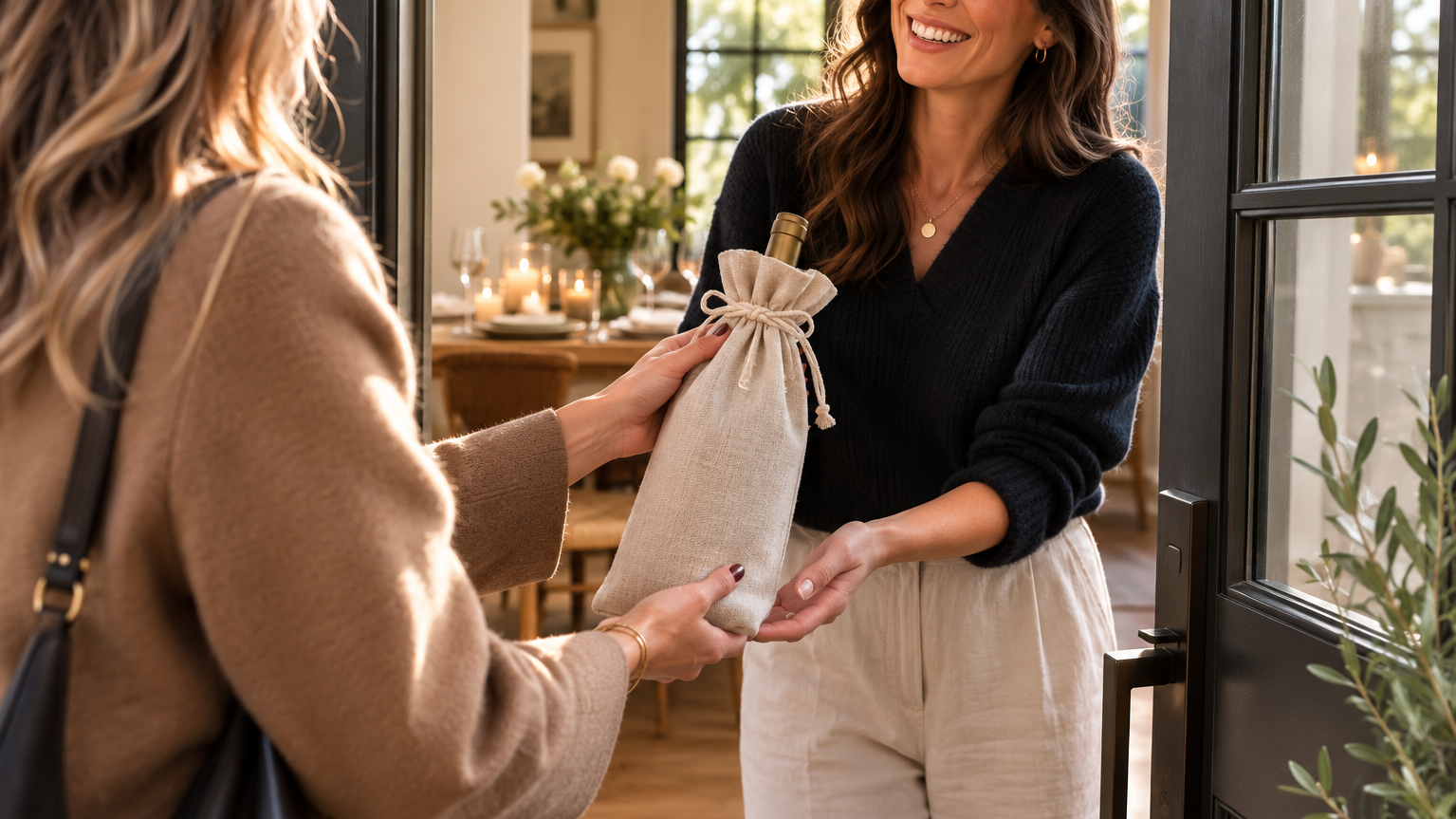
From dinner parties to holiday gatherings, here's how to choose a thoughtful bottle, how much to spend, and the etiquette that makes bringing wine simple instead of stressful.
Affiliate Disclosure: This post may contain affiliate links. As an Amazon Associate and through other affiliate programs, I earn from qualifying purchases at no additional cost to you.
In This Guide
The only rule that actually matters
Should you bring wine if the host already has wine?
How much to spend
One bottle or two?
Does it need to pair with dinner?
The safest styles to bring
A seasonal style guide
How I choose a host gift, as someone who makes the stuff
The Only Rule That Actually Matters
A bottle of wine is a thank you, not an audition.
Most people overthink this because they assume the host is quietly grading their wine knowledge. They stand in the aisle debating whether a bottle is impressive enough, whether it'll pair with dinner, whether spending another $15 will make them look less cheap. In practice, the host isn't running that calculation. They're thinking: how nice that they brought something.
Price isn't what makes a host gift land. Thought is. If your host always orders Sauvignon Blanc, bring Sauvignon Blanc. If they're not particular, almost any well chosen bottle works. I've watched people spend real money trying to impress with an obscure region nobody at the table has heard of, when a bottle they know their host likes would have done more. People remember the gesture. They rarely remember the label.
Should You Bring Wine If the Host Already Has Wine?
Yes, and this trips people up more than it should.
There's a common worry that showing up with a bottle implies the host didn't plan well enough or didn't buy the right wines for the meal. That's not how it reads. Wine you bring to someone's home is a gift to the host, not a contribution to the evening's wine list. Those are different things, and conflating them is where the anxiety comes from.
Plenty of hosts have already built the menu and chosen wines to go with each course, sometimes before you've even RSVP'd. If that's the case, they'll thank you, set the bottle aside, and move on with their plan. That's not a snub. Experienced hosts often prefer to save gifted bottles for a night when they can actually pay attention to them instead of splitting focus between the wine and eight dinner guests.
The easiest fix for any anxiety here: once you hand the bottle over, treat it as gone. It's theirs now. They can open it that night, cellar it, regift it, or bring it to their own next dinner. All of that is fine. The gift did its job the moment you handed it over.
How Much Should You Spend?
| Occasion | Typical Range |
|---|---|
| Casual dinner with friends | $15–$25 |
| Dinner party | $20–$35 |
| Holiday or special celebration | $30–$50+ |
Thought outweighs price, almost every time.
This is the question I get most, and the answer is less complicated than people expect.
These are ranges, not rules. The gap between a $22 bottle and a $30 bottle almost never registers with the recipient. What they notice is whether you remembered they like sparkling wine, or whether you included a short note. If your budget sits closer to $15, don't apologize for it. If you like spending more on gifts, that's fine too, just don't let it become the point. People remember experiences longer than they remember what something cost.
One Bottle or Two?
One is enough for nearly every occasion.
Two makes sense when you're headed to a large holiday gathering with multiple families, when your host is a known collector, when you're staying for a full weekend, or when you're marking a milestone. Otherwise, resist the instinct to double up as a way of seeming more generous. It doesn't read that way, it just reads as two bottles.
If you do bring two, pick two different styles rather than doubling up on the same one. A Brut sparkling alongside a Pinot Noir gives your host actual options down the road instead of just more of the same thing.
Does the Wine Need to Pair With Dinner?
No, not unless your host specifically asked you to bring something for the meal.
This is where people waste the most energy, trying to reverse-engineer a menu they haven't seen. You show up with a structured Cabernet expecting braised short rib, and dinner turns out to be roasted salmon. Or you bring a bright Sauvignon Blanc and walk into a table of lasagna. None of that matters, because the bottle isn't completing the meal. It's thanking the person who's hosting it.
If the host decides your bottle happens to fit, great. If they set it aside for another night, also great. Once you take pairing pressure off the table, it's much easier to pick a versatile style instead of chasing a hypothetical perfect match, which is exactly why certain wine styles show up again and again as safe host gifts.
The Safest Styles to Bring
When you don't know someone's palate, versatility beats ambition. A few styles consistently work across a wide range of foods and preferences.
Brut sparkling wine. If I had to pick one style for almost any occasion, this is it. The combination of high acidity and fine, persistent bubbles from secondary fermentation makes it work across an unusually wide range of foods, from fried snacks to roast chicken to salty appetizers. It also reads as festive without requiring an actual celebration, and if your host already has the night's wines planned, it's easy for them to set aside and open later. Even someone who doesn't drink much wine tends to find an occasion for a good bottle of bubbles.
Pinot Noir. Thin skins mean lower tannin extraction during fermentation, which is why Pinot tends to read as lighter and more approachable than fuller-bodied reds. That makes it a safer bet when you know someone drinks red wine but you don't know their specific preferences.
Sauvignon Blanc. Bright, high-acid, easy to drink on its own. Its acidity is what makes it especially welcome with lighter meals and in warmer weather.
Dry rosé. Underrated as a host gift. It sits between red and white in structure, works across seasons, and doesn't require the recipient to be "a red person" or "a white person" to enjoy it.
A Seasonal Style Guide
Not a strict framework, just a useful tiebreaker when you're stuck between two good options.
Spring: Sauvignon Blanc, dry rosé
Summer: Dry rosé, Albariño, Brut sparkling
Fall: Pinot Noir, Grenache, Chardonnay
Winter: Cabernet Sauvignon, Syrah, Brut sparkling (especially for holiday entertaining)
Don't Bring a Challenge Wine
A host gift isn't the moment to introduce someone to the strangest bottle in your collection. Adventurous wine is great, some of my favorite bottles have been genuinely unexpected, but that's a conversation for people who already know they're curious. If you don't know someone's taste, steer away from styles with a stronger personality: very sweet wines, heavily oaked Chardonnay, high-alcohol reds, orange wine, and intentionally funky natural wines. None of these are flawed. They're just polarizing, and a host gift works better when it invites people in rather than asking them to have an opinion about it.
Think of it the way you'd think about buying someone coffee for the first time. You'd reach for a well-made medium roast before handing them a heavily smoked dark roast or an experimental fermented lot.
Should You Chill the Bottle Before You Arrive?
Sometimes, and it depends on the style:
Sparkling Wine: yes
Sauvignon Blanc: yes
Dry rosé: yes
Pinot Noir: a light chill is fine, especially in warm weather, but not necessary
Cabernet Sauvignon: no, cellar temperature is ideal, not fridge-cold
If you can't chill it beforehand, it's not a problem. The gesture carries the gift, not the serving temperature, and a chilled bottle doesn't obligate the host to open it right away either. It's just an option if it fits their plans.
Presentation Matters More Than Price
A well-presented $25 bottle often reads as more thoughtful than a $60 bottle still wearing its price sticker. Presentation doesn't require much: peel off the sticker, wipe down any shelf dust, skip the novelty gift bags, and consider a simple reusable wine tote if you want it to feel more finished. A handwritten note goes a long way for birthdays, holidays, or housewarmings.
One habit worth dropping entirely: apologizing for the bottle. "It's nothing fancy," "I hope this is okay," "I didn't know what you liked." All of that puts the recipient in the position of reassuring you instead of just enjoying the gesture. Hand it over, thank them for having you, and move on.
One Small Extra Elevates the Gift
- Any bottle A reusable wine gift bag
- Red wine Artisan dark chocolate
- White wine Gourmet crackers
- Sparkling wine A quality Champagne stopper
- Any bottle A handwritten note
- Dinner party An olive wood cheese knife
A single bottle is a complete gift on its own. But for holidays, milestones, or when you want the gift to feel a little more personal, pairing it with one small item helps without meaningfully raising the cost.
For more ideas, our guide to Best Gifts for Wine Lovers covers accessories and entertaining essentials that pair well with a bottle.
If They Open Your Bottle
Say thank you, and let the evening happen. If the host decides to open what you brought, resist explaining your reasoning or apologizing if it's not a technical match for the meal. And skip the tasting notes at the table: "this vintage was better last year," "I wish it had more time in the cellar," "this would've been better with steak." Dinner with friends isn't a blind tasting. If you enjoy pairing food and wine at that level, that's a great rabbit hole to go down on your own time.
Our How to Pair Wine with Food guide gets into the mechanics without requiring a certification.
If They Don't Open Your Bottle
This is probably the more common outcome, not the exception. Most hosts have already planned the evening's wines before guests arrive, or they'd rather enjoy your bottle another time without splitting attention between it and dinner. Neither reaction says anything about whether they liked the gift. The moment you hand it over, it's theirs to open in five minutes or five months.
What If They Don't Really Drink Wine?
If you know that ahead of time, don't bring wine.
Good alternatives: quality olive oil, specialty coffee, loose-leaf tea, gourmet chocolate, fresh flowers, or a good dessert.
If you genuinely don't know, sparkling wine is still the safer bet. Even people who don't drink much wine tend to find an occasion for it, a birthday, an anniversary, New Year's Eve, and if it never gets opened, it's easy for them to keep on hand for guests or pass along.
Five Host Gift Mistakes People Make Without Realizing It
Shopping by price alone. A pricier bottle isn't automatically better received. Thought outperforms cost almost every time.
Assuming it has to be served that night. Your bottle isn't a beverage assignment. If it gets set aside, that's not a rejection.
Picking something polarizing. This isn't the moment to gamble on an unusual style. Reliable wins.
Skipping presentation. Thirty seconds spent removing a price sticker or dropping the bottle into a simple bag changes how the gift reads.
Overthinking it. This is the big one. People spend twenty minutes standing in front of a shelf hunting for a perfect bottle that doesn't exist. A thoughtfully chosen bottle within your budget is enough.
How I Pick a Bottle, as Someone Who Makes the Stuff
People assume that working in wine means I agonize over the perfect bottle before every dinner. Usually the opposite is true.
Because I've spent years around the same friends and colleagues, its not a surprise that the topic of wine has very likely already come up, so I often already know what they drink, so if someone I know loves Oregon Pinot Noir, Champagne, or Napa Cabernet, I lean into that. A bottle that matches someone's actual taste beats a more expensive bottle chosen blind, every time.
When I don't know their preferences, I default to Brut sparkling. It's the most food-flexible style on the shelf, it reads as celebratory without forcing the occasion, and if the host already has the night's wines sorted, it's an easy bottle to set aside for later. That's the logic behind the recommendation, and it's the same advice I'd give anyone standing in the aisle trying not to overthink it.
Frequently Asked Questions
Is $20 enough for a wine host gift? In most situations, yes. The $20–$30 range covers plenty of well-made wine, and most hosts evaluate the gesture, not the receipt. Spend more if the occasion calls for it, but don't feel pressure to.
Is wine always an appropriate host gift? Usually, but check first if you know your host doesn't drink for personal, religious, or health reasons. Good alternatives include olive oil, specialty coffee, tea, chocolate, or flowers.
Should I wrap a bottle of wine? You can, but it's not required. A simple linen wine bag or ribbon usually reads better than elaborate wrapping. At minimum, remove the price sticker and make sure the bottle is clean.
Is sparkling wine really the safest choice? In most cases, yes. It's food-flexible, reads as celebratory without requiring a reason, and works whether the host is a serious collector or an occasional drinker. If it doesn't get opened that night, it's easy to save or regift.
Should I bring red or white? Let known preferences guide you first. If you're guessing, think in terms of approachability: Pinot Noir over Cabernet, Sauvignon Blanc for broad appeal, dry rosé to split the difference. When still unsure, sparkling remains the default.
What if I bring the same wine as another guest? Not a problem, unlike duplicate desserts at a potluck, two bottles of the same wine just means the host has two bottles to enjoy later.
Should I tell the host how much the wine cost? No. Skip comments about price entirely, expensive or a good deal. It adds nothing and shifts focus away from the gesture.
Is it okay to ask what wine the host likes? Yes, and it's often the most efficient approach. Something as simple as "red, white, or bubbles?" usually gets you a better answer than guessing.
Final Thoughts
Bringing wine to someone's home doesn't require memorizing regions or tracking down rare bottles. If you know what your host likes, use that. If you don't, a well-chosen Brut sparkling wine covers nearly every scenario. Nobody remembers the exact vintage you showed up with. They remember the evening, and the bottle is just part of how you said thank you for it.
Continue Exploring
How to Pair Wine with Food — the mechanics behind why certain combinations work
Best Gifts for Wine Lovers— accessories and entertaining essentials worth pairing with a bottle
Old World vs. New World Wine — how region shapes style
How Wine Actually Tastes: Acidity, Tannins, Body & Sweetness Explained — building a vocabulary for structure instead of chasing tasting notes