The Best Large Wine Fridges for Serious Collectors (150+ Bottles)
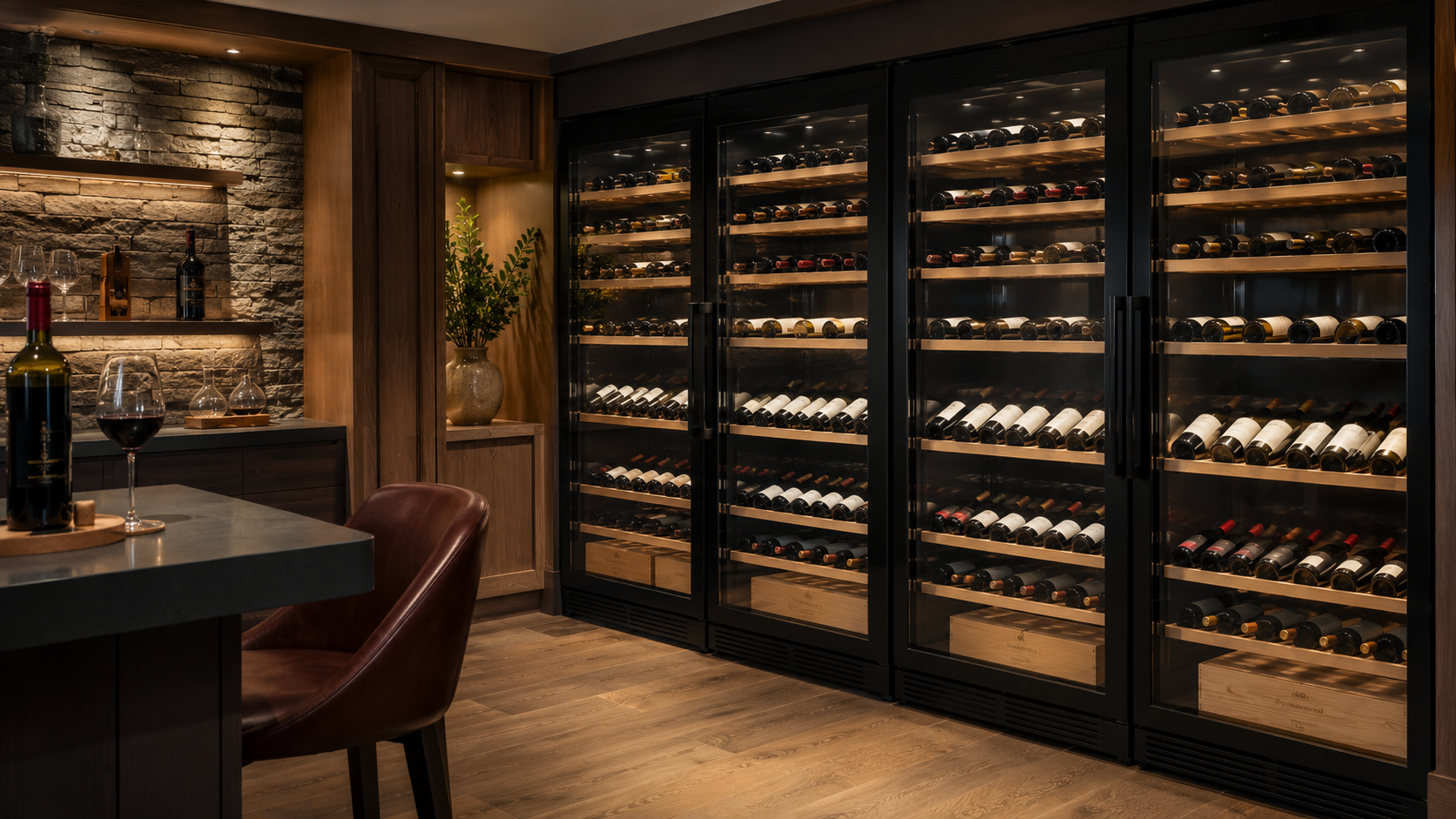
I still remember the first time my own collection outgrew its fridge. I'd been stacking bottles in every closet, telling myself it was temporary, and then another case of wine showed up and there was simply nowhere left to put it. That's usually how this goes. Nobody plans to become a serious collector. You just wake up one day and realize the small unit that felt enormous two years ago is now working overtime.
If you've reached that point, roughly 100 bottles and climbing, you're not shopping for convenience anymore. You're shopping for protection. And the large-capacity wine fridge market makes that surprisingly hard to navigate: capacities from 150 to over 600 bottles, dual zones, Wi-Fi apps, dramatic display shelving, and premium brands like EuroCave charging several times what a comparable Wine Enthusiast model costs. The obvious question is whether any of that premium is real.
The answer has less to do with your budget than with how you actually collect.
I've spent 13 years making wine, which means I've spent 13 years thinking about what happens to a bottle after it leaves the cellar. My priority isn't just keeping wine cold, it's protecting the slow, quiet evolution that happens over years in the bottle. Temperature stability, vibration, humidity, shelf design, even how often the door gets opened, all of it shapes whether a wine develops the way it's supposed to or peaks early and disappoints you.
This guide walks through the large wine fridges and it explains which features actually protect your wine and which ones just look good in a showroom.
Affiliate Disclosure: This post may contain affiliate links. As an Amazon Associate and through other affiliate programs, I earn from qualifying purchases at no additional cost to you.
In This Guide
When it actually makes sense to upgrade to a large wine fridge
Why advertised bottle capacity almost never matches reality
Single-zone versus dual-zone storage, and why the "better" option depends on you
Which premium features are worth the money and which are just marketing
The best large wine fridges for different budgets and collecting styles
Whether EuroCave's price tag is justified
When Do You Actually Need a Large Wine Fridge?
The biggest mistake I see collectors make is buying for the collection they have today instead of the one they'll have in two years.
Wine collections almost never grow in a straight line. Someone spends a few years hovering around 40 bottles, then joins a couple of mailing lists, falls into Burgundy, or takes a trip to Napa. Forty bottles becomes 120. Then 180. It happens faster than people expect, and almost never on purpose.
I find it more useful to think in stages than in fixed bottle counts:
Somewhere around 150 bottles, the questions you're asking change. It stops being "how many bottles can this hold" and becomes:
Will this actually protect my wines for the next decade?
Am I going to outgrow this in two years?
Can I organize several hundred bottles without losing my mind?
Is this something I'll still want once my collection doubles?
Those questions are what separate a good large wine fridge from one you'll be replacing sooner than you'd like.
Why the Advertised Bottle Capacity Is Almost Always Wrong
If there's one number I wish manufacturers explained more honestly, it's capacity.
Nearly every advertised figure assumes a fridge filled exclusively with standard Bordeaux bottles: straight sides, narrow shoulders, efficient stacking. Real collections don't look like that. Most collectors own a mix of shapes: broad-shouldered Napa Cabernet, Burgundy bottles for Pinot Noir and Chardonnay, Champagne, Alsace and Riesling bottles, Rhône-style bottles, and the occasional magnum thrown in for good measure. Each one eats space differently.
A fridge rated for 155 bottles might realistically hold 125 to 135 once Burgundy and Champagne enter the mix. That's not a scam, it's just an industry convention nobody bothers to explain, and most people don't discover it until they're loading shelves for the first time.
A winemaker's take: the real difference between a casual drinker's fridge and a collector's fridge isn't the bottle count, it's the shape diversity. The more varied your collection gets, the less predictable your storage needs become. That's why I generally tell people to buy more capacity than they think they need. It buys flexibility for the bottle shapes you already own, and room for the collection you're going to build whether you plan to or not.
See my guide on Wine Fridge Capacity Explained: How Many Bottles Do You Actually Need? for more a more in depth look on capacity.
What Actually Matters in a Large Wine Fridge
Once you start comparing large-capacity units, they tend to blur together on paper. Digital controls, UV glass, wooden shelves, compressor cooling, it can feel like price is the only real difference.
It isn't. The gap between a good wine fridge and a genuinely excellent one shows up in ways a spec sheet won't tell you. If you just need a week's worth of wine on hand, almost anything decent will do the job. If you're storing bottles for five, ten, twenty years, consistency matters far more than features.
Here's what I check first.
Temperature Stability Matters More Than the Exact Number
One of the more persistent myths in wine storage is that 55°F is some kind of magic number. It's a solid benchmark, but stability matters far more than hitting it exactly.
Wine expands and contracts as temperature shifts. Small, gradual fluctuations happen in every cellar and generally aren't a problem. Frequent or dramatic swings are a different story. They accelerate aging and put unnecessary stress on both the wine and the closure.
Think of it like baking bread. A loaf held at a steady temperature develops exactly as intended. Keep opening the oven door or swinging the heat up and down, and the dough won't necessarily be ruined, but it won't turn out the way it should either. Wine behaves the same way, just over years instead of minutes.
A good large wine fridge recovers quickly after the door opens and holds an even temperature across the whole cabinet, without hot or cold pockets forming near the compressor or the door seal.
A winemaker's take: during fermentation, we obsess over temperature stability because even small swings change the finished wine. Bottled wine is far more forgiving, but the same principle holds over long enough timelines. The best storage environment isn't the coldest one. It's the one that changes the least.
Humidity Does More Work Than People Give It Credit For
Humidity gets less attention than temperature because most fridges lead with temperature in their marketing. It deserves more.
Natural cork lets in microscopic amounts of oxygen over time, which is part of how wine matures in the first place. If the surrounding air stays too dry for too long, corks can lose moisture and let in more oxygen than intended, which speeds up oxidation. Too much humidity, on the other hand, rarely harms the wine itself. It mostly shows up as mold on labels and capsules, a cosmetic issue rather than a real threat unless conditions get extreme.
Most premium wine fridges are built to hold a balanced humidity range without you having to think about it. If you're storing wine for decades rather than months, that quiet consistency is another place premium models earn their price.
Why Vibration Actually Matters
Anti-vibration technology gets thrown around as a marketing buzzword, but there's real engineering behind it.
Every compressor vibrates while it runs. In a cheap fridge, that vibration transfers straight into the cabinet and, eventually, into the wine. Will that ruin a bottle overnight? No. But collectors aging wine for ten or twenty years want to eliminate as many variables as they can, and vibration is one of the few they actually can control.
Premium manufacturers spend real money on compressor mounting and cabinet construction specifically to isolate vibration before it reaches the shelves. The long-term science on vibration's exact effect on aging wine is still thin, and the real-world data is limited, but since it's a controllable variable, most serious collectors would rather remove it than gamble on it.
UV Protection Is About More Than Tinted Glass
Light is a slow, steady enemy of wine. UV exposure triggers chemical reactions that degrade delicate aromas over time, especially in white and sparkling wines, which is exactly why traditional cellars are dark.
Modern wine fridges handle this a few different ways: insulated UV-resistant glass that blocks most harmful light while still letting you see your collection, or tinted glass paired with low-heat LED lighting. If your fridge is going in a bright kitchen or dining room, UV protection matters a lot more than if it's tucked into a dark basement corner.
Shelf Design Changes More Than You'd Expect
A shelf seems like the least interesting part of a wine fridge until you've loaded 150 bottles onto badly designed ones.
Poor shelves force you to shuffle several bottles just to reach the one in back. They waste vertical space and quietly eat into your real-world capacity. Premium units generally use full-extension hardwood shelves that glide smoothly under weight and accommodate different bottle shapes without awkward stacking. Some display labels forward, which sounds like a small thing until you're trying to find one specific vintage among 200 identical-looking bottles.
A winemaker's take: one of the easiest ways to disturb a collection is constantly rearranging it. Good shelving encourages you to leave bottles alone until you're actually ready to drink them, which sounds minor but adds up over hundreds of bottles and years of collecting.
See my in depth guide on Common Wine Storage Mistakes here.
Single Zone vs. Dual Zone: Which Should You Buy?
This is where I see the most confusion. People assume dual-zone is automatically the upgrade. Sometimes it is. Often it isn't.
Single-zone fridges hold one consistent temperature across the whole cabinet. They're the right call for long-term aging, building out a cellar, or collectors who already have a separate serving fridge and just want to preserve wine, not chill it for tonight's dinner.
Dual-zone fridges create two independently controlled zones, typically used to keep reds at cellar temperature while chilling whites and Champagne for serving, or to separate aging wines from ones you're actually going to drink soon. They're a great fit for entertaining or for anyone who wants one fridge to do double duty.
If I were buying a dedicated large-capacity fridge purely to age wine, I'd choose single-zone every time. Cabernet, Riesling, Pinot Noir, Champagne, nearly all fine wine ages beautifully within the same cellar range. You don't need multiple temperatures for aging, you need consistency. Dual zones earn their keep when convenience matters as much as preservation, not the other way around, and that distinction gets lost in most marketing copy.
See my in depth guide on Single Zone vs Dual Zone Wine Fridge: What You Actually Need here
The Features That Matter Less Than You'd Think
Not every premium feature carries equal weight. Wi-Fi connectivity, smartphone notifications, touchscreens, interior display lighting, voice assistant compatibility, fingerprint-resistant finishes: all pleasant to have, none of them will make your wine age one day better.
When I'm comparing two similarly priced fridges, I'll take better refrigeration engineering over smarter electronics every time.
The Best Large Wine Fridges for Serious Collectors
Best Overall: Wine Enthusiast VinoView L 145 Smart Wi-Fi Dual Zone
If I had to recommend one large-capacity fridge to the widest range of collectors, this is it. Around 145 bottles, dual zones, Wi-Fi monitoring, and label-forward shelving that makes it just as comfortable preserving a growing collection as it is anchoring a home wine room.
What sets it apart isn't raw capacity, it's how clearly it was designed for people who actually interact with their collection regularly. Not having to pull shelves out to see what you own saves more time than you'd expect.
Specs: ~145 bottles, dual zone, built-in or freestanding, full-extension wooden shelves with label-forward display, Wi-Fi monitoring, UV-resistant glass, compressor cooling.
Pros: strong balance of aging and serving temperatures, excellent organization, premium look for a living space, useful Wi-Fi monitoring, flexible installation.
Cons: real-world capacity drops with larger Burgundy or Champagne bottles, priced above mainstream brands, dual zone is unneccesary if you're only aging.
Best for: collectors who want one fridge that ages wine and keeps bottles ready to pour.
Skip it if: your only goal is a dedicated aging cellar with every bottle at one long-term temperature.
Best Single-Zone Fridge for Long-Term Aging: Wine Enthusiast VinoView L 155 Smart Wi-Fi
A lot of buyers assume dual-zone is automatically the better version. For a dedicated collector, it usually isn't. If nearly every bottle you own is set aside for the future rather than tonight, one consistent cellar temperature across the whole cabinet is the simpler, more effective approach, and that's exactly what this model delivers. Slightly more usable capacity than the dual-zone version, and a refrigeration system built entirely around preservation instead of serving convenience.
Specs: ~155 bottles, single zone, built-in or freestanding, full-extension wooden shelves, Wi-Fi, UV-resistant glass.
Pros: ideal for long-term aging, slightly more usable capacity than comparable dual-zone models, excellent shelf access, simple temperature management.
Cons: doesn't hold whites or sparkling at serving temperature, less useful for frequent entertaining.
Best for: collectors focused on preserving wine for years, not keeping it ready to pour.
A winemaker's take: if I were buying a fridge exclusively for my own collection, I'd choose this configuration over dual-zone without hesitating. Wine doesn't need different aging temperatures by variety. Unless serving convenience is a real priority, simplicity gives you the better storage environment. If I need a stored bottle of white wine chilled to serving temperature, I just stick it in my kitchen fridge prior to serving to get it to the right temperature.
Best Premium Wine Fridge for Long-Term Cellaring: EuroCave La Première L
Bring up EuroCave around experienced collectors, sommeliers, or winery people, and the conversation shifts fast, away from features and toward reputation. That's because EuroCave was never built to compete with residential beverage fridges. Its whole design philosophy comes from trying to replicate the stability of an underground cellar, the kind fine wine can mature in gracefully for decades.
The La Première series carries that philosophy through every part of the cabinet, from the refrigeration system to the shelving to how it manages humidity. It's genuinely expensive. Whether that expense is justified depends entirely on what's inside the fridge and how long you plan to keep it there.
Specs: up to ~230 bottles depending on configuration, single zone, freestanding, modular hardwood shelving, active humidity regulation, solid or UV-resistant glass door options, made in France.
Pros: outstanding temperature stability, excellent humidity management, very low vibration, highly configurable shelving, purpose-built for aging fine wine.
Cons: significant investment, freestanding only, more storage-focused than display-focused.
Best for: collectors building a long-term cellar with wines meant to age for many years.
Best Large-Capacity Display Fridge: Wine Enthusiast VinoView Double L 290
At some point, organization becomes as important as capacity. A collection creeping toward 300 bottles gets frustrating fast if every bottle is hiding behind three others. The Double L 290 solves that with smart layout rather than just a bigger box: double-width design, full-extension shelves, and a label-forward layout that turns inventory management from a chore into something you can actually enjoy. For collectors who like browsing their cellar almost as much as drinking from it, that difference is real.
Specs: ~290 bottles, dual zone, freestanding, full-extension label-forward wooden shelves, UV-resistant insulated glass, compressor cooling.
Pros: excellent organization at scale, easy to find what you're looking for, strong presence as a display piece, dual-zone flexibility, high-end fit and finish.
Cons: needs real floor space, a serious investment, large footprint won't suit every home.
Best for: collectors who actively rotate through their cellar and want visibility without sacrificing storage quality.
Best Large Single-Zone Cellar: Wine Enthusiast VinoView Double L 310
This is the fridge for someone who's stopped thinking about "drinking wine" and started thinking about managing a cellar. Unlike the 290-bottle dual-zone version, the Double L 310 dedicates the entire cabinet to one stable environment. That sounds like a compromise until you realize it usually isn't, at least not for aging. Every bottle, whether it's Napa Cabernet, Barolo, German Riesling, or Vintage Port, experiences the same consistent conditions, the same way a professional storage facility or a traditional cave operates.
Specs: ~310 bottles, single zone, full-extension hardwood shelving, UV-resistant glass, compressor cooling.
Pros: outstanding storage efficiency, excellent long-term aging environment, simplified temperature management, more usable flexibility overall.
Cons: no ready-to-serve temperature zone, better suited to collectors than entertainers.
A winemaker's take: if someone asked me to pick one fridge purely for aging wine over the next twenty years, this would be near the top of my list. Fewer variables in long-term storage is almost always better.
Best Commercial-Grade Wine Fridge: Wine Enthusiast Commercial 310
Most home collectors will never need commercial-grade equipment. Some genuinely do. Restaurants, tasting rooms, hospitality spaces, and the occasional collector with an unusually active wine room can open a fridge door dozens of times a day, which is a very different workload than the average home setup. The Commercial 310 is built around that reality: durability and fast temperature recovery over aesthetics or smart features.
Pros: built for heavy daily use, excellent temperature recovery, durable construction, large capacity.
Cons: more utilitarian look, higher price, overkill for most home collectors.
Best for: commercial spaces or private collectors with an unusually active wine room.
Dream Collection Pick: Wine Enthusiast VinoView Quad L 620
Very few readers actually need a 620-bottle wine fridge. A lot of us dream about one anyway, which is exactly why it earns a spot here. The Quad L 620 isn't just a bigger fridge, it becomes part of the room's architecture. Installed well, it gives you the feeling of a professional wine room with modern refrigeration performance, and for collectors approaching 500 bottles, it's a genuinely reasonable alternative to building out a climate-controlled wine room when space or construction costs get in the way.
Specs: ~620 bottles, multiple independently controlled zones, modular configuration, premium display shelving, commercial-quality construction.
Pros: extraordinary capacity, striking architectural presence, flexible organization, excellent long-term storage conditions.
Cons: major investment, requires careful installation planning, well beyond what most collectors need.
Best for: collectors building a genuine destination wine room at home.
Is EuroCave Really Worth the Premium?
This is the question I get asked most often. A EuroCave can run two or three times the price of another large-capacity fridge with a similar bottle count on paper, so where does that money actually go?
Some of it goes toward premium materials and European manufacturing. But most of it goes somewhere you won't notice until you've owned the fridge for years.
Most manufacturers compete on features: bigger touchscreens, more lighting, smartphone apps, voice control, decorative shelving. EuroCave has always focused on the fundamentals instead, investing in temperature stability, gentle air circulation, humidity regulation, low-vibration compressors, and shelving built around how collectors actually use their cellars. None of that photographs well in a showroom. All of it matters after ten years of aging wine.
For long-term cellaring, I think EuroCave has earned its reputation. If you're storing wines meant to mature over decades, the premium buys real engineering, not unnecessary luxury. If you're mostly drinking bottles within a year or two of buying them, the premium probably isn't buying you much. A quality Wine Enthusiast fridge will store wine just as well for meaningfully less money.
My rule of thumb: choose a Wine Enthusiast VinoView for outstanding performance, beautiful presentation, everyday usability, and strong value. Choose a EuroCave once your collection itself has become the investment, when individual bottles cost hundreds of dollars and are meant to age for decades. At that point, protecting the investment is easy to justify.
My Final Recommendations
Best Overall Flexibility: Wine Enthusiast VinoView L 145 Dual Zone
Best for Long-Term Aging: Wine Enthusiast VinoView L 155 Single Zone
Best Premium Investment: EuroCave La Première L or M
Best Large Display Cellar: Wine Enthusiast VinoView Double L 290
Best Dedicated Cellar Storage: Wine Enthusiast Double L 310
Best Commercial-Grade Use: Wine Enthusiast Commercial 310
Dream Wine Room: Wine Enthusiast Quad L 620
Eight Mistakes People Make When Buying a Large Wine Fridge
A large wine fridge is a significant purchase, and unlike a countertop unit, it's not something most people want to replace in a couple of years. Here's where I see collectors go wrong most often.
1. Buying for today's collection instead of tomorrow's. At 120 bottles, a 150-bottle fridge sounds like plenty. In reality, you've left yourself room for 30 more, and mailing list allocations, winery visits, auction wins, and holiday gifts fill that up faster than anyone expects. Buy at least 25 to 50 percent more capacity than you think you need now.
2. Trusting the advertised bottle capacity. Manufacturers calculate capacity using identical Bordeaux bottles. Real collections include Burgundy, Champagne, Rhône bottles, Riesling, and the occasional magnum, all of which reduce usable capacity. Expect real-world numbers to run lower than the box says.
3. Paying for features you'll never use. Wi-Fi monitoring, app notifications, touchscreens, and customizable lighting all look great in a showroom. None of them help your wine age. I'll take better temperature stability and shelf design over a slicker app every time.
4. Choosing dual-zone when what you actually need is a cellar. Dual-zone fridges are great for serving. They're not automatically better for aging. If nearly every bottle is going in for the long haul, a well-designed single-zone fridge is usually the simpler, more effective choice.
5. Ignoring bottle accessibility. A 200-bottle collection gets old fast if pulling one bottle means moving six others. Look past the bottle count and check shelf extension, label visibility, and how easy the layout makes inventory.
6. Overlooking installation requirements. Large fridges are heavy before they're even loaded with wine. Check door clearances, hallways, staircases, floor strength, ventilation, and the electrical circuit before you fall in love with a model that can't actually get into the room.
7. Treating it like a kitchen fridge. Opening the door repeatedly throughout the day introduces exactly the kind of temperature swings a premium cabinet then has to work to correct. Organize your collection so you can grab a bottle quickly instead of standing there deciding with the door open.
8. Not checking the settings after a power outage. Most wine fridges reset to a factory default once power is restored, and that default is not always the temperature you had it set to. A short outage during the day is easy to catch, but one that happens overnight or while you're away can go unnoticed for days, quietly holding your collection at the wrong temperature the whole time. After any outage, even a brief one, check the display before assuming everything's fine. This is where Wi-Fi monitoring actually earns its keep, since it can alert you the moment power drops instead of leaving you to find out days later.
One Large Wine Fridge or Two Smaller Ones?
There's no single right answer, but the tradeoffs are fairly clear.
One large fridge tends to suit long-term collectors best: better organization, more efficient floor space, one consistent environment, a cleaner look overall. It also means higher capacity, easier inventory management, generally better energy efficiency than running two separate compressors, and simpler maintenance. The downside is that it's a single point of failure, less flexible, and a bigger upfront cost.
Two smaller fridges work well for collections still finding their shape, or for homes juggling both storage and serving needs, especially where installation space is tight. You get the ability to expand gradually, separate serving and aging temperatures, and some redundancy if one unit needs service. The tradeoff is more floor space, more compressors and energy use, and a harder time keeping the whole collection organized as one system.
If you're confident your collection will eventually pass 150 bottles, I'd generally recommend buying one properly sized premium fridge over two smaller units. Collectors almost always appreciate having the extra room. Very few wish they'd bought less.
How Wine Collections Really Grow
Almost nobody decides one day to own 300 bottles. It happens gradually: a few winery memberships, a case picked up on vacation, a vertical tasting, buying three bottles instead of one because you'll age the other two. Before long, the little collection you started with fills an entire wall.
That's why I'd rather have people plan for where their collection will be in five years than for where it sits today. A good wine fridge should support your habits, not put a ceiling on them.
See my guide on How to Start a Small Home Wine Collection here.
Frequently Asked Questions
What size wine fridge should I buy? Aim for at least 25 to 50 percent more capacity than your current collection. Most people underestimate how quickly they'll fill it.
Is 55°F really necessary? Not exactly. The exact number matters less than keeping it steady. A consistent temperature near cellar range beats a fridge that constantly fluctuates around a "perfect" number.
Can I age wine in a dual-zone fridge? Yes, as long as one zone stays at proper cellar temperature. The second zone is just there for the convenience of keeping other bottles ready to pour.
Do expensive wine fridges actually preserve wine better? Often, yes. Premium models tend to offer better temperature stability, lower vibration, better humidity control, and higher-quality shelving. Whether that's worth the extra cost depends on the value of your collection and how long you plan to age it.
How full should a wine fridge be? Reasonably full but not packed to the edges. Leaving some room helps air circulate and makes future purchases easier to organize.
Can I store Champagne with red wine? Yes. For long-term storage, Champagne is just as happy in stable cellar conditions as still wine. If you're drinking it soon, chill it further right before serving.
Should expensive bottles go on top or bottom shelves? Shelf position matters less than overall temperature consistency. That said, I like keeping long-term bottles on shelves that don't get disturbed often.
Final Thoughts
A large wine fridge isn't just a bigger appliance, it's the point where casual wine storage turns into real cellar management. The right model for you isn't necessarily the one with the highest bottle count or the flashiest app. It's the one that keeps your collection stable today while leaving room for the collector you're going to become over the next decade.
If you're balancing everyday drinking with long-term aging, the Wine Enthusiast VinoView L 145 Dual Zone is my overall pick. If you're building a dedicated cellar for wines that need to mature for years, lean toward a single-zone model, or step up to a EuroCave if preserving fine wine for decades is genuinely the mission.
Either way, investing in the right fridge now is almost always cheaper than replacing the one you've already outgrown.