How to Pair Wine With Food (Without Memorizing a Single Rule)
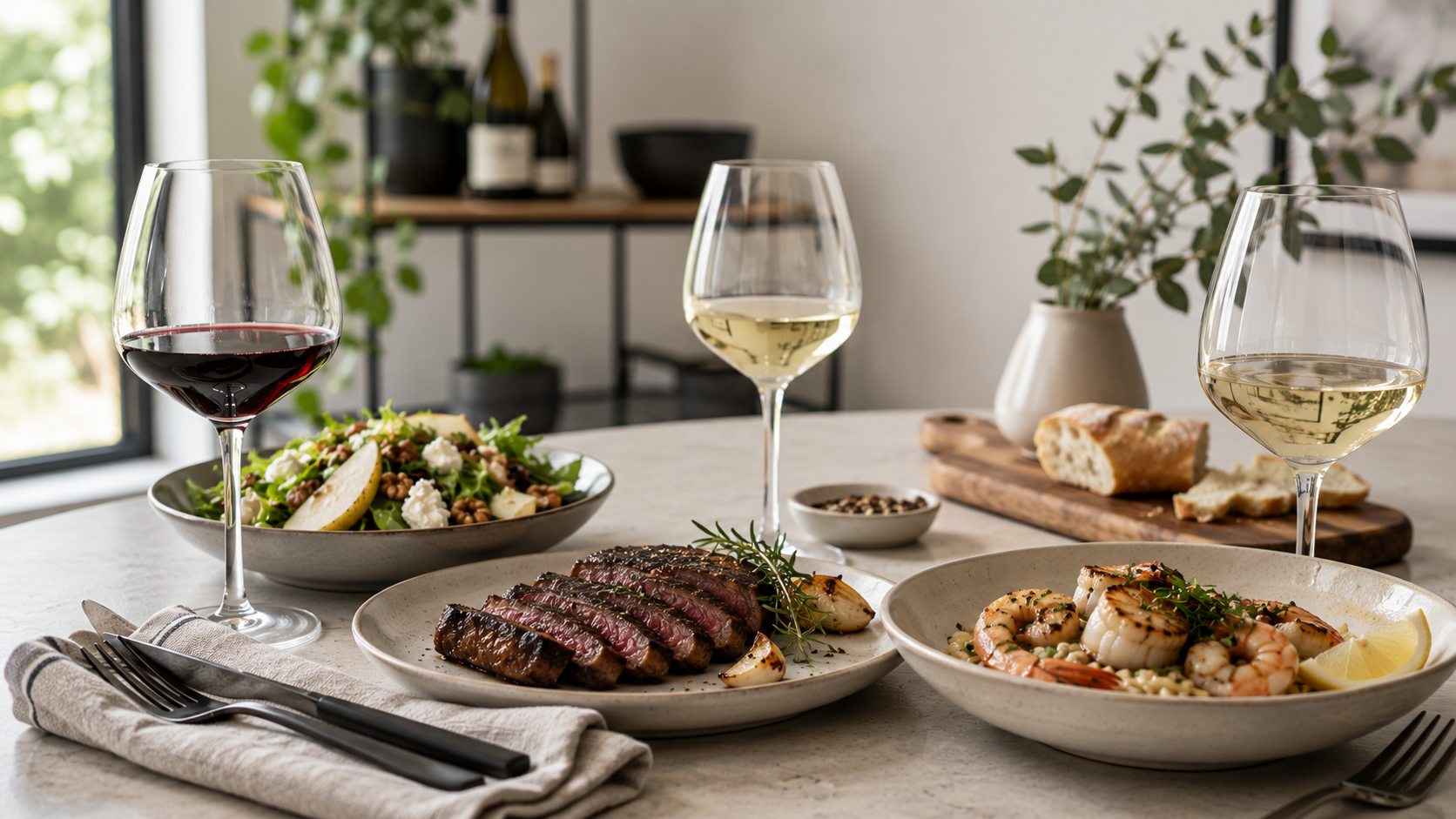
Most wine pairing guides teach you what to do. Almost none of them tell you why it works.
That's a problem, because once you leave the guide behind and face an actual menu, or a dish you've never paired wine with before, the memorized list is useless.
This guide is different. By the end, you should be able to look at an unfamiliar dish and reason your way to a solid pairing on your own. No cheat sheet required.
Affiliate Disclosure: This post may contain affiliate links. As an Amazon Associate and through other affiliate programs, I earn from qualifying purchases at no additional cost to you.
First: Forget the Protein Rule
You've heard some version of this: red wine with red meat, white wine with fish, Chardonnay with chicken.
These aren't wrong exactly. They're just incomplete. And the gap between "technically true" and "actually useful" is where most pairing confusion lives.
Here's the problem with protein-first thinking: the same ingredient can taste completely different depending on how it's cooked and what's on top of it.
Chicken, for example:
Grilled with lemon and herbs
Smothered in cream sauce
Fried until crispy
Glazed with miso and honey
Braised in red wine
These are not the same dish. They don't have the same flavor profile, the same texture, or the same intensity. Recommending the same wine for all of them would be like recommending the same outfit for a beach and a black-tie dinner because you're going to the same city.
The actual question isn't what protein is this? It's what is this dish doing?
The Four Things That Actually Drive Wine Pairings
1. Weight (Body): Match the Intensity on Both Sides
When wine people say a wine has "body," they're describing how it feels in your mouth, its weight and richness. A full-bodied wine feels dense and substantial, like whole milk. A light-bodied wine feels more delicate, like water or skim milk. Medium-bodied lands somewhere between the two. It's not about flavor. It's purely about physical presence.
And this is the most fundamental idea in pairing: a light dish needs a light wine, and a rich dish needs a wine that can keep up.
If you pour a massive, full-bodied Cabernet Sauvignon alongside a delicate piece of sole, the wine steamrolls the food. Conversely, pour a crisp, featherweight Pinot Grigio with a slow-braised short rib and the wine disappears like it was never there.
Think of it as a volume match. The food and wine should be speaking at roughly the same level.
Light end of the spectrum: salads, raw seafood, fresh vegetables, simple appetizers. Wines like Pinot Grigio, Sauvignon Blanc, Albariño, dry rosé.
Heavy end: braised meats, cream sauces, anything rich and slow-cooked. Wines like Cabernet Sauvignon, Syrah, Malbec, or a full-bodied oaked Chardonnay.
Most dishes fall somewhere in between, and so do most wines. Getting the weight roughly right gets you 80% of the way there.
If you need a refresher on these terms, see our related guides on Common Wine Terms Explained, How to Taste Wine Like a Pro, and Red vs White: the Real Difference
2. Acidity: Wine's Most Underrated Pairing Tool
Every wine contains natural acids, and they're what give wine that crisp, mouthwatering, almost tart quality. You feel it most along the sides of your tongue and at the back of your jaw, that slight pucker or salivation that makes you want another sip. Think of the difference between biting into a fresh green apple versus a ripe banana. That brightness in the apple is acidity. High-acid wines have it in spades; low-acid wines feel rounder and softer.
In pairing, acidity is one of your most powerful tools, and also the most overlooked.
High-acid wines cut through richness and reset your palate between bites. Think about what a squeeze of lemon does to fried food or a heavy cream sauce. It lifts it, brightens it, keeps it from feeling leaden. That's acidity doing the same work in wine form.
This is why Champagne with fried chicken is such an unexpectedly good pairing. It's why Chianti and tomato sauce are practically married. Sauvignon Blanc and goat cheese. The acidity in the wine either mirrors or counterbalances the dish, and the result feels lively instead of heavy.
Rule of thumb: The richer and fattier the dish, the more you want acidity in your wine.
3. Tannins: They Need Something to Grab Onto
Tannins are compounds found mainly in red wine, coming from the grape skins, seeds, and stems during winemaking. The sensation they create is that dry, slightly grippy, almost chalky feeling you get after a sip of Cabernet Sauvignon, the same way strong black tea dries out your mouth. That's tannin. Some people describe it as astringency. It's not a flavor exactly. It's a texture.
Here's what most guides skip: tannins bind to protein and fat. When you eat a well-marbled ribeye alongside a structured, tannic red, the fat and protein in the meat soften the tannins and make the wine feel rounder and smoother. At the same time, the tannins make the meat taste less fatty and more savory. The two are literally interacting at a chemical level, each one making the other better.
That's why steak and Cab is a classic. It's not tradition. It's chemistry.
Flip it around: pour a tannic red alongside lean white fish or plain chicken breast, and you get the opposite effect. The tannins have nothing to bind to, so they sit on your palate and taste harsh, drying out your mouth without any payoff.
If you're reaching for a tannic red, you want well-marbled beef, lamb, rich braised meats. Anything with enough protein and fat to meet the wine halfway.
4. Sweetness and Spice: They Need to Balance Each Other
Not all wine is bone dry. Residual sugar, the natural grape sugar left in the wine after fermentation, can range from imperceptible to very obvious. Wines with noticeable sweetness are called off-dry (subtle) or sweet (more pronounced). That sweetness isn't a flaw. In the right context, it's a tool.
Spicy food is one of those contexts.
High-alcohol red wine with spicy food is a bad combination. Alcohol amplifies heat. It's a solvent, and it carries capsaicin (the compound that makes food feel hot/spicy) right to your pain receptors. A wine that tastes perfectly fine on its own can taste like it's burning a hole in your throat next to a spicy dish.
What actually works: wines with lower alcohol and a touch of residual sweetness. Riesling, Gewürztraminer, off-dry rosé. The sweetness softens the heat instead of feeding it.
The other half of this rule: wine should always be at least as sweet as the food. If your dish is sweet, a fruit glaze, teriyaki, a dessert, and your wine is dry, the wine will taste thin and sour by comparison. It's not a bad wine. It just has no sweetness to stand alongside the dish. This is why dessert wines exist.
The Thing Most People Overlook: The Sauce Usually Matters More Than the Protein
Here's a real example. Take salmon. Now imagine it four ways:
With lemon, capers, and herbs
In a cream sauce
With a tomato-based sauce
With a miso-soy glaze
The fish is the same. The wine you'd choose is different in every case.
Lemon and herbs: high-acid white, something crisp and light like Sauvignon Blanc or Vermentino. Cream sauce: something with body and either matching richness or enough acidity to cut it, like white Burgundy or unoaked Chardonnay. Tomato sauce: high-acid red or white that mirrors the acidity, like Pinot Noir, Barbera, or Sangiovese. Miso-soy glaze: off-dry white or light-bodied red that handles umami without clashing, like Pinot Gris or Grenache.
The fish is an afterthought in each case. Before you settle on a wine, ask: what flavor is going to dominate this dish? In most cases, that's the sauce.
How to Think Through Any Pairing in Four Steps
When you're facing an unfamiliar dish:
Step 1: Is this dish light, medium, or rich? Match the wine's body to the dish's intensity.
Step 2: Is there significant acidity in the dish? Tomatoes, citrus, vinegar, bright sauces. These call for wines with good acidity.
Step 3: How much fat and richness is there? High-fat dishes benefit from wine with either acidity or tannin to balance them out.
Step 4: Is it spicy or sweet? Spicy means lower alcohol and a touch of sweetness. Sweet means the wine should be equally sweet or sweeter.
Run through these four questions and you'll land in the right neighborhood almost every time.
Common Food and Wine Pairings (and Why They Work)
| Dish | Recommended Wine | Why It Works |
|---|---|---|
| Grilled Ribeye | Cabernet Sauvignon | High tannins bind to the fat and protein in well-marbled beef, softening the wine while cutting through the richness. |
| Roast Chicken with Herbs | Chardonnay (Unoaked) or Pinot Blanc | Medium body matches the dish without overwhelming it, while fresh acidity keeps the pairing balanced. |
| Salmon with Lemon and Herbs | Sauvignon Blanc or Vermentino | Bright acidity mirrors the citrus notes and enhances the freshness of the fish. |
| Spicy Thai or Indian Curry | Off-Dry Riesling | Lower alcohol and a touch of sweetness help soften heat rather than intensify it. |
| Pasta with Tomato Sauce | Chianti (Sangiovese) | The wine's naturally high acidity matches the acidity of the tomatoes, creating balance. |
| Fried Chicken | Champagne or Sparkling Wine | Acidity and bubbles cut through fat and refresh the palate between bites. |
| Mushroom Risotto | Pinot Noir | Earthy flavors in the wine complement the umami and earthiness of the mushrooms without overwhelming them. |
| Grilled Shrimp with Garlic Butter | White Burgundy or Chardonnay | Enough body to stand up to the butter while maintaining enough acidity to keep the pairing lively. |
| Pulled Pork with BBQ Sauce | Zinfandel or Grenache | Fruit-forward flavors and moderate tannins complement the smoky sweetness of barbecue sauce. |
| Goat Cheese Salad | Sauvignon Blanc | A classic contrast pairing where bright acidity cuts through the creaminess of the cheese. |
| Dark Chocolate Dessert | Tawny Port or Banyuls | Sweet wine matches the sweetness of the dessert. Dry wines often taste thin and harsh alongside chocolate. |
| Caesar Salad | Pinot Grigio or Dry Rosé | Light-bodied wines complement the dish while providing enough acidity to handle lemon and Parmesan. |
See our related guides on Spring Brunch, Mexican Food, and Summer BBQ specific pairings here.
Two Strategies That Both Work
Pairing wine with food usually goes one of two directions.
Similarity: the wine echoes what's already in the dish. Earthy Pinot Noir with mushrooms. Creamy Chardonnay with a butter sauce. The wine reinforces the flavors you're already tasting.
Contrast: the wine provides balance through opposition. Champagne with fried food. A sweet Riesling with a salty, spicy dish. Sauvignon Blanc cutting through the richness of goat cheese.
Neither is inherently better. Both work. The goal isn't to find the "correct" pairing. It's to find balance between what's in the glass and what's on the plate.
The Most Common Mistakes (and Why They Happen)
Pairing by protein alone. The sauce and cooking method usually matter more.
Ignoring acidity. It's not glamorous, but it's one of the most powerful tools you have.
Picking the biggest wine you own. Weight matters. A massive, full-bodied wine can obliterate a subtle dish.
High-alcohol reds with spicy food. This one will ruin your dinner.
Forgetting texture. Wine interacts with mouthfeel, creaminess, fat, tannin grip, acidity, just as much as it interacts with flavor.
The Point
You don't need to memorize wine and food combinations. You need to understand why they work.
Once you understand that acidity cuts through fat, that tannins bind to protein, that sweetness softens heat, and that body should be matched, you're not following rules anymore. You're reasoning.
And when you can reason through a pairing instead of just recall it — no dish is unfamiliar.
If you're ready to put these principles into practice, start with our guides to wine tasting, common wine terms, and real-world food pairing examples. Once you understand acidity, tannin, sweetness, and body, you'll be able to confidently pair wine with almost any meal.
Frequently Asked Questions
What is the most important rule in wine pairing? Match the weight of the wine to the weight of the dish. A light wine with a light dish, a full-bodied wine with a rich dish. If you get that right, most other variables take care of themselves.
What does "body" mean in wine? Body describes how a wine feels in your mouth, specifically its weight and richness. Full-bodied wines feel substantial, like whole milk. Light-bodied wines feel delicate and thin, closer to water. It has nothing to do with flavor and everything to do with physical presence on the palate.
What are tannins in wine and why do they matter for food pairing? Tannins are compounds from grape skins, seeds, and stems that create a drying, slightly grippy sensation in your mouth, similar to strong black tea. They matter for pairing because they bind to protein and fat. That's why tannic reds like Cabernet Sauvignon work so well with a well-marbled steak: the fat softens the tannins and the tannins cut through the richness of the meat.
Can you pair red wine with fish? Yes, with the right fish and the right red. The key is matching body and avoiding high-tannin wines with delicate, lean proteins. A light-bodied, low-tannin red like Pinot Noir works well with salmon, tuna, or other oily fish. A tannic Cabernet alongside a piece of sole is a different story and generally not a good one.
What wine pairs best with spicy food? Off-dry whites like Riesling or Gewürztraminer, or a low-alcohol rosé. Alcohol amplifies heat, so high-alcohol reds tend to make spicy food taste even spicier and more aggressive. A touch of sweetness softens the heat and makes the pairing actually enjoyable.
Does white wine always go with fish and red wine always go with meat? No. This is one of the most oversimplified rules in wine. The sauce and cooking method often matter more than the protein. A salmon fillet with a rich cream sauce might call for a fuller white or even a light red. A chicken thigh braised in tomatoes and olives might work better with a medium-bodied red than a white. Focus on the overall flavor profile of the dish, not just the main ingredient.
What wine should I pair with a meal I've never tried before? Run through four quick questions: How rich is the dish? Is there acidity in the sauce or preparation? How much fat is involved? Is it spicy or sweet? Match body to richness, lean into high-acid wines for fatty or acidic dishes, avoid tannic reds with lean proteins, and reach for something off-dry if there's heat. That framework works across almost any dish.
What is residual sugar in wine? Residual sugar is the natural grape sugar that remains in the wine after fermentation. Dry wines have very little; off-dry wines have a noticeable but not overwhelming sweetness; sweet wines have a lot. Residual sugar matters most when pairing with spicy or sweet dishes, where a touch of sweetness in the wine helps balance the flavors rather than fight them.
Related Guides
If you're building your wine knowledge, these related guides can help: