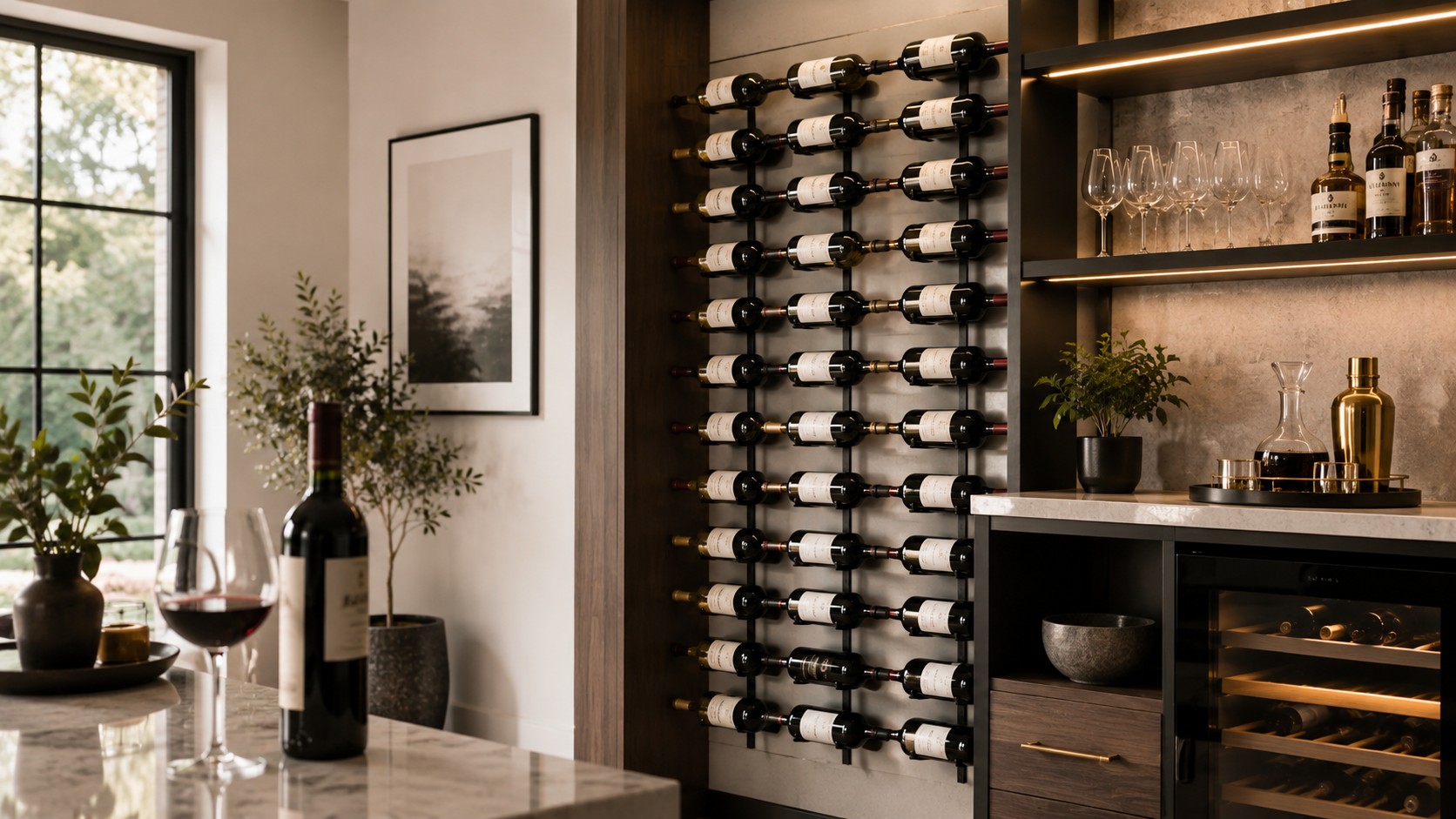
Wine walls used to mean one thing: a custom-built cellar in a house that also had a pool and a chef. That's changed. The same look is now completely achievable in an apartment dining nook, a galley kitchen, or a condo living room — usually for a few hundred dollars and an afternoon with a drill.
The difference between a wine wall that looks intentional and one that looks like a Craigslist free section score mostly comes down to scale, placement, and restraint. Here's how to get it right.
Affiliate Disclosure: This post may contain affiliate links. As an Amazon Associate and through other affiliate programs, I earn from qualifying purchases at no additional cost to you.
What Is a Wine Wall?
A wine wall is vertical wine storage built directly onto a wall or integrated into cabinetry — as opposed to a freestanding rack or a floor unit. The point is using vertical space while making the bottles part of the room rather than just sitting in it.
Modern versions typically use label-forward racks, floating bottle mounts, modular metal rails, or cable systems. Some are purely decorative. Most are practical. The best ones are both.
If you're still deciding between wall-mounted and other formats, our guides to Best Countertop Wine Racks and Best Modern Wine Racks for Minimalist Homes cover the tradeoffs.
The Best Places to Put a Wine Wall in a Small Home
Dining Room Accent Wall
The easiest place to make a wine wall feel like it belongs. A narrow section of wall beside a dining table can hold 12–24 bottles without crowding the room. Label-forward systems work especially well here — they read more like decor than storage furniture.
Symmetry helps in smaller rooms. Don't try to maximize bottle count at the expense of the layout looking clean.
Kitchen Wine Wall
Most kitchens have underused vertical space beside the fridge, pantry, or a breakfast nook. It's a natural fit for people who keep 6–24 bottles on hand and want quick access without digging through a cabinet.
Keep it away from ovens, dishwashers, heating vents, and west-facing windows. Temperature swings are still one of the fastest ways to wreck a bottle of wine, and the kitchen has more of them than anywhere else in the house.
Apartment Dining Nook
Small-space wine walls live or die on visual weight. Slimmer racks, floating bottle displays, and matte black finishes keep things light. Strong vertical lines help too.
A 9–18 bottle display in a nook almost always looks more considered than cramming in a 36-bottle setup. Restraint reads as intentional. Over-packing reads as storage problem.
Under the Stairs
If you have exposed wall space under a staircase, this is one of the cleanest wine wall setups you can pull off in a home. The angled architecture creates natural visual structure that works beautifully with modular rail systems or floating bottle pins, and it reads as integrated rather than retrofitted.
Built-In Cabinet Integration
Combining open shelving, cabinetry, wall-mounted bottle storage, and soft accent lighting creates something that feels architectural rather than tacked on. It also keeps the room from drifting into steakhouse territory — a real risk once the bottle count climbs past 30.
Modern Wine Wall Styles
Minimal Metal Rails
Metal rails are the cleanest entry point into a modern wine wall. They use almost no visual space, scale easily as your collection grows, and keep attention on the bottles rather than the hardware. Matte black blends into walls better than chrome or brushed nickel in most modern interiors.
Floating Bottle Displays
Floating bottle systems create the illusion that bottles are suspended directly from the wall. It's one of the most architectural storage styles available — legitimately striking in minimalist, Scandinavian, and contemporary kitchens. They're also the best option for keeping a small wine wall from feeling heavy.
Label-Forward Wine Walls
Label-forward storage has become the default in modern wine walls for good reason: it makes bottles easier to identify, creates stronger visual rhythm, and turns the collection into part of the decor. It's also the better format for anyone who entertains regularly or enjoys a more curated display.
Traditional cork-forward storage is still fine for everyday home use. Just note that label-forward tends to read cleaner in modern interiors, especially when the labels themselves are worth showing.
Floor-to-Ceiling Wine Displays
A narrow vertical installation can make a small home feel surprisingly considered — but only with restraint. A tight column of bottles looks expensive. A floor-to-ceiling wall packed edge-to-edge looks like a restaurant supply closet.
Modular systems are the right tool here because you can build up gradually rather than committing to a massive installation on day one.
Best Wine Wall Systems for Small Homes
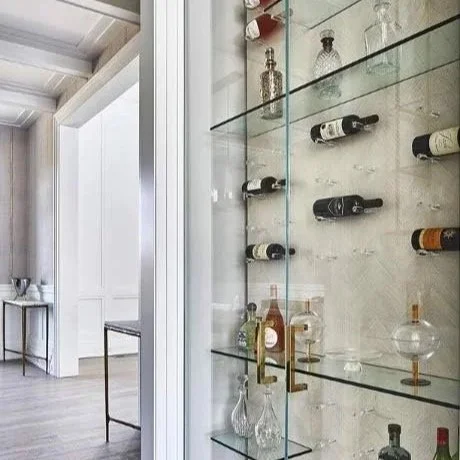
Best Minimalist: VintageView Acrylic Vino Pins
These label-forward floating mounts turn the bottles themselves into part of the visual display, making it easy to see labels at a glance while adding more personality to the wall. The layout feels more curated and collector-oriented, similar to modern restaurant wine displays or contemporary home bars. Excellent for entertaining spaces, dining rooms, and anyone who wants their wine collection to function as both storage and decor. They are also available in a wide range of metal finishes here to suit any home.
Best for: ultra-clean aesthetics, floating bottle look, visually lighter installs
Best Collector View Display: VintageView W Series
The W Series is the most versatile modular wine wall system on the market for residential use. Label-forward, architectural in feel, and genuinely scalable — it works in apartments, dining rooms, built-ins, and larger statement walls. If you don't know where to start, start here. Rail systems are ideal when you're working with an odd wall dimension, a staggered layout, or a staircase section. The modular format handles narrow spaces and irregular shapes better than any fixed rack, and it's more renter-friendly since you can work with fewer anchor points.
Best for: most homes, modern kitchens, anyone who wants room to expand, custom or non-standard layouts, under-stair installs, renters
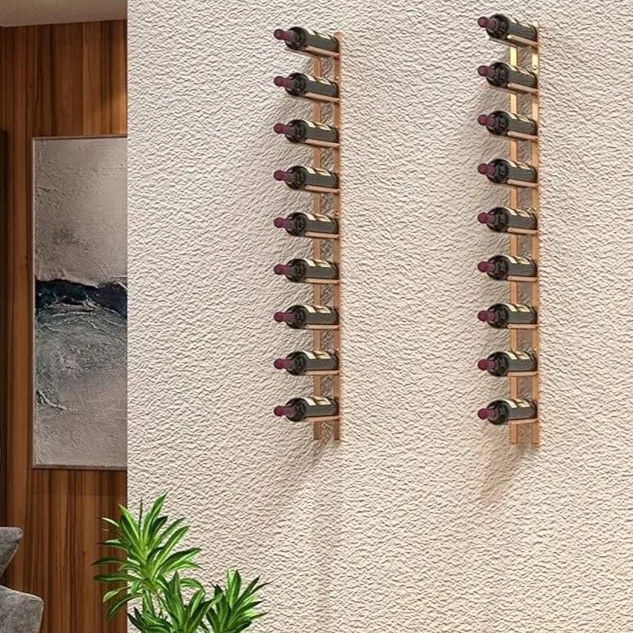
Best Minimalist: VintageView Vino Rails
These cork-forward floating mounts keep the focus on shape and repetition rather than labels, giving the wall a quieter, more architectural feel. Instead of reading like a traditional wine rack, the bottles become part of the room’s texture and rhythm. Excellent for minimalist interiors, modern kitchens, and spaces where you want wine storage to feel integrated rather than attention-seeking.They are also available here in individual pins, for more design flexibility.
Best for: ultra-clean aesthetics, floating bottle look, visually lighter installs
Best Statement Piece: Wine Enthusiast Circular Wall Wine Rack
Not a high-capacity solution, but an effective one if you want a focal point rather than a storage wall. Works well in dining rooms and entertaining spaces as a design element that happens to hold wine.
Best for: decor-forward displays, smaller curated collections, visual impact
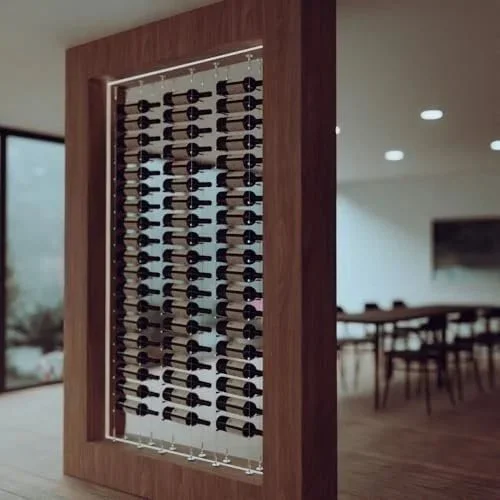
Best Luxury/Architectural: Floor-to-Ceiling Cable Wine System
The kind of installation you see in high-end restaurants and open-concept homes that cost more than they look like they cost. Dramatic, clean, and genuinely impressive when done correctly — which means symmetrical, restrained, and with breathing room around it.
Best for: open-concept homes, statement installations, architectural spaces
How to Mount a Wine Wall Safely
Know the actual weight
A full 750mL bottle runs ~2.5–3 lbs. A 12-bottle setup can easily exceed 35 lbs before the rack itself. That adds up faster than most people expect.
Studs vs. drywall anchors
Smaller displays can work with quality drywall anchors. Anything larger — floor-to-ceiling systems, high-capacity modular walls, stacked columns — should be secured into studs. If you're renting, smaller modular installs are the more realistic and less destructive approach.
Heat and sunlight
Wine walls are designed for short-to-medium term storage and display, not long-term aging. Avoid mounting near ovens, radiators, direct sunlight, or heating vents. Temperature stability matters more than aesthetics for anything you're planning to hold for more than a year or two.
Renters: go modular and go small
Start with a 9–18 bottle display. Fewer anchor points, easier to move, easier to patch. A smaller clean installation almost always looks better in an apartment than an ambitious one that's fighting the space.
How to Style a Wine Wall Without It Looking Like a Problem
The difference between a wine wall that looks designed and one that looks like overflow storage usually comes down to a few things:
Keep finishes consistent. Leave negative space around the installation — don't push bottles to every edge. Limit competing decor nearby. Use symmetry where you can. Don't overcrowd the bottles.
Smaller curated displays consistently read as more expensive than packed-out walls. If you're working in a compact space, editing the bottle count down is usually the right move.
Label-Forward vs. Cork-Forward: Does It Matter?
Both styles can work beautifully in modern interiors. The difference mostly comes down to the overall aesthetic you want.
Label-forward wine walls feel more expressive and collector-focused. They make bottles easier to identify and turn the labels themselves into part of the visual design.
Cork-forward storage tends to feel quieter and more uniform, especially when paired with minimalist interiors or tightly organized layouts. Because the bottle ends create a consistent pattern, this style can sometimes feel cleaner and more architectural.
Neither approach is inherently better. In smaller homes, the best choice is usually the one that complements the room rather than drawing too much attention to the storage itself.
From a storage perspective, the important part is simply keeping cork-sealed bottles horizontal enough to prevent the corks from drying out over time.
Are Wine Walls Good for Long-Term Storage?
Usually not. Most residential wine walls are best suited for everyday drinking wines, shorter-term collections, and display bottles. For anything you're aging seriously — high-end Burgundy, Barolo, cellar-worthy Cab — a temperature-controlled wine fridge or actual cellar conditions are the better option.
Wine walls are about access, organization, and how the room looks. That's what they do well.
FAQ
Are wall-mounted wine racks safe? Yes, when mounted correctly. Smaller systems can work with good drywall anchors. Larger installations should hit studs. If unsure, consult a professional.
Do wine walls work in apartments? They're actually well-suited to apartments. Modular systems and floating displays use vertical space efficiently without requiring large furniture pieces or extensive wall damage.
Should wine bottles be stored horizontally? For cork-sealed bottles, yes. Horizontal storage keeps the cork in contact with the wine, preventing it from drying out and letting air in.
Can drywall hold a wine rack? Small racks often can, depending on anchor quality and total weight. Larger systems should hit studs. If unsure, consult a professional.
Are wine walls bad for wine? Not for everyday drinking wine and short-to-medium storage. Heat, direct sunlight, and temperature swings are the real risks. For serious aging, use temperature-controlled storage.
The Bottom Line
A modern wine wall doesn't need to be a luxury buildout to look good. In small homes, the installs that work best are usually the simplest: clean lines, a system that fits the wall, and the discipline not to overfill it.
Done right, a 12-bottle floating display in a dining nook can look more considered than a 60-bottle wall that's trying too hard. Scale it to the space, keep the finish consistent, and let the bottles do the work.