How to Build and Design a Stylish Home Wine Bar (Complete Guide)
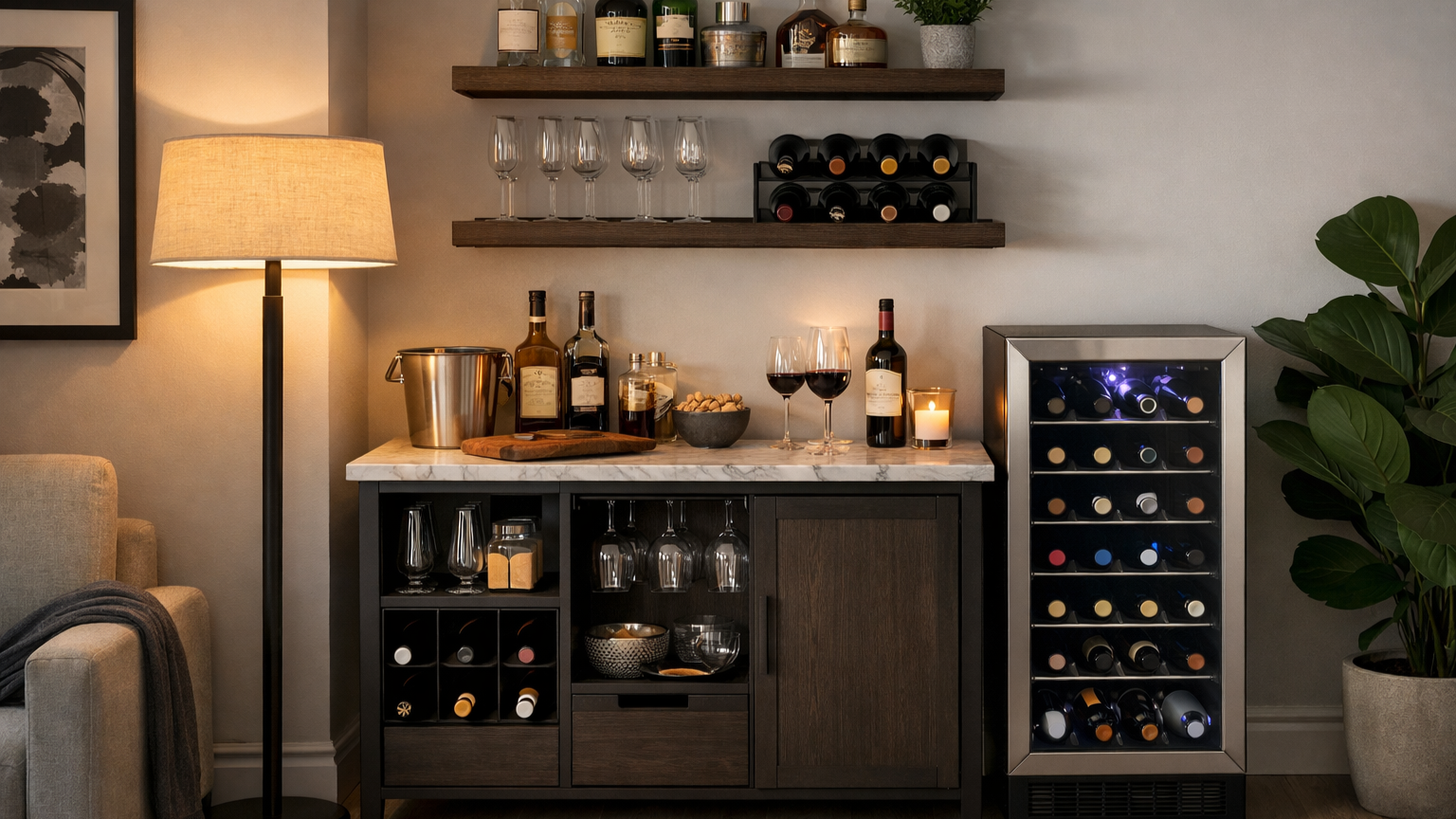
A stylish home wine bar is not about owning the fanciest cart, the most expensive glassware, or a Pinterest-perfect wall of bottles you’re afraid to actually pull from. The best setups work because they make wine easy to enjoy, easy to store properly, and easy to keep looking intentional instead of chaotic.
That is the part many people miss. A home wine bar is not just decor. It is a functional zone that should support how you actually live. Maybe that means a compact bar cart in a small apartment. Maybe it means a wine cabinet with hidden storage. Maybe it means integrating a wine fridge into your kitchen so bottles are protected and ready to drink. Whatever form it takes, the goal is the same: create a setup that feels polished, works for your space, and makes opening a bottle feel effortless.
Affiliate Disclosure: This post may contain affiliate links. As an Amazon Associate and through other affiliate programs, I earn from qualifying purchases at no additional cost to you.
In This Guide
What actually makes a good home wine bar
How to choose the right type of wine bar for your space
Where to put a home wine bar
How to think about wine storage, glassware, and lighting
Styling rules that make a wine bar look elevated
A realistic setup checklist
Related guides to help you build the rest
What Actually Makes a Good Home Wine Bar
A good home wine bar does four things at once: it is accessible, functional, space-aware, and visually intentional.
If one of those is missing, the setup usually falls apart fast.
A beautiful bar cart that holds almost nothing will annoy you. A cabinet with great storage but a terrible location will be ignored. A wine station with random bottles, overcrowded shelves, and nowhere to set down a glass will start looking messy no matter how expensive it was.
The best wine bars feel easy. You can reach what you need, store wine appropriately, keep the essentials together, and maintain a clean look without constantly restyling it.
Accessibility matters more than people think
If your wine setup is inconvenient, you will not use it the way you imagined. This sounds obvious, but it is one of the main reasons home bar areas turn into dead zones or clutter magnets.
A wine bar should make the experience smoother. That means your opener is easy to grab, your glasses are close by, and you have at least a small surface to pour, decant, or set a bottle while serving. If everything is stored in three different places, the setup may look nice in photos, but it is not doing its job.
Storage is not just about where bottles go
A wine bar needs to store more than wine. At minimum, it should account for:
bottles
everyday stemware
an opener
stoppers or preservation tools
a small tray or catchall for the little things that otherwise wander off
This is where many setups become visually noisy. People plan for the bottles and forget everything else. Then the corkscrew, foil cutter, napkins, coasters, and half-used stopper end up scattered around the counter like an afterthought.
A stylish setup feels cohesive because the practical items have a home too.
Layout determines whether the setup feels calm or cramped
A wine bar should fit the space, not fight it.
In a small apartment, that might mean choosing a narrow bar cart over a bulky cabinet. In a kitchen, it might mean using a wine fridge and keeping the styling more restrained so the area does not compete with food prep space. In a dining room or living room, you may have more freedom to create a fuller vignette.
The mistake is choosing a setup based only on appearance. Scale matters. A piece that looks elegant in a large room can feel absurdly oversized in a small one. On the flip side, something too small can look temporary and underpowered, especially once you add bottles and glassware.
Aesthetic matters, but it should support function
The best home wine bars look intentional because they are edited, not because they are overloaded with decor.
Wine already brings visual interest. Bottles, glassware, labels, and texture do a lot of work on their own. You usually need less styling than you think.
A polished wine bar is less about adding more and more objects, and more about choosing the right storage piece, limiting visual clutter, and using a few strong accents well.
Step 1: Choose the Right Type of Home Wine Bar
The first real decision is not color palette or accessories. It is the format of the setup itself.
That choice shapes everything else, including storage capacity, flexibility, and how permanent the setup feels.
Bar cart: best for flexibility and smaller spaces
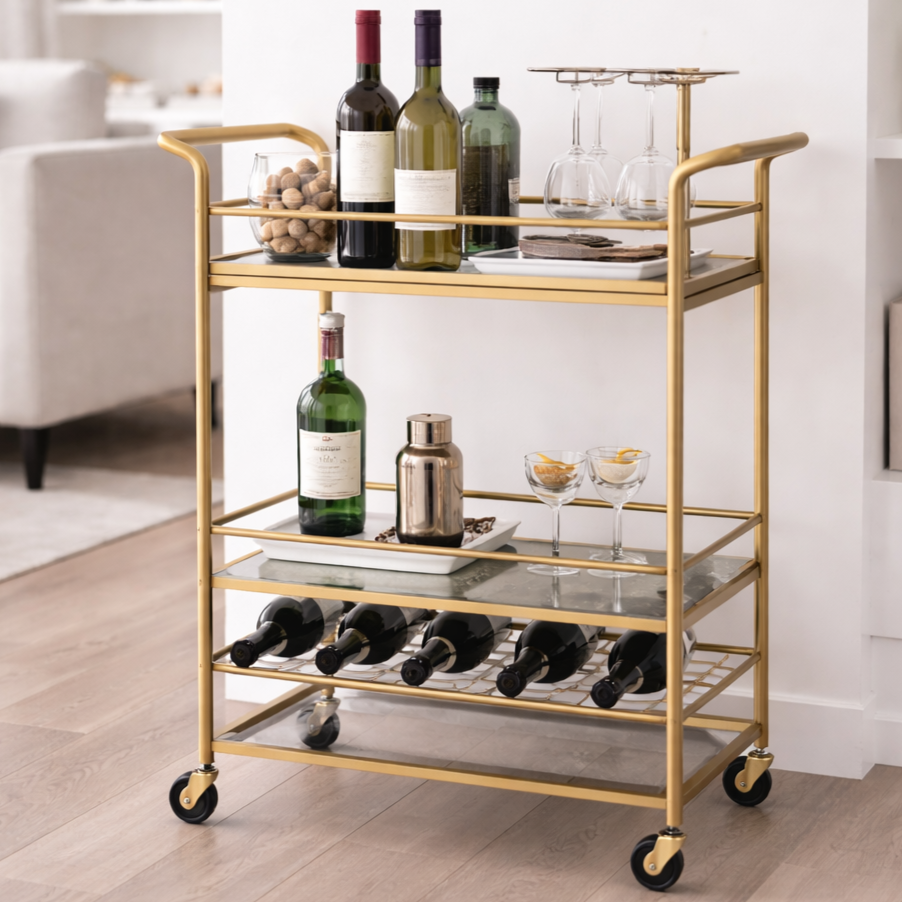
Styled Bar Cart
A bar cart is one of the easiest ways to create a home wine bar because it asks very little of the room. It can work in a kitchen corner, dining area, living room, or apartment nook. It is also the easiest option to move, restyle, or repurpose later.
That flexibility is the big advantage. If you are still figuring out how much space you want to devote to wine, a bar cart is a smart entry point.
The tradeoff is storage discipline. A cart can look chic fast, but it can also look overloaded fast. Because it has open shelving, everything is visible. That means fewer, better-chosen items usually work better than trying to cram in every bottle and tool you own.
A bar cart is ideal if you want:
a low-commitment setup
a visually light piece
something that can move with you
a wine zone that doubles as entertaining space
Related guide: Best Bar Carts for Wine Lovers (2026 Guide)
Wine bar cabinet: best for a cleaner, more contained look
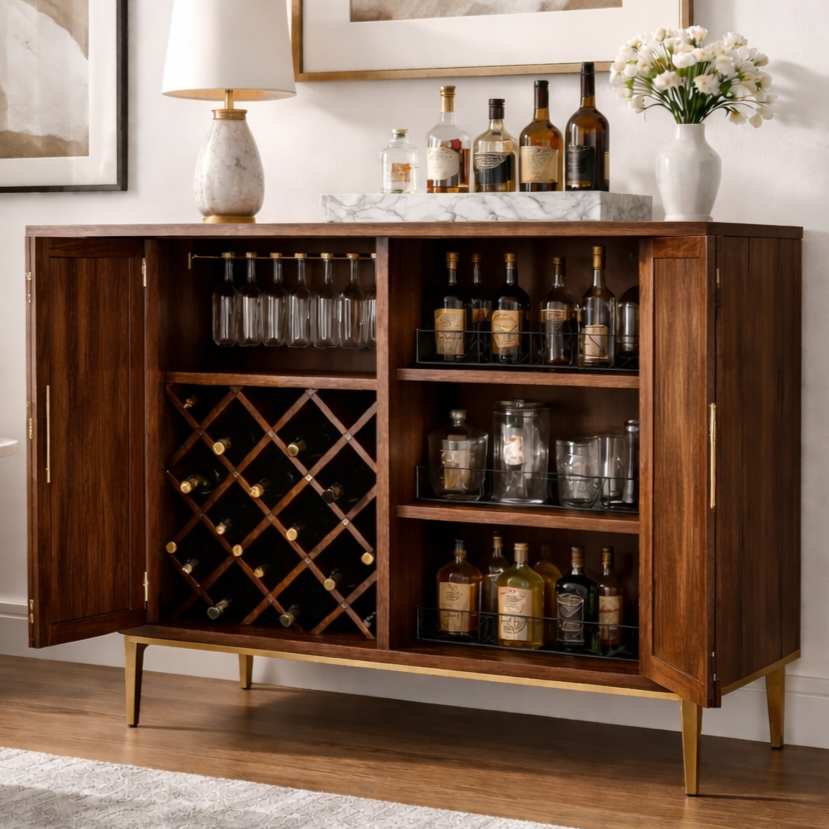
Styled Wine Bar Cabinet
If a bar cart is the flexible extrovert, a wine bar cabinet is the organized adult in the room.
Cabinets are great because they hide visual noise. That matters more than most people realize. Doors, drawers, and enclosed compartments help a wine setup feel calmer, especially in smaller homes where open storage can start to feel busy quickly.
A cabinet is often the better choice if you want the wine area to blend into the room more seamlessly. It also helps if you have a lot of accessories, extra glassware, or a mix of wine and entertaining supplies you would rather not display all the time.
The main thing to watch is bulk. Some cabinets look compact online and then arrive with the footprint of a minor appliance. Measure carefully.
A wine bar cabinet is ideal if you want:
hidden storage
a cleaner visual look
a more furniture-like piece
better control over clutter
Related guide: Best Wine Bar Cabinets for Small Spaces
Built-in or dedicated wine bar area: best for a permanent setup
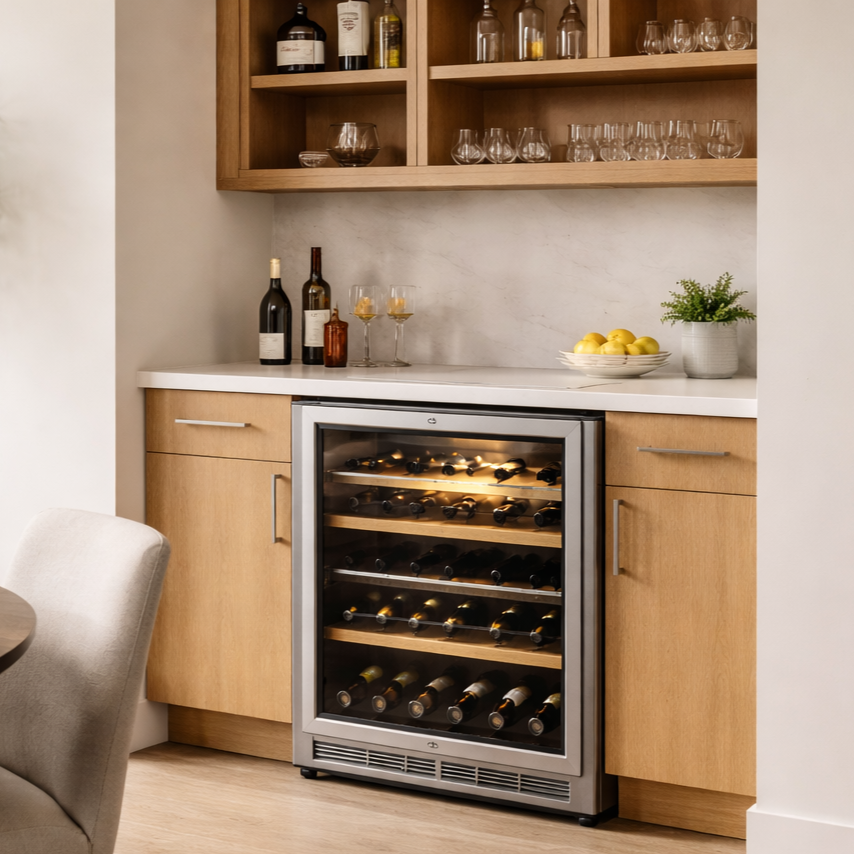
Built in home wine bar setup
A dedicated home wine bar is the most polished option when the space allows it. This can be as simple as a defined section of kitchen cabinetry or as involved as a freestanding zone in a dining room or living space.
What makes this approach work is not just scale. It is cohesion. A dedicated wine bar can integrate bottle storage, stemware, serving surface, lighting, and even refrigeration in one area, which makes the whole setup feel intentional from the start.
This is often the most functional option for someone who entertains regularly or keeps a meaningful number of bottles on hand. It is also the easiest way to make the setup feel architectural rather than temporary.
The catch is commitment. This style works best when you already know how you want to use the space.
Related guide: The Modern Home Wine Bar: Design Ideas That Actually Work
Small apartment wine bar: best when every inch has to count
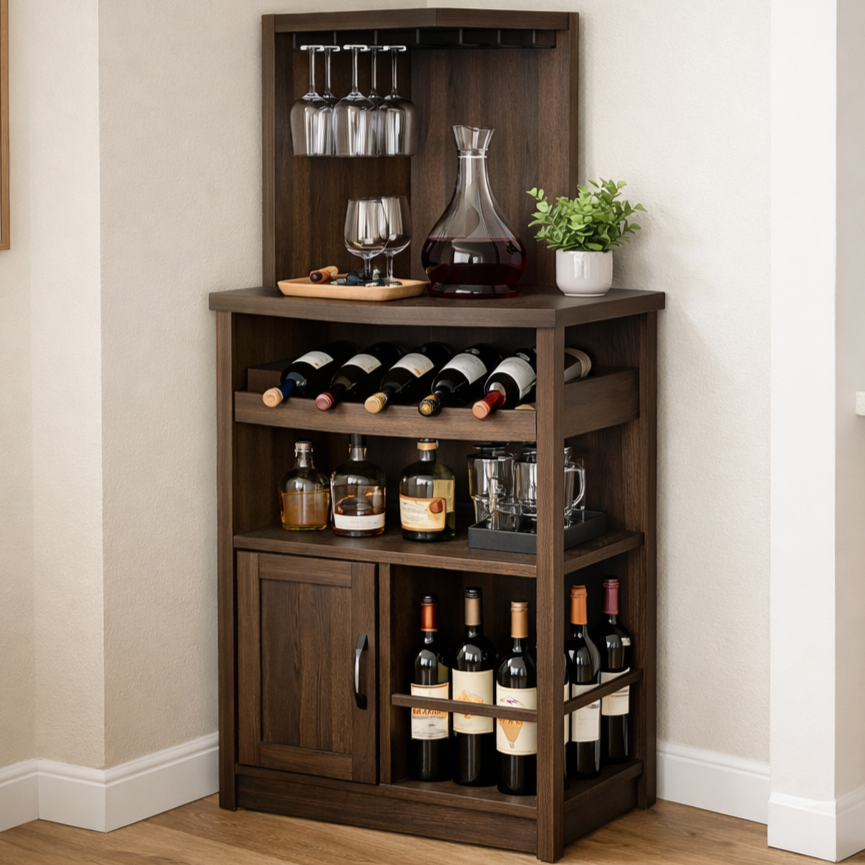
Compact corner wine bar set up
A small apartment wine bar is less about buying miniature versions of everything and more about editing ruthlessly.
You do not need a huge footprint. You need a smart one.
That may mean using vertical storage, a compact cart, floating shelves, or a narrow cabinet with enough surface area for one or two functional moments. The challenge in small spaces is keeping the setup from feeling like spillover clutter.
The answer is to choose fewer pieces that do more. A compact wine fridge, slim shelving, and a small number of everyday glasses will usually outperform an overstuffed setup trying to do too much.
Related guide: Small Apartment Wine Bar Ideas That Actually Work
Step 2: Decide Where to Put Your Home Wine Bar
Location affects both function and wine quality. This is not just a design decision.
The right location should make the setup convenient without exposing bottles and glassware to unnecessary heat, sunlight, or daily chaos.
Kitchen wine bar
The kitchen is the most natural place for a home wine bar because it is where people already gather, cook, and serve. It also tends to make sense for convenience. Glasses, entertaining tools, and chilled bottles are all close to where they will be used.
But not every kitchen location is equally smart.
Wine should not be placed wherever there happens to be open counter space. Heat-producing appliances, direct sun, and spots with constant movement are not great choices. If you are incorporating a wine fridge, placement becomes even more important because ventilation and clearance matter.
A kitchen wine bar works best when it is slightly adjacent to the main prep zone, not jammed into the middle of it. You want it accessible, but not in the line of fire every time someone makes pasta.
Related guide: Where to Put a Wine Fridge in Your Kitchen (Built-In, Freestanding, and Small Spaces)
Living or dining room wine bar
These spaces often give you more styling freedom. A wine cabinet or bar cart can act more like furniture here, which makes it easier to create a setup that feels decorative and functional at the same time.
The advantage is atmosphere. Wine belongs naturally in rooms where people linger. The downside is that these spaces can have less hidden storage and may expose bottles to more ambient room temperature swings depending on the home.
This is usually a great location for everyday serving and glassware, but if you keep wines you truly care about, especially whites or sparkling, a wine fridge somewhere in the mix is still worth considering.
Small corner or unused niche
Sometimes the best wine bar spot is not obvious until you stop looking for a perfect room and start looking for an underused zone.
An awkward dining room corner, a stretch of wall near the kitchen, or a small recess can become a highly effective wine bar with the right piece and proportions. These spaces often work well because they create natural definition without demanding a full room redesign.
The trick is avoiding the temptation to overfill them. Small spaces need breathing room more than they need extra decor.
Step 3: Build the Right Wine Storage Into the Setup
This is where a lot of pretty wine bars become less convincing. They look good for a minute, but the storage logic is shaky.
If wine is part of the function, storage deserves real thought.
Do you need a wine fridge?
Not every home wine bar needs a wine fridge. But many benefit from one more than people expect.
If you keep mostly short-term drinking bottles and rotate through them quickly, room storage may be fine for a small number of wines, especially in a relatively cool, stable part of the home. But if your house runs warm, you buy wine ahead, or you regularly keep whites, rosé, or sparkling on hand, a wine fridge starts making a lot of sense.
Why? Because wine is sensitive to temperature swings and heat. Even if you are not building a collector's cellar, stable storage helps bottles show better and last longer. Whites served too warm feel flat. Reds stored too warm can lose freshness faster than people realize.
A wine fridge is also practical because it solves two problems at once: storage and readiness. Bottles are protected, and at least some of them are already where you want them temperature-wise.
Related guide: Best Wine Fridge for Home Use
Countertop racks: useful, but only in moderation
Countertop wine racks can be a good solution for a small setup, but they work best when they are used as a controlled display, not as a substitute for all wine storage.
A countertop rack is ideal for a few current bottles. It is not ideal for turning part of your kitchen into a bottle warehouse.
Visually, a small rack can anchor a wine zone. Functionally, it helps keep a few easy-reach bottles together. But too many bottles on the counter quickly starts to feel cluttered and can eat into practical surface area.
Related guide: Best Wine Storage Racks for Countertops
Floating shelves: good for visual lift, not bulk storage
Floating shelves can look beautiful in a home wine bar, especially when you want to draw the eye upward and make a small setup feel more designed. They are particularly helpful in apartments, kitchens, or narrow areas where floor space is limited.
But they work best when used selectively.
Shelves are good for:
a few bottles
stemware
a decanter
a small framed piece or sculptural object
They are not great for becoming a dense wall of heavy storage unless they are specifically designed and installed for that purpose. The more weight you ask them to carry, the more the practical side matters.
Related guide: Best Floating Shelves for Wine Storage
Open storage vs hidden storage
This comes down to how you live.
Open storage feels lighter and more decorative, but it also demands more discipline. Hidden storage feels calmer and more forgiving, especially if you have a lot of accessories or not every label is something you want on display.
In design terms, open storage creates character. In real life, hidden storage often creates sanity.
Many of the best home wine bars combine the two. Display the beautiful, useful items. Hide the backup stock, extra tools, and visual clutter.
Step 4: Plan Glassware Storage the Right Way
A home wine bar without a good glassware plan tends to unravel quickly.
Glasses are fragile, visually prominent, and often awkward to store. If you do not decide where they go upfront, they end up colonizing your cabinets, counters, and drying rack like squatters with stems.
Hanging storage vs shelf storage vs cabinet storage
Each has advantages.
Hanging stemware storage feels classic and efficient. It keeps glasses accessible, frees up shelf space, and adds visual wine-bar energy. The main downside is that it is exposed, so it works best when the setup stays fairly tidy.
Open shelf storage can look beautiful, especially with a small set of matching glasses. It is easy to access and works well in styled setups. But it also collects dust more easily and requires restraint.
Cabinet storage is the cleanest visually and the most protective. It is often the best choice if your home wine bar is in a busy kitchen or if you prefer a more minimal look.
Related Guide: Best Wine Glass Storage Ideas for Small Spaces
How many glasses do you actually need?
For most people, the answer is fewer than the internet would have you believe.
A strong home wine bar usually does not need an army of highly specialized stemware. For daily use, a small set of versatile, good-feeling glasses will outperform a collection of mismatched shapes you never reach for.
That matters because space is part of design. The more pieces you store, the more storage you have to build around them.
A realistic everyday setup might include:
4 to 6 go-to wine glasses
2 to 4 backup or entertaining glasses
optional Champagne or stemless glasses depending on how you drink
That is enough to be functional without making the wine bar feel like a glassware warehouse.
Related guide: The Best Budget Wine Glasses That Don’t Feel Cheap
Step 5: Lighting Changes Everything
Lighting is one of the fastest ways to make a home wine bar feel elevated. It is also one of the fastest ways to make it feel weirdly harsh.
The goal is not brightness for the sake of brightness. The goal is atmosphere plus function.
Why lighting matters so much
Wine bars tend to involve reflective surfaces: glassware, bottles, metal accents, mirrors, polished counters. Good lighting makes those elements glow. Bad lighting makes them glare.
Lighting also creates separation. In an open-plan room, a small wine bar can feel much more intentional if it has its own visual moment, even something as simple as a lamp, sconce, or under-shelf glow.
The three lighting layers that work best
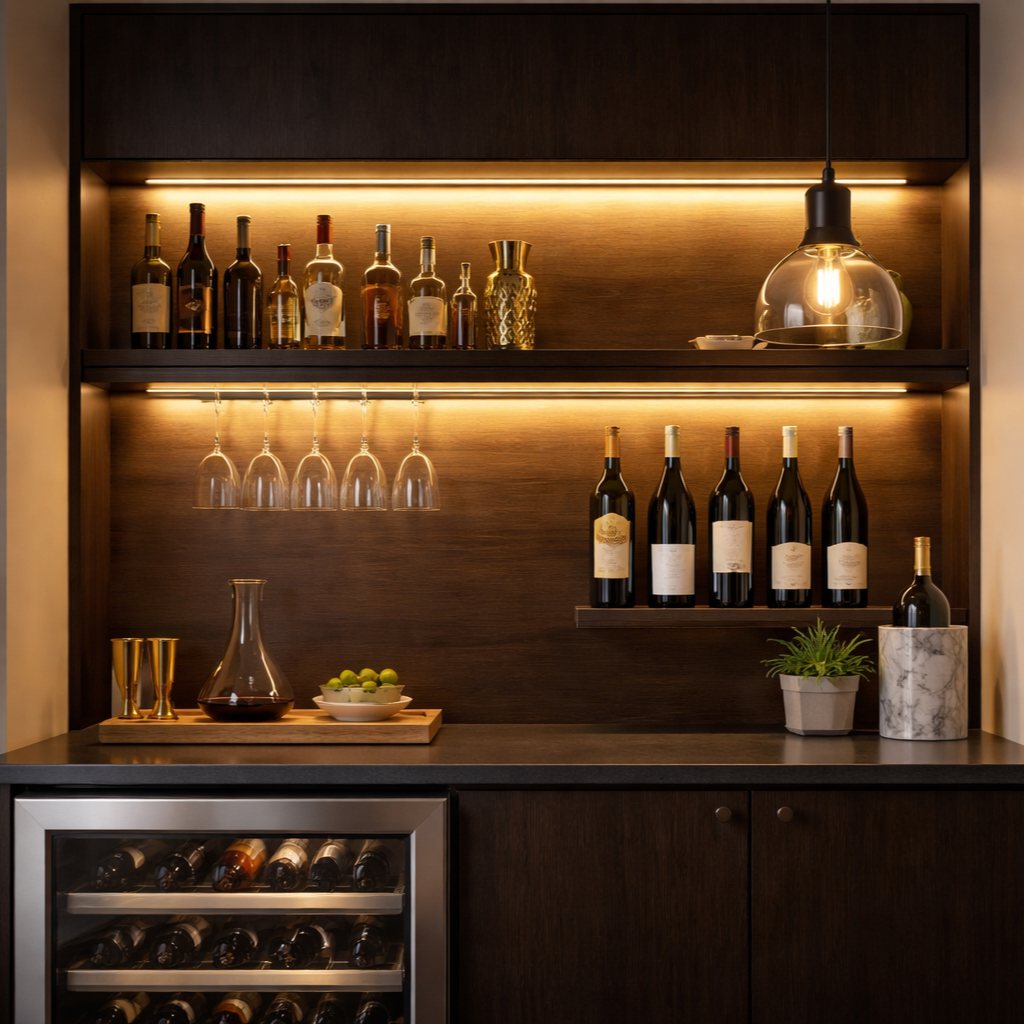
Home wine bar with modern under shelf lighting and an accent pendant lamp
Ambient lighting
This is the general room light. It should support the wine bar without flattening it. Overhead light alone often makes a setup feel more utilitarian than inviting.
Task lighting
This is helpful if the wine bar includes a working surface or wine fridge area. You do not need surgery-level brightness here. You just want enough illumination to pour, read labels, and use the space comfortably.
Accent lighting
This is the secret weapon. Accent lighting gives the wine bar mood, depth, and definition. It is often what makes the setup feel designed rather than assembled.
Small lamps, subtle sconces, or shelf lighting can all work. The best accent lighting feels warm and intentional, not theatrical.
Related guide: The Best Lighting for a Home Wine Bar
Step 6: Style the Wine Bar So It Looks Intentional, Not Overdone
This is where people either nail it or accidentally create a liquid-themed junk drawer.
Styling works when it supports the function and reinforces the mood. It fails when it becomes random object accumulation with a corkscrew somewhere in the pile.
Use the rule of edited layers
A wine bar does not need many things. It needs the right things.
A strong setup often includes:
bottles
glassware
one tray or anchor object
one decorative accent, if needed
one source of height or vertical interest
That is enough.
The reason restraint works so well is that wine itself already brings richness: label texture, glass reflection, bottle shape, deep color. When you pile on too much decor, the space starts competing with its own purpose.
Think in materials, not just objects
A stylish wine bar usually feels cohesive because the materials relate to each other.
Examples:
matte black with warm wood
glass with brushed brass
stone with dark metal
oak with soft neutral ceramics
When the finishes feel connected, the setup looks intentional even if it is simple.
When every object feels like it came from a different planet, the space gets visually noisy fast.
Leave breathing room
This may be the most important styling rule in the entire guide.
Empty space is part of the design.
Not every shelf needs to be filled. Not every bottle needs to be displayed. Not every inch of surface should hold an object. A little negative space makes the whole setup look more expensive and more controlled.
This is especially important in small spaces, where visual clutter can make a wine bar feel heavier than it is.
What to avoid
A few common styling mistakes show up again and again:
too many bottles on display at once
random accessories with no storage plan
oversized decor that crowds the functional area
too many tiny objects
combining too many finishes
treating the wine bar like a dumping zone for all entertaining leftovers
If the space starts feeling messy, the answer usually is not to add something. It is to remove three things.
Three Realistic Home Wine Bar Setups by Space
A lot of people get stuck because they can imagine the aesthetic, but not the practical version for their actual home. So here are three realistic models.
1. Small apartment setup
Best for: renters, compact kitchens, studio or one-bedroom layouts
A slim bar cart or narrow cabinet works well here, especially paired with vertical storage like floating shelves. Keep the footprint light and the inventory focused. A few current bottles, everyday glasses, opener, stopper, and one styling element are enough.
Why this works:
It gives you a dedicated wine zone without asking a small room to carry a large piece of furniture or a lot of visual weight.
2. Medium kitchen setup
Best for: homes with a bit of extra cabinetry or a defined corner
This setup often works best with a small wine fridge, limited countertop styling, and either cabinet or shelf storage for glasses. A tray can help visually anchor the area and keep it from drifting into generic kitchen clutter.
Why this works:
It blends convenience with actual wine protection. It also keeps the setup close to where people naturally gather.
3. Dedicated entertaining setup
Best for: dining rooms, open living areas, regular hosts
This is where a larger cabinet or built-in zone shines. You can store bottles, stemware, serving pieces, and preservation tools in one place, then layer lighting and a little styling for atmosphere.
Why this works:
It creates a true destination within the home, which makes the setup feel substantial and cohesive.
Essential Home Wine Bar Setup Checklist
You do not need everything at once. But you do need the basics in the right order.
Core pieces
a storage format: bar cart, cabinet, shelving, or built-in area
bottle storage: countertop rack, shelves, cabinet storage, or wine fridge
everyday glassware
wine opener
stopper or preservation tool
small tray, catchall, or surface organizer
Nice-to-have upgrades
accent lighting
candle or small lamp
coaster set
one sculptural or decorative object
What to prioritize first
If you are building from scratch, prioritize in this order:
storage piece or setup format
bottle storage logic
glassware storage
lighting
styling details
That order matters because function should carry the setup first. Styling works better when the basics are already solved.
Best Home Wine Bar Setups at a Glance
| Setup Type | Best For | Space Needed | Main Strength | Watch Out For |
|---|---|---|---|---|
| Bar Cart | Small spaces, renters, flexible layouts | Low | Easy to move and style | Can look cluttered fast if overloaded |
| Wine Bar Cabinet | Clean, furniture-like setups | Medium | Hides clutter well | Can feel bulky if scale is off |
| Floating Shelves + Small Surface | Apartments and narrow zones | Low | Uses vertical space beautifully | Not ideal for heavy bulk storage |
| Kitchen Wine Zone + Fridge | Convenience and temperature control | Medium | Practical for everyday use | Needs careful placement and ventilation |
| Dedicated Built-In Area | Permanent, high-function setups | High | Most cohesive and substantial feel | Least flexible once installed |
What to Stock After You Build It
Once the setup is done, the next question is what to actually put in it.
This is where many people either buy too much too fast or stock the space randomly. A better approach is to build a small, useful collection that matches how you actually drink. That means thinking in categories, not just impulse buys.
A good home wine bar does not need fifty bottles to feel legitimate. It needs a smart mix of wines you will actually open.
Read next: How to Start a Small Home Wine Collection
Frequently Asked Questions
Do I need a wine fridge for a home wine bar?
Not always. If you keep a small number of bottles and drink through them fairly quickly, a wine fridge may not be essential. But if your home runs warm, you store wine for more than a short time, or you want whites and sparkling properly chilled and protected, a wine fridge is one of the most useful upgrades you can make.
Read next: How to Store Wine without a Wine Fridge
What is the best piece of furniture for a home wine bar?
It depends on the space and how you want it to function. A bar cart is best for flexibility and smaller spaces. A wine bar cabinet is better if you want hidden storage and a cleaner look. A dedicated built-in or defined area works best when you want a more permanent setup.
How many bottles should I keep on display?
Usually fewer than you think. Keeping a small, edited number of bottles visible tends to look better and feel calmer. Too many bottles on display can make even a nice setup feel crowded.
Can you build a wine bar in a small apartment?
Yes. In fact, small spaces often benefit the most from a thoughtful wine bar setup because it forces you to be intentional. A slim cart, narrow cabinet, or vertical shelf setup can work beautifully if you keep the storage edited and the styling restrained.
What should a home wine bar include besides wine?
At minimum, glasses, an opener, and a stopper or preservation tool. A small tray or catchall is also useful because it helps keep loose items organized. After that, you can add lighting, a decanter, or one or two decorative accents.
Read next: The Best Wine Accessories That Every Wine Lover Should Own
Should wine glasses be stored at the wine bar?
Usually yes, at least the everyday set. Keeping glasses near the wine setup improves convenience and makes the area function like a true station instead of just a decorative corner.
Final Thoughts
A stylish home wine bar is not about copying a look. It is about creating a setup that supports how you actually drink, entertain, and live.
That is why the best ones work so well. They do not just photograph nicely. They solve problems. They give your bottles a place, your glassware a plan, and your home a more intentional way to enjoy wine.
If you get the fundamentals right, the visual part gets easier. Choose the right format for your space. Think through storage before styling. Keep the setup edited. Add lighting thoughtfully. Let function lead, then make it beautiful.
That is how a home wine bar ends up feeling polished instead of performative.