A Simple Mother’s Day Wine Moment at Home (No Reservations Required)
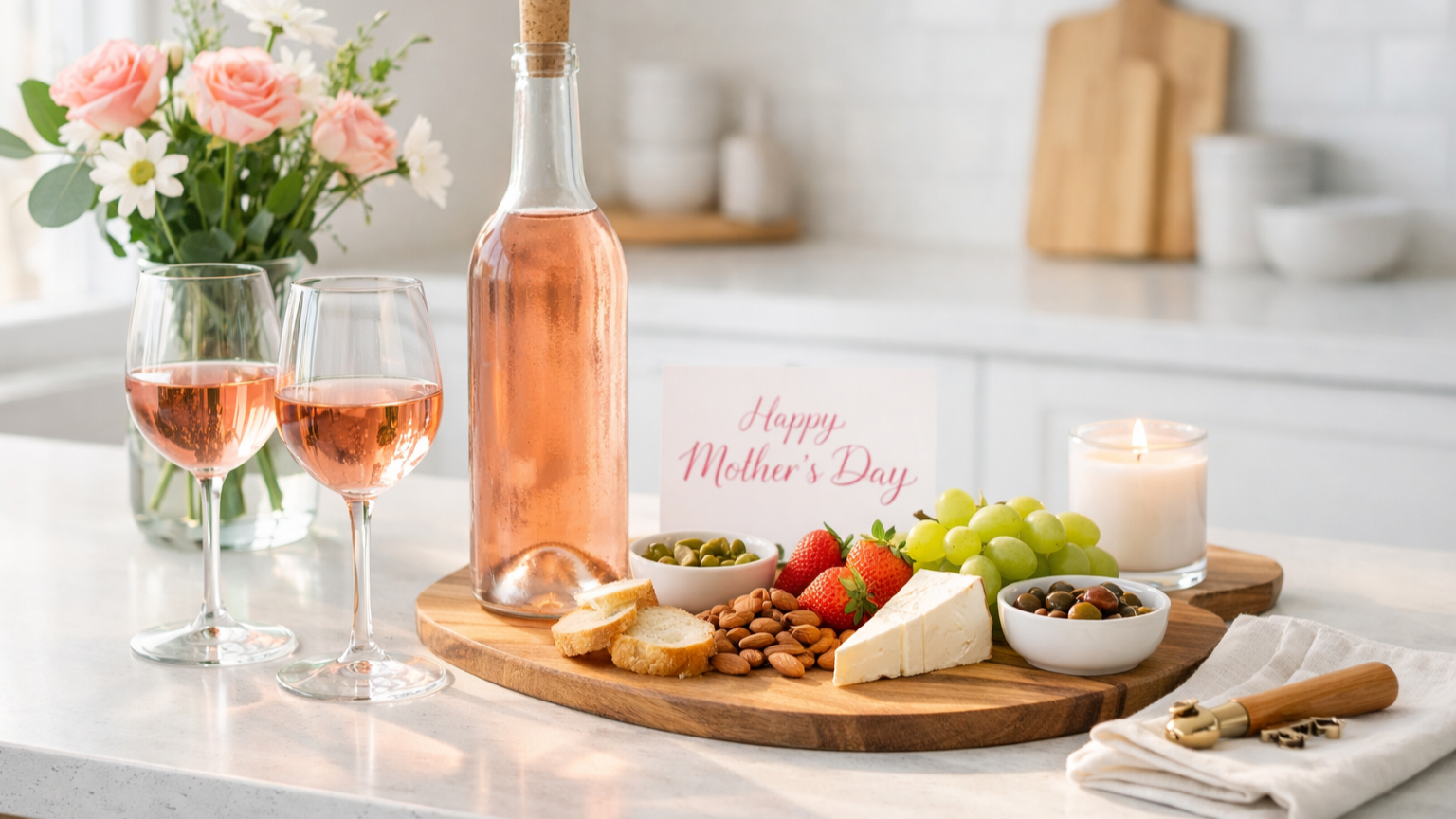
Mother’s Day doesn’t need a crowded brunch reservation to feel special.
In practice, those plans are usually rushed, loud, and overbooked anyway.
A simple, well thought out wine moment at home tends to feel better. It’s more relaxed, more personal, and actually gives you time to slow down and enjoy it.
With Mother’s Day around the corner, it’s the perfect excuse to plan something intentional. But this isn’t just a once a year idea. This kind of setup works anytime you want to turn an ordinary afternoon into something that feels a little more elevated.
This guide breaks down exactly how to do it, what to serve, and why it works, without overcomplicating it.
Affiliate Disclosure: This post may contain affiliate links. As an Amazon Associate and through other affiliate programs, I earn from qualifying purchases at no additional cost to you.
In This Guide
A simple formula that always works
How to set up a space that actually feels elevated
What wine to serve (and why certain styles work better)
Easy food pairings that don’t require effort
Small upgrades that noticeably improve the experience
Thoughtful gift ideas for wine-loving moms
Why This Works Better Than Going Out
Most people default to reservations because it feels like the right thing to do.
But in reality, Mother’s Day at restaurants is usually the opposite of what you’re trying to create.
It’s one of the busiest service days of the year.
long waits, even with reservations
crowded dining rooms
rushed service
elevated prix fixe brunch pricing
Having worked in restaurants, it’s a day where everything is pushed to capacity. Tables turn faster, staff is stretched thin, and the overall experience ends up feeling more hectic than special.
And that’s the disconnect.
What you actually want is something that feels:
relaxed
intentional
personal
A simple wine setup at home does that better, because you control:
the pace
the space
the experience
No waiting. No noise. No pressure to finish and leave.
In practice, it ends up feeling more thoughtful, and a lot more enjoyable.
The Simple 3-Part Formula (This Is All You Need)
If you strip this down, every good setup (holiday or not) follows the same structure:
1. One good bottle
2. One simple food pairing
3. One clean, intentional space
That’s it.
Most people try to add more. More food, more wine, more complexity.
It rarely improves the experience. It usually just makes it feel scattered.
This works because it keeps everything focused.
Step 1 — Set Up a Space That Feels Intentional (Not Overdone)
This is where the “elevated” feeling actually comes from.
Not from spending more. From removing friction and visual noise.
Start by Clearing the Space
Use what you already have:
kitchen counter
dining table
coffee table
patio
Then simplify it.
Clutter is the fastest way to make something feel unintentional.
Use Light to Your Advantage
Daytime is ideal here.
Natural light does most of the work for you:
it makes the setup look better
it keeps the mood relaxed
it avoids the heavy “evening drinking” feel
If possible, set up near a window or outside.
Create One Defined Moment
Instead of spreading everything across the kitchen, keep it contained.
Group the essentials together:
one or two bottles
glassware
a small board
Think of it less like “setting things out” and more like creating a single, intentional scene.
Why This Works (Most People Miss This)
When items are scattered, it feels accidental.
A glass on the counter. Food on a different surface. Bottle somewhere else.
Even if everything is nice, it doesn’t register as a moment. It just looks like separate tasks happening at once.
Grouping everything together does two things:
1. It creates a visual focal point
Your eye knows exactly where to land.
That alone makes it feel more elevated, because it mirrors how restaurants and hospitality spaces are designed. There’s always a defined center.
2. It signals intention
This is subtle, but important.
When everything is placed together, it communicates “This was planned.”
Not in a try hard way. Just in a way that feels considered.
That’s the difference between:
grabbing a glass of wine
vs. sitting down to enjoy a glass of wine
How to Do It Simply
You don’t need styling skills for this.
Just keep everything within one defined area:
a wooden board
a tray
a section of the counter
If it feels like one “unit,” you’re doing it right.
A Small Upgrade That Makes a Big Difference
Use a tray or board even if you don’t need one.
It does two things instantly:
frames the setup
makes it portable if you want to move it
It’s one of the easiest ways to make something feel intentional without adding anything extra.
The Underlying Principle
You’re not adding more.
You’re editing down and organizing what’s already there.
And that’s what actually makes it feel elevated.
Step 2 — What Wine to Serve (And What to Actually Look For)
The goal isn’t to find the “best” wine.
It’s to choose something that fits the moment and is easy to enjoy.
For a daytime or relaxed at home setup, lighter, fresher wines almost always work better. They keep everything feeling clean, balanced, and effortless instead of heavy or overly serious.
Here’s how to approach it, with the right expectations for each style.
The 4 Best Wine Styles for This Setup (With What to Spend):
Sparkling Wine (Most Reliable Choice)
If you’re unsure what to get, start here. It’s the easiest way to make the moment feel more intentional and celebratory.
What to spend:
$15–$25 → Crémant or Cava (best value zone)
$25–$40 → entry Champagne or higher-end Crémant
What to look for:
Crémant (France) — Made using the same traditional method as Champagne, just outside the Champagne region. Clean, balanced, and one of the best value picks if you want that Champagne feel without the price. Easy win.
Cava (Spain) — Also made using the traditional method. Slightly richer and more textured, often with a subtle savory edge. Great everyday option that still feels intentional.
California Sparkling Wine (Traditional Method + Cooler Regions) — Look for “Traditional Method” or “Méthode Champenoise” on the label. Then check where it’s from. Cooler regions like Carneros, Anderson Valley, Sonoma Coast, or Santa Barbara tend to produce fresher, more balanced sparkling wines. If it doesn’t list the method or comes from a very warm inland region, it’s usually not what you’re looking for.
Grower Champagne (France, Higher End Pick) — Small producer Champagne with more character and less uniformity. A good choice if you want something a little more interesting or gift-worthy.
Why it works:
High acidity and bubbles keep everything feeling fresh and reset your palate between bites.
Dry Rosé (Most Versatile)
This is the easiest crowd-pleaser and one of the safest bets.
What to spend:
$12–$20 → everyday Provence or domestic rosé
$20–$30 → more refined Provence or smaller producers
What to look for:
Provence Rosé (France) — light, crisp, classic
Central Coast Rosé (California) — slightly more fruit, still fresh
Spanish Rosado — deeper color, a little more body if you want something different
Why it works:
It sits right in the middle. Enough freshness to stay light, enough body to feel satisfying.
Sauvignon Blanc (Bright + Refreshing)
This is your “everything tastes better” wine.
What to spend:
$12–$18 → New Zealand or Chile (great value zone)
$20–$30 → Loire Valley (Sancerre, Touraine) for more mineral styles
What to look for:
New Zealand — bright, citrusy, very expressive
Loire Valley (France) — more restrained, mineral-driven
Chile — crisp, clean, often underrated value
Why it works:
High acidity lifts both the wine and the food. Nothing feels heavy.
Pinot Noir (If You Want Red)
If someone prefers red, keep it light.
What to spend:
$18–$25 → California or entry Oregon (solid everyday range)
$25–$40 → better Oregon or entry Burgundy
What to look for:
Oregon Pinot Noir — balanced, fruit-forward, easy to like
Sonoma Coast — slightly richer, still soft
Burgundy — more earthy and subtle if you want to explore
Why it works:
Lower tannin and lighter body keep it from overpowering the setup.
How to Use This in Real Life
If you’re standing in a store and unsure, don’t overcomplicate it:
1. Pick the style first
Red, white, sparkling, light, bold. Just choose a lane and stay there. Most bad picks happen when you bounce around without a plan.
2. Stay in that style’s comfort price range
Every category has a “safe middle” where quality is consistent. You don’t need the cheapest bottle, and you don’t need to overspend. Just avoid the extremes.
3. Look for a real place, not vague branding
Wines that clearly tell you where they’re from tend to be more reliable.
“Sonoma Coast,” “Rioja,” “Willamette Valley” > anything overly generic.
4. Check for one or two quality signals (not all of them)
You don’t need to decode the whole label, just one solid indicator:
A known region - Regions have reputations to protect, so quality tends to be more consistent.
A grape you recognize - Gives you a rough idea of what it will taste like, which lowers the risk.
For sparkling: “Traditional Method” - Signals a higher-quality production method with better texture and structure.
For European wines: appellations (AOC, DOC, etc.) - These enforce rules on how the wine is made, which helps prevent low-quality shortcuts.
For U.S. wines: look for “Produced and Bottled by” in the fine print of the back label (usually a better sign than “Cellared” or “Vinted and Bottled by”) - Usually means the winery actually made the wine, not just purchased and packaged bulk juice.
You don’t need all of these. One or two is enough to know you’re not grabbing random bulk wine.
5. Avoid anything trying too hard
If the label feels loud, gimmicky, or overly designed, it usually is. Clean and simple is a surprisingly reliable filter.
A Simple Rule That Actually Works
If the setup is light, the wine should be light.
And if you follow the price ranges above, you’ll avoid overpaying or underdelivering.
How Much Wine Do You Need?
1 bottle per 2–3 people
2 different wines if you want variety
More than that usually goes unfinished.
Step 3 — Easy Food Pairings That Always Work
This is where people tend to overcomplicate things.
You don’t need a menu. You need balance.
The No-Thinking Board
Start here:
1–2 cheeses
crackers and/or bread
fresh fruit
something savory (cured meat, nuts and/or olives)
This works because it covers:
fat
salt
acid
texture
Which is exactly what wine responds well to.
If You Want One Upgrade
Add one warm element:
baked brie
flatbread
something simple from the oven (Think Trader Joe’s frozen appetizers. Minimal effort, but still feels intentional with the right wine.
This adds contrast without adding complexity.
Step 4 — The Small Details That Actually Elevate Everything
These are small, but they make a bigger difference than people expect.
Not because they’re expensive.
Because they remove friction and make everything feel intentional.
Proper Wine Glasses
Even a basic upgrade here changes the entire experience.
improves aroma
improves presentation
makes the wine feel more polished
What to get:
$25–$40 set → simple, thin-rim universal glasses (best value)
$60+ → higher-end crystal if you want to upgrade later
You don’t need varietal-specific glassware. One good universal shape is enough.
A Simple Serving Surface
A tray or board is doing more work than it seems.
defines the space
creates a focal point
makes everything feel cohesive
It’s what turns separate items into a single setup.
What to get:
wood board for a warmer, more casual feel
neutral tray for a cleaner, more minimal look
If it frames everything into one “unit,” it’s doing its job.
A Reliable Wine Opener
This is purely about avoiding frustration.
Nothing breaks the moment faster than struggling with a cork.
What to get:
$10–$20 → waiter’s corkscrew (best overall choice)
Skip novelty openers. Simple and reliable wins every time.
Optional, But Worth It: Wine Preservation
If you’re opening more than one bottle or not finishing it:
keeps wine fresh for the next day
reduces waste
gives you flexibility
What to get:
$15–$25 → vacuum pump system (easy, affordable)
$200+ → Coravin system if you want to pour without opening
Not essential, but a noticeable upgrade if you use it regularly.
The Underlying Idea
You’re not adding more.
You’re choosing a few things that:
work well
look clean
remove friction
That’s what actually makes it feel elevated.
At a Glance: Simple vs Elevated Setup
| Element | Keep It Simple | Elevated Version |
|---|---|---|
| Wine | 1 bottle | 2 bottles for variety |
| Food | Cheese + crackers | Add fruit + warm element |
| Setup | Clean counter | Tray or styled area |
| Tools | Basic opener | Opener + preservation tool |
Optional — Turn It Into a Real “Moment”
This is the difference between something that feels routine and something that sticks.
soft background music
simple bouquet of flowers
slower pacing
timing it for late afternoon or golden hour
You’re not adding more. You’re just being intentional.
Thoughtful Gift Ideas for Wine-Loving Moms
If you’re gifting, the goal isn’t to impress.
It’s to choose something she’ll actually use.
The best wine-related gifts aren’t one-time items.
They quietly become part of her routine.
A Bottle She Wouldn’t Normally Buy
This is the easiest upgrade.
Not expensive. Just a step above what she’d usually grab.
Think:
a grower Champagne instead of a standard bottle
a higher-end Provence rosé
a well-made Pinot Noir in the $40+ range
It feels thoughtful without overcomplicating it.
A Set of Wine Glasses (Upgrade She’ll Notice Immediately)
Most people use whatever glasses they already have.
A simple upgrade makes a noticeable difference every time she pours a glass.
Look for:
thin rim and stem
simple, modern shape
universal use (no need for different glasses for every wine)
Riedel Extreme Wine Glasses ← Check Price on Amazon
This is one of those gifts that keeps paying off.
A Better Wine Opener or Preservation Tool
These fall into the category of things people don’t buy for themselves, but always appreciate once they have them.
A smoother opener removes friction every time she opens a bottle.
Rabbit Electric Corkscrew ← Check Price on Amazon
A preservation system gives flexibility, especially if she likes to have a glass without finishing the bottle.
Vacu Vin Wine Saver ← Check Price on Amazon
Small upgrade, big usability win.
Something for Her Space
This is where it becomes more personal.
Not decor for the sake of decor, but something that makes her space work better.
Think:
a small wine rack for everyday bottles ← See our related guide
a clean, minimal bar cart addition ← See our related guide
a simple wine accessory upgrade that makes her experience more enjoyable ← See our related guide
If it makes her setup easier to use, it’s a good gift.
What Makes a Wine Gift Actually Good
It’s not about price or rarity.
It’s about:
ease of use
frequency of use
how naturally it fits into her routine
If she uses it regularly, you got it right.
Final Thoughts
Mother’s Day doesn’t need to be complicated to feel meaningful.
In practice, the simplest setups often feel the most intentional.
A good bottle of wine, a clean space, and a little thought behind it is more than enough.
And honestly, it’s usually more enjoyable than anything you could book.
FAQ
Should I serve one wine or multiple wines at home?
For a simple at-home wine setup, one wine is usually enough.
It keeps the moment focused and avoids overcomplicating things.
If you want variety:
choose two contrasting styles (like sparkling and rosé)
avoid opening multiple similar wines
More options rarely improve the experience. They usually dilute it.
What’s the biggest mistake when setting up a wine moment at home?
Trying to do too much.
Too many:
food items
decorative elements
wine options
The setups that feel the most elevated are usually the simplest ones, done well.
How do I make a wine setup feel more personal?
Focus on one detail that feels specific.
That could be:
a wine style she already enjoys
a favorite snack or pairing
a space she naturally gravitates toward
You don’t need multiple personal touches. One thoughtful choice is enough.
Should I pour wine ahead of time or at the table?
It’s best to pour wine at the table.
It keeps the experience interactive and prevents the wine from warming up too quickly.
The only exception is sparkling wine, which can be lightly pre-poured just before serving.
How do you keep wine cold without a wine fridge?
You don’t need special equipment.
A simple ice bucket or bowl with ice and a little water will chill wine quickly and evenly.
How can I make a wine setup look more elevated?
Focus on spacing, not adding more.
avoid crowding the setup
leave some empty space
keep the layout clean
This creates a more intentional, design forward look instantly.
Can you do a wine setup outdoors?
Yes, and it often works even better.
A patio, balcony, or backyard setup naturally feels more relaxed.
Just keep in mind:
use shade when possible
choose lighter wines in warm weather and keep water available
keep the setup simple and easy to manage
What small detail makes the biggest difference when serving wine?
Opening the bottle before sitting down.
It removes interruption and keeps the experience flowing.
It’s a small detail, but it noticeably improves the overall feel.
What should I bring to a Mother’s Day wine gathering?
Keep it simple and useful.
A good option is:
a bottle slightly above everyday price
or a practical upgrade like wine glasses or a quality opener
The best gifts are things that will actually get used again.