Wine Fridge Capacity Explained: How Many Bottles Do You Actually Need?
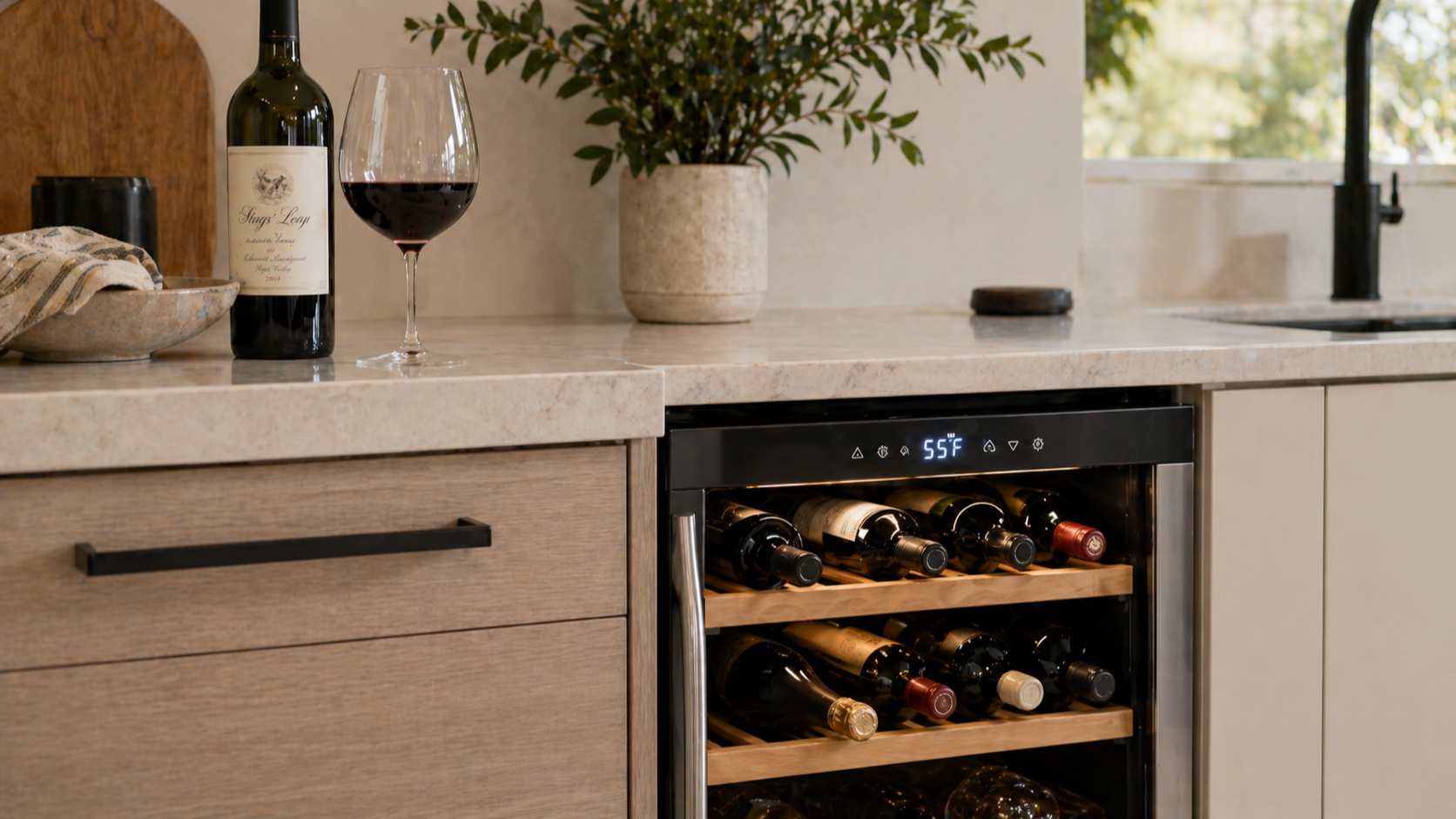
Wine fridge capacity is one of those things that seems simple until you're standing in front of a half-empty shelf wondering why your "24-bottle" fridge is already full.
The answer is almost always the same: the number on the product listing is a best-case scenario, not real life. It assumes every bottle is the same slim Bordeaux shape — and most wine collections are anything but.
This guide cuts through the confusion. Here's how wine fridge capacity actually works, what size makes sense for your home, and why you should almost always size up.
Affiliate Disclosure: This post may contain affiliate links. As an Amazon Associate and through other affiliate programs, I earn from qualifying purchases at no additional cost to you.
Why Wine Fridge Capacity Numbers Are Misleading
Every wine fridge capacity rating is based on standard Bordeaux-style bottles — the slim, straight-sided bottles used for Cabernet Sauvignon, Merlot, and most everyday reds and whites.
The problem is that a lot of wine doesn't come in that shape.
Burgundy bottles (used for Pinot Noir and Chardonnay) are noticeably wider at the shoulders. Champagne and sparkling wine bottles are wider and heavier. Some premium bottles use thicker glass or have taller necks or wider shoulders that don't fit shelf-to-shelf without adjusting the configuration.
Stack a few of those in a "32-bottle" fridge and you'll get 24 bottles in on a good day.
The capacity number is useful as a comparison point between models — but treat it as a ceiling, not a guarantee.
Wine Fridge Capacity Chart: Advertised vs. Real Life
| Advertised Capacity | Realistic Capacity | Best For |
|---|---|---|
| 6 to 12 bottles | 4 to 10 bottles | Occasional wine drinkers, small apartments, countertop use |
| 18 to 24 bottles | 14 to 20 bottles | Casual wine drinkers who keep a small rotation at home |
| 28 to 36 bottles | 22 to 30 bottles | Regular wine drinkers, couples, small collections |
| 40 to 60 bottles | 32 to 50 bottles | Entertaining, mixed red and white storage, growing collections |
| 80+ bottles | 65+ bottles | Collectors or people buying wine by the case |
What Size Wine Fridge Do You Actually Need?
You drink wine occasionally
A 6–12 bottle fridge is fine if you mostly keep a few whites, rosés, or sparkling wines chilled and you're not buying ahead. This is more of an appliance swap than a storage solution — it gets bottles out of your main fridge without taking up counter space.
You drink wine weekly
An 18–24 bottle fridge is the practical sweet spot for most casual wine drinkers. There's room for everyday bottles, a couple of nicer ones you're saving, and a few whites or sparkling. The one caveat: if you regularly buy Burgundy, Pinot Noir, or anything in a wider bottle, a "24-bottle" fridge will feel tight fast.
You entertain or buy in multiples
A 30–50 bottle fridge is where things start to feel like a real home wine setup instead of just a small appliance. If you host dinners, keep both red and white wine stocked, or tend to buy a few bottles at a time, this range gives you the flexibility to actually use it.
You buy by the case
If you join wine clubs, buy at the winery, or cellar bottles to drink later, don't bother with anything under 60 bottles. A smaller fridge will be full the moment a case arrives, and you'll be back to stacking bottles in a closet — which defeats the point.
The Bottle Shape Problem (Most Listings Ignore This)
This is the part that catches people off guard. A fridge might technically hold its advertised count if every bottle is the same size and shape. Real collections don't work that way.
Wider bottles force you to remove shelves, stagger placement, or just accept fewer bottles per row. It adds up quickly. The bottle types most likely to shrink your usable capacity:
Champagne and sparkling wine bottles
Burgundy-shaped Pinot Noir and Chardonnay
Heavy or thick-glass premium bottles
Tall Riesling-style bottles
Dessert wine bottles in non-standard shapes
If sparkling wine or Burgundy is a regular part of what you drink, add 15–20% to whatever capacity you think you need.
Single-Zone vs. Dual-Zone: Does It Affect Capacity?
Yes, slightly. Dual-zone fridges divide the interior into two separate temperature sections — one for reds, one for whites. That division takes up space that would otherwise be usable storage.
If you regularly drink both red and white wine, dual-zone is worth the tradeoff. The temperature flexibility is genuinely useful. But if you're mainly looking to maximize bottle count and you don't mind serving reds slightly cooler, a single-zone fridge will typically give you more usable space.
The Practical Rule: Buy One Size Up
For most people, the best advice is to add one size tier to whatever you think you need.
Think you need 18 bottles? Look at 24. Think you need 24? Look at 32. Think you need 36? Look at 46 or 50.
Wine fridges fill faster than expected. A few bottles for weeknight drinking, a few you're saving for a dinner, two whites, a Champagne you keep for guests — and suddenly a "24-bottle" fridge has no room for the case you just bought.
The cost difference between adjacent size tiers is usually modest. The annoyance of outgrowing a fridge you just installed is not.
Quick Decision Guide
Choose a 12-bottle fridge if: Space is limited and you only need a few bottles chilled at any given time.
Choose a 24-bottle fridge if: You drink wine weekly and want a clean, simple home setup.
Choose a 32–36 bottle fridge if: You want flexibility without committing to a large appliance.
Choose a 50-bottle fridge if: You entertain, store both reds and whites, or buy wine in multiples.
Choose 80+ bottles if: You're building a real collection or buying by the case.
FAQ
How many bottles does a wine fridge actually hold? Usually 15–20% less than the advertised number. Most capacity ratings assume slim Bordeaux-style bottles, so any wider bottle reduces your real usable count.
Is a 12-bottle wine fridge enough? For occasional drinkers with limited space, yes. For anyone drinking wine most weeks, it will fill up fast. Most regular wine drinkers find 18–24 bottles much more practical.
What's the most useful wine fridge size for a home? For the majority of households, 24–36 bottles covers everyday use comfortably. It's enough for both reds and whites without dominating the room.
Should I size up when buying a wine fridge? Almost always. The one thing people consistently wish they'd done differently is buy a slightly larger fridge.
Do Champagne bottles fit in wine fridges? Some do, but not without adjusting or removing shelves. Sparkling wine bottles are wider than standard bottles and can meaningfully reduce usable capacity on the shelf where they sit.
Does a dual-zone wine fridge hold fewer bottles than single-zone? Slightly, yes. The interior divider between zones takes up some space. The tradeoff is usually worth it if you drink both red and white regularly.
The Bottom Line
The capacity number on a wine fridge listing is a starting point, not a guarantee. The right size depends on how you actually buy wine, what bottle shapes you drink, and how quickly your collection grows.
For most people, the math is simple: take the size you think you need and go one step larger. You'll use it.