Do Wine Aerators Work? What They Actually Do (and When to Use One)
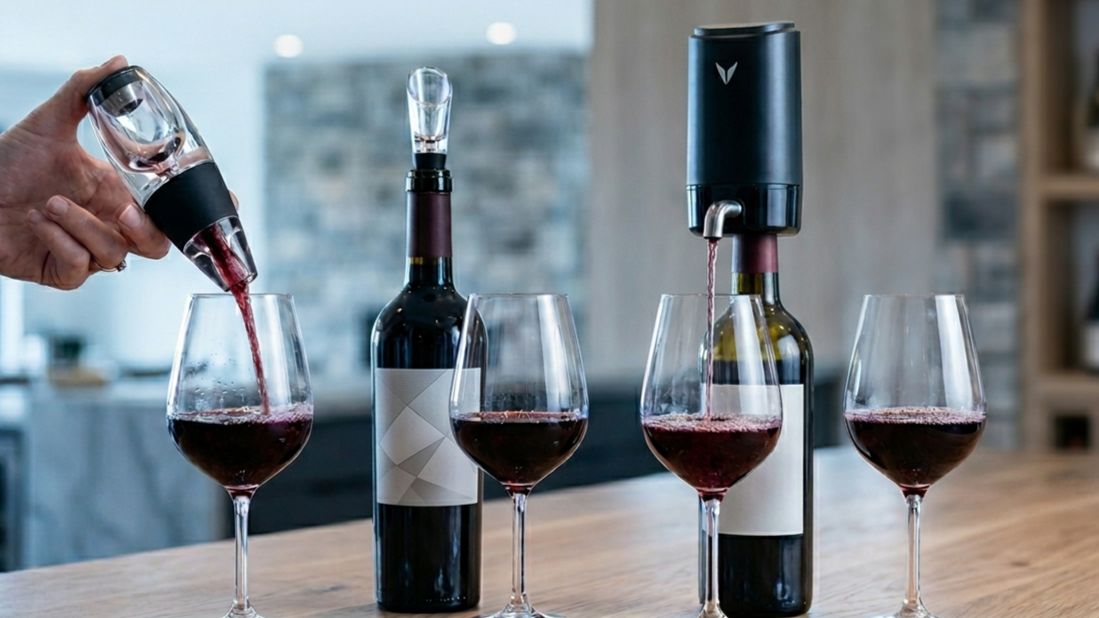
Most wine aerators promise the same thing: better flavor, instantly.
Some deliver. Some just make noise and look impressive.
The reality is simple: aeration can improve wine, but only in the right context. And more importantly, not all aerators do it the same way.
This guide breaks down:
how aeration actually works
when it matters (and when it doesn’t)
which type of aerator fits how you drink
Affiliate Disclosure: This post may contain affiliate links. As an Amazon Associate and through other affiliate programs, I earn from qualifying purchases at no additional cost to you.
Best Wine Aerators at a Glance
If you just want the quick answer, this is how the best wine aerators compare:
| Wine Aerator | Type | Best For | Aeration Level | |
|---|---|---|---|---|
| Vinturi Essential Top Pick | Pour-through | Best overall balance of performance, ease, and consistency | High | View |
| VinoAir | Bottle-mounted | Easy pouring and casual entertaining | Medium | View |
| Budget Pour-Through Aerator Best Value | Pour-through | Trying aeration without spending much | Medium-High | View |
| Vinaera PRO Electric Aerator | Electric | Hands-free serving and adjustable aeration | Medium | View |
| Rabbit Aerator with Sediment Strainer | Pour-through + filter | Older wines and bottles with sediment | Low-Medium | View |
| Decanter + Aerator Set | Hybrid set | Maximum aeration for young, tight reds | Very High | View |
| Final Touch Conundrum | Decanter insert | Design-forward gifting and elevated decanting ritual | Medium-High | View |
| Aerating Wine Glasses | Integrated glass | Giftable, casual use, and novelty appeal | Low | View |
What Does a Wine Aerator Actually Do?
At its core, aeration is about oxygen exposure.
When wine is exposed to air:
volatile aroma compounds become more expressive
reductive notes (like sulfur or “closed” aromas) dissipate
tannins can feel softer and less aggressive
In traditional winemaking terms, this is what happens during decanting, just over a longer period.
Aerators speed that process up by:
increasing surface area
creating turbulence (tiny bubbles and mixing)
forcing oxygen into the wine as it flows
Not all aerators do this equally. Some are subtle. Others are aggressive.
When Aeration Actually Makes a Difference
Aerators are most useful when a wine is:
Young and tightly structured
Think:
Cabernet Sauvignon
Syrah
Nebbiolo
These wines often start out:
closed aromatically
firm or drying tannins on the palate
Aeration helps open them up faster.
Recently opened and “shut down”
Even good wines can feel muted right after opening. A little oxygen can bring them back to life.
Slightly reductive
If a wine smells a bit:
sulfurous
rubbery
or just “off”
Aeration can help blow that off.
When Aeration Doesn’t Help Much
This is where most guides get it wrong.
Aeration does very little for:
older, delicate wines
light-bodied reds (like Pinot Noir)
most whites and rosés
wines that are already expressive
In some cases, too much aeration can actually flatten a wine.
That’s why choosing the right type of aerator matters more than just using one.
Types of Wine Aerators (and What They’re Good At)
Before jumping into products, it helps to understand the categories:
Pour-through aerators
Held over the glass
Create immediate turbulence
Most noticeable impact
→Best for: quick improvement in young reds
Bottle-mounted aerators
Attach to the bottle
Aerate as you pour
→Best for: convenience and serving
Electric aerators
Pump wine through with controlled flow, some can be adjustable for amount of aeration.
→Best for: hands-off use and entertaining
Decanter-based systems
Combine aeration with time and surface area
→Best for: maximum oxygen exposure
Specialty / design aerators
Built into glasses or decanters
→Best for: experience and aesthetics
The Best Wine Aerators
Best Overall Wine Aerator
Vinturi Essential
A classic pour-through aerator that oxygenates wine instantly as it hits the glass.
Pros
• immediate, noticeable impact
• very easy to use
• includes a stand for drip-free serving
• consistent performance
Cons
• needs rinsing after use
Why It Works
The Vinturi uses a pressure differential to pull air into the wine stream as it passes through. That creates fine mixing and rapid oxygen exposure, which is why the effect is noticeable even in a single pour.
Verdict
If you only buy one aerator, this is the one. It’s simple, effective, and doesn’t rely on gimmicks.
Best Bottle-Mounted Aerator:
VinoAir
Attaches directly to the bottle and aerates wine as you pour.
Pros
• one-handed pouring
• ideal for serving multiple glasses
• compact and low effort
Cons
• slightly less aggressive aeration
• needs cleaning after use
Why It Works
Bottle-mounted aerators trade intensity for convenience. The wine flows through a smaller aeration chamber, so the effect is more subtle.
Verdict
You’ll use this more often than a handheld aerator simply because it’s easier. That alone makes it a strong choice.
Best Budget Wine Aerator:
Vinvoli
A simple pour-through aerator that delivers solid performance without the price.
Pros
• very affordable
• noticeable improvement vs no aeration
• widely available
Cons
• lighter build
• less refined airflow
Why It Works
These are essentially simplified versions of premium aerators. They still introduce air and create turbulence, just with less precision.
Verdict
You get most of the benefit at a fraction of the cost. For casual drinking, that’s more than enough.
Best Electric Wine Aerator:
Vinaera PRO
An automatic aerator that dispenses wine directly into the glass.
Pros
• completely hands-free
• consistent pour
• adjustable aeration levels
• great for entertaining
Cons
• bulkier
• requires batteries
Why It Works
Electric aerators control flow rate and aeration more consistently than manual pouring. That consistency is what people actually notice, not necessarily “better” aeration.
Verdict
This is about ease, not performance gains. If you host often, it’s worth it. The adjustability is also a plus.
Best for Older Wines:
Rabbit Aerator with Sediment Strainer
A stainless steel aerator that also filters sediment while pouring.
Pros
• removes sediment
• durable construction
• clean, minimal design
Cons
• unnecessary for most wines
• adds an extra step
Why It Works
Older wines often throw sediment as tannins and pigments fall out of solution over time. This aerator combines light aeration with filtration, which is exactly what those wines need.
Verdict
Not essential for everyday use, but extremely useful in the right situation.
Best for Maximum Aeration:
Decanter + Aerator Set
A hybrid setup combining pour-through aeration with decanting.
Pros
• high oxygen exposure
• combines immediate + passive aeration
• effective for young wines
Cons
• not quick or casual
• takes up space
Why It Works
This setup hits wine twice:
Forced aeration during pouring
Continued exposure in the decanter
That combination gets you closer to what happens during a full decant, but faster.
Verdict
Best for wines that need serious opening up. Overkill for everyday use.
Best Design / Luxury Pick:
Final Touch Conundrum
A gorgeous sculptural aerator that sits inside a decanter.
Pros
• visually striking
• enhances decanting process
• includes sediment filtering
Cons
• fragile
• requires a decanter
• more involved
Why It Works
The Conundrum creates multi-stage aeration as wine flows through its structure, increasing contact with air while also filtering sediment.
Verdict
This is about experience as much as performance. Ideal for people who already enjoy decanting.
Best Gift Option:
Aerating Wine Glasses
Wine glasses with built-in aeration chambers.
Pros
• no extra tools
• easy to use
• visually interesting
Cons
• mild aeration effect
• more novelty than performance
Why It Works
These rely on internal channels or chambers to agitate wine as you swirl or pour. The effect is subtle compared to dedicated aerators.
Verdict
Fun and giftable, but not a replacement for a proper aerator.
Which Wine Aerator Should You Buy?
If you want a simple answer:
Best overall → Vinturi
Easiest to use → VinoAir pour spout
Best value → Vinvoli pour-through
Most convenient → Vinaera PRO
For older wines → Rabbit with strainer
For maximum impact → decanter + aerator
Everything else comes down to how you like to drink wine.
FAQ
Do wine aerators actually make a difference?
Sometimes, yes. They tend to make the biggest difference with young red wines that feel tight, muted, or tannic right after opening. A good aerator can help soften the structure a bit and make aromas more expressive faster. On older, delicate wines, the effect is usually smaller and can sometimes do more harm than good.
What’s the difference between an aerator and a decanter?
An aerator speeds up oxygen exposure during the pour. A decanter gives wine more surface area and time to open up. In simple terms, an aerator is the quick version, while a decanter is the slower, more traditional version.
Are electric wine aerators better than manual ones?
Not necessarily better, just easier. Electric aerators are more about convenience, consistency, and entertaining. A good manual pour-through aerator can work just as well for most people.
Are wine aerators worth it for cheap wine?
They can be. If a young inexpensive red tastes harsh, closed, or overly tight, aeration may help it taste a little more open and approachable. It will not turn bad wine into great wine, but it can make some bottles more enjoyable.
Should you use a wine aerator for white wine?
Usually, no. Most white wines do not need aggressive aeration, and many are best kept fresh and bright. Some fuller-bodied whites can benefit from a little air, but this is the exception, not the rule.
Can you over-aerate wine?
Yes. Older wines and more delicate styles can fade quickly with too much oxygen. That is why stronger aeration tools make more sense for young, structured reds than for fragile or already expressive wines.
What type of wine benefits most from aeration?
Young Cabernet Sauvignon, Syrah, Malbec, and Nebbiolo are common examples. Wines with firm tannins, muted aromas, or a tight palate usually benefit most.
Is a wine aerator better than just letting the wine sit in the glass?
Not always better, but definitely faster. Swirling in the glass helps, and so does time. An aerator is useful when you want a similar effect right away instead of waiting.
And here’s the exact ending order I’d use:
Related Guides
If you want to go deeper or improve your setup, these are worth reading next:”
How to Store Wine Without a Wine Fridge
A practical guide to keeping wine in good condition using what you already have at home.The Best Wine Preservation Systems That Actually Work
If you don’t finish bottles in one night, this breaks down what actually keeps wine fresh and what’s a waste of money.Best Wine Fridges for Home Use (Complete Guide)
When it’s worth upgrading, what features actually matter, and how to choose the right size.The Complete Guide to Storing Wine at Home
A convenient hub to all of our wine storage posts. .
Final Thoughts
Aeration isn’t about making bad wine good.
It’s about helping a wine show what it already has, just faster.
Used well, it can:
open aromas
soften structure
make a young wine more enjoyable
Used blindly, it doesn’t do much.
So don’t overcomplicate it.
Pick the tool that fits how you actually drink, and you’ll get the most out of it.