Halloween Candy & Wine Pairings: A Grown-Up Guide to the Candy Bowl
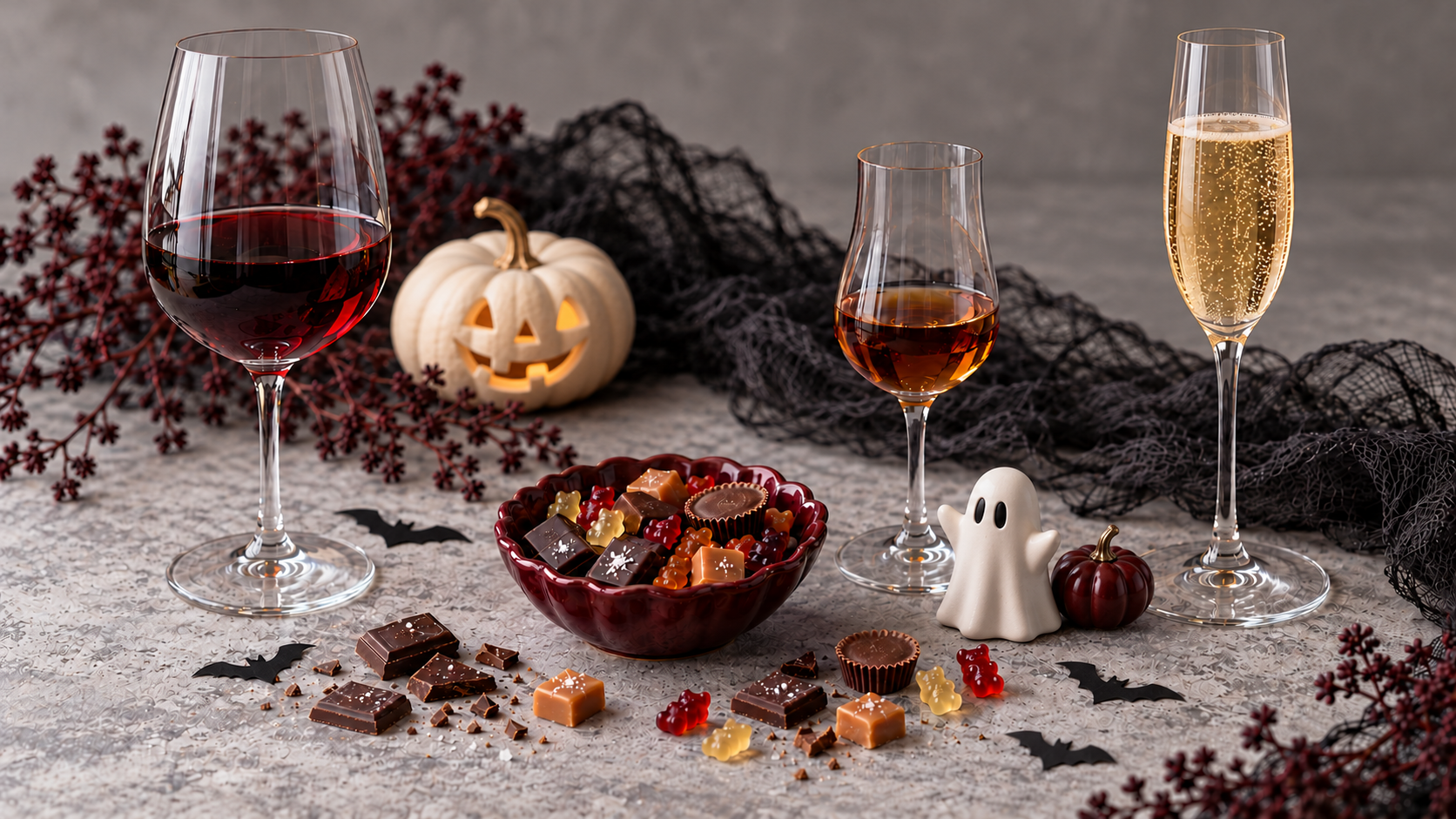
Happy Halloween!
Raid the Candy Bowl, Pour Something Good
The porch light is on, the spooky playlist is going, and the candy bowl is looking lighter than it did an hour ago. Whether you're waiting on trick-or-treaters or settling in for a scary movie, Halloween is a decent excuse to practice wine pairing. One stolen peanut butter cup at a time.
Candy is a good tasting partner because the flavors are obvious. You don't have to hunt for caramel notes when you're eating a caramel. Chocolate, nuts, chewy fruit, and buttery fillings give you clear flavors and textures to compare against what's in the glass.
Some pairings work by echoing: a wine with nutty, caramelized flavors next to a caramel candy. Others work on texture, where a wine's freshness keeps a rich chocolate filling from feeling heavy. What you're really doing is noticing how a bite changes the next sip. Does the wine get fruitier? Does the candy pull out a toasted note you missed? Or did your perfectly pleasant red just grow fangs?
You don't need a lineup of bottles. One wine you're curious about, a few pieces of candy, and some willingness to experiment is enough.
Unofficial disclaimer: try at your own risk. None of these pairings have been taste-tested for this post. They're built from how sweetness, acidity, tannin, and alcohol generally behave, which is solid logic but not a tasting panel. Some will probably be treats. A couple are tricks waiting to happen. Consider this an invitation to run the experiment yourself, and try it if you dare.
The Lineup at a Glance
| Candy | Wine | The Idea | Odds |
|---|---|---|---|
| Hershey's Milk Chocolate | Ruby Port | Sweet wine, fruit against cocoa | Likely Treat |
| Dove Dark Chocolate | Zinfandel | Fruit against bitterness | Wildcard |
| Werther's Soft Caramels | 10 Year Old Tawny Port | Caramel echoing caramel | Likely Treat |
| Reese's Peanut Butter Cups | Sweet Madeira (Malmsey) | Toasted nuts, acidity for lift | Likely Treat |
| Haribo Goldbears | Moscato d'Asti | Sweet meets sweet | Likely Treat |
| Sour Patch Kids | Brut Champagne | Breaks the sweetness rule on purpose | Likely Trick |
The First Rule: Give Sweetness Its Due
Wine generally tastes best with candy when it's at least as sweet as the candy. It's a useful starting point, especially when the bowl has more sugar than subtlety.
The reason is that a sweet bite changes how the next sip tastes. The wine can come across as less sweet, less fruity, more acidic, and more bitter than it did on its own. A dry red that was smooth before a piece of chocolate can turn stern and drying after it. The wine is the same. The candy just reset your palate. This is a core idea in WSET's food-and-wine pairing guidance.
That's why sweet wines belong at this party. Their sweetness lets them hold their own, so you can still pick up the fruit, nuts, spice, or caramel that make the pairing interesting.
One distinction matters here: fruity doesn't mean sweet. A red can smell like ripe blackberries and cherries and still have very little residual sugar, which is the sugar left in the finished wine. Those fruit aromas can flatter chocolate, but they don't give you the cushion that real sweetness does. A ripe Zinfandel with dark chocolate is worth trying, but how well it works depends on the chocolate's cocoa intensity and sweetness.
After sweetness, think about intensity. A delicate fruit candy and a dense peanut butter chocolate ask different things of a wine. Go lighter and more aromatic for the first, richer for the second. Shared flavors help too: toasted nuts with a nutty wine, caramel with a wine that has similar browned-sugar notes.
Try a quick experiment. Sip the wine, take a bite of candy, then sip again, and note what got stronger, softer, or disappeared. If the wine suddenly tastes cursed, drink some water, reset, and try another bite. The rule is a guide. Your own enjoyment gets the final vote.
Five Halloween Candy & Wine Pairings to Try
With sweetness in mind, here are five pairings that connect the wrapper to the glass in different ways, from matching flavors to balancing a rich filling.
Hershey's Milk Chocolate + Ruby Port
Milk chocolate is sweet, creamy, and fairly gentle on cocoa intensity. It needs a wine with enough sweetness that the first bite doesn't strip the fruit from your next sip.
Ruby Port is a sweet, fortified red with a young, fruit-forward profile. Its berry and plum flavors play against the milk chocolate in the familiar chocolate-and-fruit way, and its richness keeps up with the candy's creamy texture.
Try this: Let a small piece of chocolate soften on your tongue before you sip. See whether the fruit in the wine gets clearer against the cocoa. Keep the pour small. Port is higher in alcohol than a typical table wine, and a little goes a long way with a few squares.
Dove Dark Chocolate + Zinfandel
This is the unpredictable guest. A ripe, fruit-forward Zinfandel can offer blackberry, plum, and spice that work well with dark chocolate. But most Zinfandel is dry, so this pairing bends the sweetness rule.
Dark chocolate usually has more cocoa intensity and less sugar than milk chocolate, though it varies a lot. The sugar can make a dry wine taste sharper, and the bitterness can amplify the wine's own bitter or drying edges. Going darker and darker doesn't automatically improve the match.
Alcohol is the other thing to watch. Ripe Zinfandels often land between 14.5 and 16% ABV, and bitter cocoa makes alcohol heat more noticeable. That's a likelier failure point than tannin. Look for a Zinfandel with generous fruit, softer tannins (the compounds that create that drying feeling in your mouth), and ideally the lower end of that alcohol range. A moderately dark chocolate is a good place to start.
Try this: Taste the wine before and after a small bite. If the fruit still comes through and you like the finish, you've got a match. If the wine turns harsh, hot, or hollow, these two may belong in separate rooms of the haunted house.
Want a version that follows the rule? Banyuls and Maury, both fortified Grenache from the south of France, are the classic dark chocolate wines because they bring real sweetness.
Werther's Original Soft Caramels + Tawny Port
This one works on shared flavors. Caramel brings buttery sweetness and cooked-sugar notes. Tawny Port often brings caramel, nuts, and dried fruit.
Tawny ages in wood, and the slow exposure to oxygen pushes it toward those mellow, nutty flavors. Next to a soft caramel, the overlap makes the pairing feel connected. The candy picks up something in the wine, and the wine adds another layer back.
Check the label for an age statement. An entry-level tawny with no age is often a lighter, younger blend that sits closer to Ruby. The nutty, caramel character this pairing depends on shows up at 10 Year Old and above.
Try this: Chew and swallow a small piece before sipping. Look for a nutty or dried-fruit note that goes beyond the candy's buttery sweetness.
Reese's Peanut Butter Cups + Sweet Madeira
A peanut butter cup brings a lot at once: chocolate, sugar, a little salt, and a rich peanut filling. A delicate wine gets lost in that.
Sweet Madeira has the intensity to stand up to it. It's a fortified wine made with heat and long aging, which develops flavors like toasted nuts, caramel, and dried fruit. Those notes echo the roasted peanuts, and the wine's acidity gives some lift against the richness.
If you're shopping, look for Malmsey Madeira, typically the sweeter, richer end of the range.
Try this: Take a bite with both the chocolate shell and the peanut butter center. After the sip, see whether the wine's freshness cuts through the lingering richness while its toasted notes line up with the peanuts.
Haribo Goldbears + Moscato d'Asti
After all that chocolate, fruit gummies are a change of pace. Their concentrated sweetness needs a wine with real sweetness, and Moscato d'Asti brings a lighter texture to the lineup.
It's gently sparkling, usually with floral aromas and flavors of grape, peach, and citrus, and it's low in alcohol. The sweetness gives it a better footing against gummies than a dry sparkling wine would have, and the light bubbles add a playful contrast to the chew.
The gummy flavor changes the result, which makes this an easy pairing to play with. A citrus bear may bring out a different side of the wine than a berry one.
Try this: Go one color at a time, with a small sip between bites. Find a favorite combination before you mix a handful together.
The Tricky Treats: Sour Candy and Candy Corn
Some candies make pairing feel less like matchmaking and more like a séance. You can invite harmony, but nothing guarantees it shows up.
Sour Patch Kids + Brut Champagne: The Trick
Sour candy brings acidity and sugar together, and they pull your perception of wine in different directions. Acidic food can make a wine seem softer and fruitier. Sweetness can make it taste drier, less fruity, and more bitter.
Here the sugar is likely to win. Brut Champagne tops out at 12 grams of sugar per liter, and Sour Patch Kids are mostly sugar plus acid. This pairing breaks the sweetness rule on purpose, and the probable result is a thin, sharp wine. The sour coating might soften the Champagne's acidity for a second, but expect the sweet candy underneath to flatten the next sip.
Try it if you dare: Sip the Champagne alone, eat one piece, then sip again. Brighter and fruitier, or lean and sour? If it works for you, it's part of your Halloween routine now.
Want a version that works? Swap in a demi-sec Champagne (32 to 50 grams per liter) or a sparkling Brachetto d'Acqui, a sweet, lightly fizzy red. Both have enough sweetness to stand up to the candy.
Candy Corn: A Sweetness Test
Candy corn is intensely sweet with a mellow, vanilla-like flavor, and wine has nowhere to hide next to it. A dry wine can lose its fruit after one bite, which throws the pairing off even though the candy isn't bold on flavor.
If you want to try it, pair a small piece with one of the sweeter wines already on the table. A 10 Year Old Tawny Port is a reasonable candidate, since its caramel notes could connect with the candy. That's a starting point, not a promise.
Candy corn is also a clean demonstration of the sweetness rule. Taste your wine before and after a piece and pay attention to how much changes. Whether you love it or think it belongs in a decorative bowl forever, it teaches you something.
Turn Your Candy Bowl into a Mini Halloween Tasting
You don't need six open bottles and a dining room dressed as a crypt. Two or three pairings are enough to find out what works.
Pick candies with distinct flavors or textures so you have something to compare. Milk chocolate, a peanut butter cup, and a fruit gummy give you more range than three similar chocolate squares. Unwrap a few pieces, set out small glasses, and keep water and plain crackers nearby.
Start Light, Then Go Rich
If you're running the full lineup, go from lightest wine to richest:
Moscato d'Asti with Haribo Goldbears
Brut Champagne with Sour Patch Kids
Zinfandel with Dove Dark Chocolate
Ruby Port with Hershey's Milk Chocolate
Tawny Port with Werther's Caramels
Sweet Madeira with Reese's Peanut Butter Cups
The sour candy sits second because Brut is the lightest wine on the list, and that coating would flatten anything richer that followed it. Drink water and eat a cracker afterward before moving on.
Pour Small
Pour about 2 oz of the table wines and sparkling wines (Moscato, Brut, Zinfandel) and about 1 oz of the fortified ones (Ruby, Tawny, Madeira). Across all six, that adds up to roughly two standard drinks. Worth knowing if you're also the one supervising trick-or-treaters or driving anyone home.
Sip, Bite, Sip Again
For each pairing, run the same sequence:
Taste the wine on its own. Note the sweetness, fruit, acidity, and any drying sensation.
Take a small bite of candy. Give the filling or coating a moment, then chew and swallow.
Taste the wine again. What changed? Is the fruit clearer? Is the wine sharper? Do the candy and wine share a nutty or caramel note?
Pause before the next one. Have some water and, if you like, a plain cracker.
You don't need elaborate tasting notes. "More berry," "too bitter," and "would absolutely eat another" are all useful.
Let Everyone Pick a Favorite
If you're tasting with friends, have everyone choose a favorite before comparing notes. Disagreement is part of it. One person will like dry red with dark chocolate, and another will want the easier comfort of Ruby Port and milk chocolate.
Give each pairing a quick verdict: treat, trick, or worth another bite. By the end you'll know a bit more about your palate, and the candy bowl will have a better job than slowly emptying next to the sofa.
Which Pairing Will Haunt Your Candy Bowl?
The best find might be a caramel that brings out the nuttiness in your Tawny Port, or a peanut butter cup that turns out to get along with Madeira. Pay attention to what you like, and let the misses teach you something too.
Keep the sweetness rule handy, pour small, and leave room for some mischief. Not every pairing has to work for the night to be a good one.
Which candy are you reaching for first, and what's going in your glass? Share your favorite pairing in the comments, including any good surprises or absolute horrors.
Related Guides
Haunted Vineyards & Ghostly Cellars: 5 Halloween Wine Stories
Wine Fridges Explained - How to Choose the Best One
Best Wine/Bar Cabinets for a Home Bar
The Best Budget Wine Glasses That Don’t Feel Cheap
Best Large Wine Fridges for Serious Collectors (150+ Bottles)
Best Walkable Wine Towns For a Weekend Trip (US Version)
Bucket List Wine Hotels Around the World
Best Places to Stay for Wine Tasting: