Why Restaurants Let You Taste the Wine First (Tasting Pour Guide)
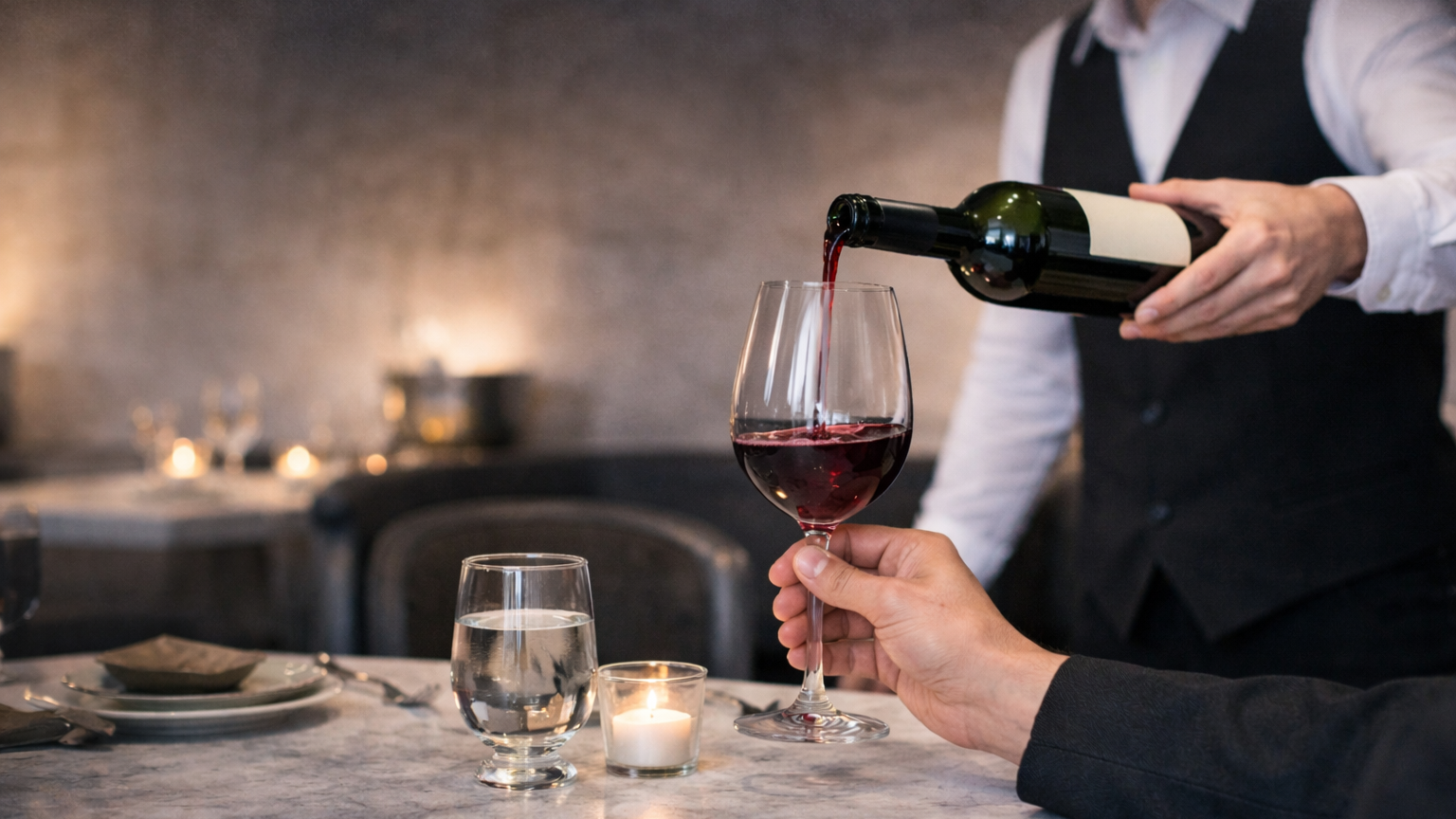
You’ve seen it a hundred times. The server pours a small amount, steps back, and suddenly all eyes are on you. You swirl, sip, and now you’re expected to decide something. Accept? Reject? Say something smart?
This moment feels bigger than it is. It’s not a test of your wine knowledge. It’s a simple quality check with a very specific purpose. Once you understand what’s actually happening, the whole thing becomes easy and, honestly, kind of empowering.
Affiliate Disclosure: This post may contain affiliate links. As an Amazon Associate and through other affiliate programs, I earn from qualifying purchases at no additional cost to you.
What the Tasting Pour Is Actually For
The tasting pour is not about whether you like the wine.
It exists for one reason:
To confirm the wine is sound and free of faults.
That’s it.
You are not expected to evaluate:
whether it’s worth the price
whether it pairs perfectly with your food
whether it’s your personal style
You are simply checking that the bottle is not flawed.
Why Restaurants Do This
There are a few practical reasons this ritual exists.
1. Corked bottles happen
Even today, a small number of bottles are affected by cork taint. Natural cork comes from trees, so a bit of variability is unavoidable. When it happens, the wine smells musty and the fruit disappears. It’s not the winery’s fault, just an occasional downside of using a natural closure. Most shops and restaurants will replace the bottle without issue.
2. Storage variables exist
Wine is sensitive to heat, light, and time. If a bottle was exposed to high temperatures or poor storage anywhere between the winery and your glass, it can taste dull, flat, or prematurely aged. This can happen during shipping, in a warehouse, or even on a retail shelf. Again, not a winemaking issue, just a handling problem along the way.
3. It protects both sides
You avoid paying for a flawed bottle
The restaurant gets a chance to replace it immediately
Think of it as a quality checkpoint, not a performance.
Sometimes it’s the wine. Sometimes it’s what happened to the bottle. If you want to get better at spotting the difference, check out our guide to common wine faults and how to recognize them.
What You Should Actually Do During the Tasting
Keep it simple. This is an easy 10–15 second process.
Step 1: Smell first
Give the glass a quick swirl and smell.
You’re looking for obvious red flags:
musty, damp cardboard smell
moldy or wet newspaper notes
muted, dull, lifeless aroma
If it smells clean and expressive, you’re already 90 percent there.
Step 2: Take a small sip
Confirm what you smelled carries through.
You’re checking for:
strange bitterness not typical of the wine
flat or stripped character
anything that feels clearly “off”
Step 3: Decide confidently
If it’s clean, just nod or say “that’s great, thank you.”
No speech required.
When It’s OK to Reject the Wine
This is where most people freeze up.
Here’s the rule:
👉 Reject for faults. Not for preference.
Acceptable reasons to reject
Cork taint
Oxidation (wine tastes stale, flat, or sherry-like when it shouldn’t)
Volatile or chemical off-aromas
Anything clearly flawed or spoiled
Not acceptable reasons
“I don’t like this style”
“It’s too dry / too acidic”
“I wish it were fruitier”
If the wine is technically sound, it’s considered valid.
Quick Tie-In: Wine Faults You Might Encounter
If you read our guide on wine faults, this is exactly where that knowledge becomes useful.
The most common one you’ll realistically encounter in a restaurant is:
Cork Taint (TCA)
Smells like wet cardboard or damp basement
Suppresses fruit and aroma
Makes the wine feel flat and lifeless
If you smell that, you’re completely justified in rejecting the bottle.
Less common but possible:
Oxidation in wines that should be fresh
Heat damage causing stewed or cooked fruit notes
If you’re unsure, you don’t need to diagnose it perfectly. You just need to recognize that something isn’t right.
What If You’re Not Sure?
This is the part nobody explains, and it’s where people get stuck.
You are absolutely allowed to say:
“Something seems a little off. Could you take a look?”
That’s it. No technical breakdown needed.
Who actually knows what they’re doing?
This matters more than people think.
Sommelier or wine director
Highly trained. Best person to assess the wine.Manager
Usually experienced enough to evaluate and make the call.Server
Varies a lot. Some are great, but some have minimal or even no wine training.
In many restaurants, especially casual or mid-tier ones, your server may not be deeply trained in wine faults. That’s normal.
If you want a second opinion, you can politely ask:
“Would you mind having someone else take a quick look?”
No one will be offended. This happens all the time.
What Happens After You Reject a Bottle
Zero drama.
The bottle is taken away
Staff will confirm the issue
You’ll be offered a replacement
You are not charged for the faulty bottle.
Restaurants expect this. It’s built into how wine service works.
The Biggest Misconception to Drop
You are not being tested.
No one is judging:
how you swirl
what descriptors you use
whether you say anything at all
In fact, most experienced diners do exactly this:
smell
sip
nod
Done.
How to Handle It Like a Pro (Without Making It Awkward)
If you want a clean, confident approach, use this:
Smell
Sip
Quick internal check
Say “that’s perfect, thank you”
Or, if something’s off:
“I think something might be off with this, could you check it?”
That’s the whole playbook.
FAQ: Tasting Pour at Restaurants
Do I have to say anything specific?
No. A nod or “thank you” is enough if the wine is fine.
Can I skip the tasting?
Technically yes, but it’s not recommended. It’s your chance to catch a flawed bottle.
What if I accidentally approve a bad bottle?
You can still say something after the full pour. Just speak up as soon as you notice.
Is it rude to reject a bottle?
Not at all, if there’s a legitimate fault.
Can I ask for a different wine instead?
Only if there’s a fault. Otherwise, you’re expected to stick with your selection.