Why Some Wines Cost More (And What That Means in the Bottle)
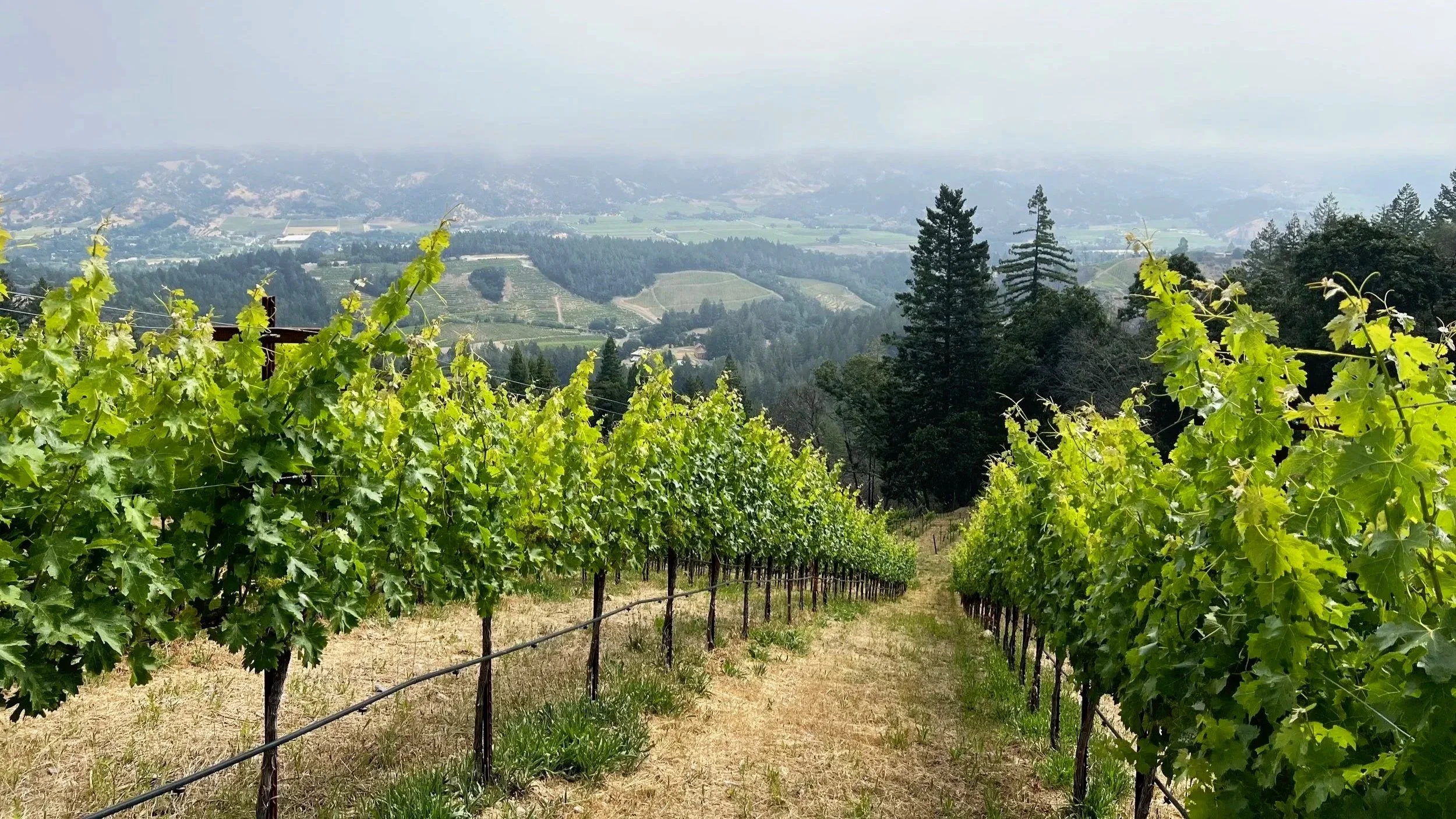
Vineyard rows in Napa Valley hills overlooking the valley floor, showing grape growing conditions that influence wine quality and price
Wine prices can feel all over the place.
That difference isn’t random, and it’s not just branding.
A wine’s price is shaped by how it’s grown, how it’s made, how long it takes to produce, and the global systems required to bring it to market.
From my perspective as a winemaker working in Napa Valley, many of these cost drivers are especially visible. Napa is one of the most expensive places in the world to grow and produce wine, which makes it a useful lens for understanding how pricing works more broadly.
While the specifics can vary by region, the underlying factors, farming, materials, time, labor, and logistics, apply across the industry.
Affiliate Disclosure: Some posts on this site may contain affiliate links. If you purchase through them, I may earn a small commission at no additional cost to you.
What Actually Drives the Cost of a Bottle of Wine
Vineyard Land and Location
In premium regions like Napa Valley, land cost alone sets a high baseline.
Vineyard acreage is limited, demand is high, and that cost carries through to every bottle produced from that land. Even before farming begins, the economics of the site are already built into the final price.
Farming Practices and Risk
Sustainable and more hands-on farming practices often come with higher costs and higher risk.
Lower yields, more vineyard passes, and reduced chemical intervention all increase the cost of growing grapes while also making outcomes less predictable from year to year. A smaller crop means fewer bottles to sell, even though many of the fixed costs, like labor, equipment, and land, remain the same.
Labor also plays a major role. In places like California, higher minimum wage requirements and cost of living directly increase farming and production costs compared to many other wine regions.
Because much of premium winegrowing relies on manual work, these differences materially affect the final price.
Regulations and Environmental Standards
Wine is an agricultural product, and in regions like California, it operates under a range of environmental and labor regulations.
These can include water usage restrictions, farming and runoff management, worker safety requirements, and limitations on certain materials and practices.
Compliance adds cost, both directly through required practices and indirectly through additional planning, monitoring, and reporting.
At the same time, these standards exist to protect the long-term health of vineyard land and the surrounding environment. In an industry that depends entirely on agriculture, those protections are part of maintaining the ability to grow quality grapes over time.
Grape Cost and Yield Decisions
Lower yields mean fewer grapes per acre, which increases cost per ton.
In higher-end production, that tradeoff is intentional. Vineyard decisions like cluster thinning, selective harvesting, and multiple passes through the vineyard all prioritize fruit quality and have a direct impact on structure and balance (something you start to recognize once you understand How to Taste Wine Like a Pro), but they also increase the cost of the grapes that go into each bottle.
Waste and Selection
Not everything produced makes it into the final bottle.
In higher-end winemaking, lots are evaluated and blended selectively, and some portions may be excluded entirely. For example, certain ultra-premium wines choose not to include press fractions, even though that reduces total volume.
This kind of selection improves precision, but it also means fewer bottles are produced from the same amount of fruit, increasing the cost per bottle.
Oak and Materials
French oak barrels can cost over $1,000 each, and their impact isn’t constant over time.
A standard barrel holds about 60 gallons, which translates to roughly 300 bottles, or about 25 cases of wine.
New barrels contribute the most flavor and structure in their first use. By the second and third fills, that impact drops significantly, and after that, the barrel becomes largely neutral.
To maintain a consistent style, wineries regularly replace a portion of their barrel program. The more new oak used in a wine, the higher the cost per bottle.
These are not just stylistic choices. They are ongoing financial decisions.
Time and Inventory
Wine production is slow.
For a premium Napa Cabernet Sauvignon, grapes may be harvested in October, aged for around two years in barrel, and often held additional time in bottle before release.
During that time, the wine is not generating revenue, but it is still accumulating cost through storage, materials, and capital tied up in inventory.
By the time the wine is released, it may represent three years or more of investment before a single bottle is sold.
Production Scale
Smaller production runs mean higher cost per unit.
Larger operations benefit from efficiency and scale, while smaller lots often require more manual work, more attention, and more resources per bottle. That difference in scale directly impacts cost structure.
Packaging Materials
A significant portion of cost comes from materials that have nothing to do with the liquid itself.
Glass bottles, corks, labels, and capsules are all sourced materials, often from different parts of the world. These inputs fluctuate in price based on availability, energy costs, and manufacturing conditions.
Even small choices, like tin versus more affordable polylaminate capsules, create meaningful cost differences when scaled across production.
Supply Chain, Freight, and Inflation
Many winemaking materials are sourced globally, including glass bottles, closures, and packaging components.
That means wineries are exposed to shifts in freight costs, fuel prices, and broader economic conditions. When shipping rates increase, those costs apply not just to finished wine leaving the winery, but to everything required to produce it.
Over the past several years, global inflation has increased the cost of materials, energy, and transportation across the board. Events like the Suez Canal blockage highlighted how quickly these costs can change, and how widely they ripple through the industry.
Tariffs and Trade Costs
Tariffs can influence the cost of both imported wines and imported materials.
Changes in trade policy can shift pricing quickly, even when nothing about the wine itself has changed.
Because these changes can happen suddenly, wineries often try to absorb short-term increases where possible rather than immediately adjusting pricing. However, if higher costs persist over time, they are eventually reflected in the price of the finished wine.
Government Support and Regional Economics
Wine is produced globally, and not all regions operate under the same economic conditions.
In some countries, agricultural subsidies or support programs help offset production costs. This can allow wines from those regions to be priced more competitively, even when similar levels of quality and care are involved.
Distribution and the Three-Tier System
Before reaching the consumer, wine typically moves through a three-tier system: producer, distributor, and retailer.
Each tier adds margin. A wine sold from the winery at one price is marked up through distribution and again at retail.
As a result, the final shelf price reflects multiple layers beyond production alone.
This is also why wine purchased directly from a winery often differs in price from what you see on a retail shelf or restaurant menu.
Production Scale and Business Structure
Ownership structure can influence how decisions are made over time.
Smaller or privately held producers often prioritize vineyard and winemaking decisions over longer timelines, while larger portfolios balance consistency, scale, and broader business considerations.
Because many wines take years to produce and release, those decisions are made well in advance of when the wine is sold.
What That Means for the Wine Itself
All of these inputs shape how the wine is produced.
More resources allow for:
greater control in farming and winemaking
more selective blending decisions
longer aging timelines
increased consistency over time
These differences are built into the wine long before it’s opened.
Production Choices at Different Price Points
Tools Used at Scale
Some wines use tools to create consistency across large production volumes, especially when working across multiple vineyard sources or variable fruit quality.
This can include adjustments to acidity, sugar, or tannin levels, as well as color concentrates like Mega Purple. Not all adjustments serve the same purpose. Some are used in small amounts to fine-tune balance, while others can have a more noticeable impact on the wine’s color, texture, and overall profile.
At larger production levels, these tools are often used more aggressively to shape a consistent style, particularly when working with lower-cost or less consistent fruit.
In those cases, the goal shifts from refining the wine to standardizing it. The result is a product designed to deliver a predictable profile, rather than one that reflects variation from site, vintage, or individual lots.
That variation is part of what makes wine distinct. Differences from vineyard, vintage, and growing conditions are not flaws to eliminate, they are often what define the character and quality of the wine. (especially once you understand concepts like tannin, acidity, and body in Common Wine Terms Explained).
Why Higher-End Wines Often Rely Less on Intervention
In contrast, when starting with higher-quality fruit and more controlled farming conditions, there is often less need for correction later in the process.
Decisions made in the vineyard, like yield management and site selection, have a direct impact on balance going into fermentation. When those elements are aligned, fewer adjustments are needed to achieve the desired result.
In these cases, winemaking tends to focus more on guiding the process rather than correcting it. That often means allowing more variation between sites and vintages, rather than standardizing a consistent profile.
A common way to think about it is that you can make bad wine from great grapes, but you can’t make great wine from bad grapes. The goal is to start with the best fruit possible and not lose that quality along the way.
Why Price Is Usually Grounded in Reality
In most cases, wine pricing reflects real costs.
Land, farming, materials, time, labor, logistics, and distribution all contribute to the final price of a bottle.
At the higher end of the market, pricing can also reflect demand, reputation, and limited availability. When production is small and demand is high, pricing can extend beyond production cost alone.
That doesn’t mean every expensive wine will resonate with every person, but it does mean the price is rarely arbitrary.
A Simple Way to Think About Quality
One of the most reliable indicators of quality is consistency over time.
Producers who are closely involved in their vineyards and winemaking tend to show that consistency year after year.
Smaller, family-run producers often prioritize long-term vineyard decisions, while larger portfolios balance consistency across a broader range of wines.
FAQ
Why is Napa Valley wine so expensive?
Land cost, labor, farming intensity, and extended aging timelines all contribute to higher production costs in Napa Valley.
Does more expensive wine mean better quality?
Higher prices usually reflect higher production costs and more resources, but they are not a guarantee of personal preference.
What is the biggest cost in making wine?
There isn’t a single factor. Land, grapes, labor, oak, time, and distribution all play major roles.
Do additives make wine lower quality?
Not necessarily, but the extent and type of their use matters.
Small, targeted adjustments, such as adding tartaric acid to fine-tune balance, are a normal part of winemaking and are typically minimal enough to be indistinguishable, even to a trained palate. That level of adjustment is not what most people are referring to when they ask this question.
At larger scales, however, other tools, including color concentrates like Mega Purple, may be used more heavily to shape color, texture, and flavor, especially when working with lower-quality or less consistent fruit.
At that point, the adjustments are no longer refining the wine, they are compensating for what the fruit lacks.
That approach can create a consistent product, but it also moves the wine further away from reflecting a specific vineyard or vintage. In general, the more a wine relies on significant post-fermentation adjustments, the less the final result is driven by the vineyard itself.
Related Posts
If you want to go a touch further, these break down how wine actually works: