Best Wine Decanters for Home Use (and When to Use Them)
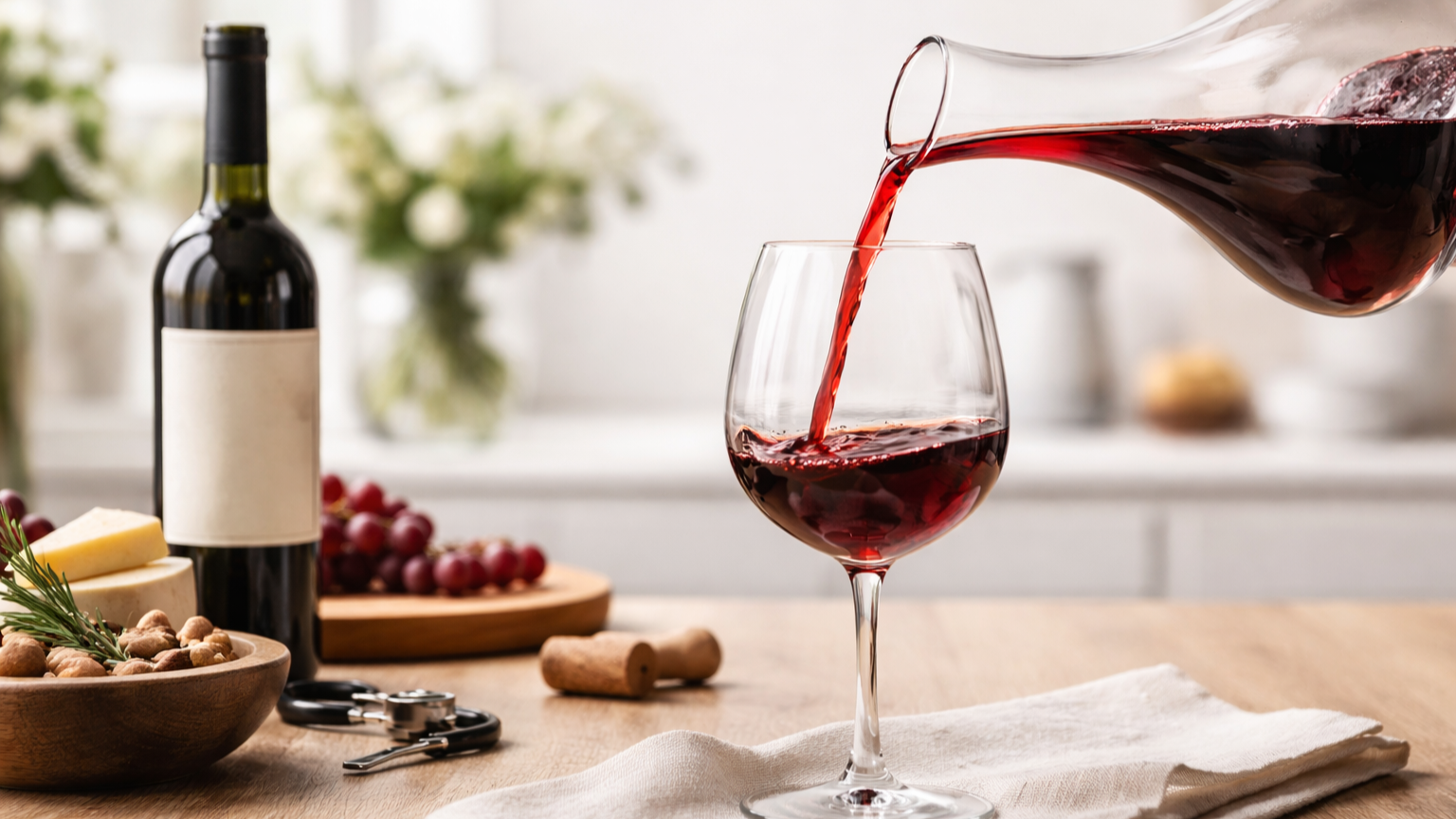
Most people think wine decanters are just for special occasions.
In reality, the right decanter can make a noticeable difference in how wine smells, tastes, and feels, especially with younger red wines.
That does not mean you need something oversized or overly delicate. The best decanters for home use are designed to fit into real life. Easy to use, easy to clean, and actually helpful for how you drink wine.
This guide breaks down when decanting matters, when it does not, and the best wine decanters to use at home right now.
Affiliate Disclosure: This post may contain affiliate links. As an Amazon Associate and through other affiliate programs, I earn from qualifying purchases at no additional cost to you.
Quick Comparison Table
| Category | Product | Best For | Key Feature | |
|---|---|---|---|---|
| 🏆 Best Overall | Le Chateau Wine Decanter | All-purpose use | Wide base for aeration | View |
| Best Compact | Riedel Cabernet Decanter | Small spaces | Slim, easy storage | View |
| 💰 Best Value | JoyJolt Layla Decanter | Budget-friendly | Wide base, modern look | View |
| Best Dishwasher Safe | Bormioli Rocco Ypsilon | Easy cleaning | Dishwasher safe | View |
| Best Design | Riedel Mamba Decanter | Statement piece | Sculptural shape | View |
| Best for Older Wines | Riedel Amadeo Decanter | Sediment control | Controlled pour | View |
| Best Traditional Style | Godinger Dublin Decanter | Classic bar setups | Includes stopper | View |
Why You Should Decant Wine (And When It Actually Matters)
Most people assume decanting wine is about making it look fancy.
Sometimes it is. But most of the time, it is about helping the wine taste better in the moment.
Decanting simply means pouring wine from the bottle into another vessel before serving.
There are two real reasons to do it:
• to help a wine open up
• to separate wine from sediment
The real reason decanting works
When you open a bottle, the wine does not instantly show everything it has.
Young wines especially can feel tight, muted, or closed. Giving the wine more exposure to air helps bring out aromas and soften the overall impression.
A decanter speeds that up by increasing surface area.
What oxygen actually does
A small amount of oxygen can:
• soften tannins
• make aromas more noticeable
• bring forward fruit flavors
Too much over time will flatten the wine. The goal is balance.
Why a decanter works better than the bottle
The bottle opening limits airflow.
A decanter spreads the wine out, which accelerates the process significantly.
When You Should Decant Wine
Young red wines
Cabernet Sauvignon, Syrah, Malbec, and similar wines benefit most when they feel tight or tannic.
Older wines
Decant gently to remove sediment, not to aggressively aerate.
Closed or reduced wines
Some wines simply need air to show properly.
When serving guests
Decanting improves presentation and makes pouring easier.
When You Do Not Need to Decant
You can skip it for:
• most white wines
• rosé
• sparkling wine
• already expressive reds
If the wine tastes good right away, leave it alone.
How Long Should You Decant Wine
• young reds: 30 to 60 minutes
• older wines: decant just before serving
• everyday wines: 15 to 20 minutes or optional
Taste and adjust. There is no exact timer.
Quick Takeaway
Decant young wines for air.
Decant older wines for sediment.
Skip it if the wine already tastes balanced.
Now that you know when decanting actually makes a difference, here are the best wine decanters for home use based on how you drink wine.
Best Wine Decanters for Home Use
Best Overall Everyday Decanter: Le Chateau Wine Decanter
This is the decanter most people should buy if they only own one.
It uses a classic wide-base design that gives wine plenty of surface area to interact with oxygen. That helps young red wines open up quickly without requiring complicated technique or long wait times.
The shape is also practical. It pours cleanly, feels balanced in hand, and is durable enough for regular use rather than occasional entertaining.
Specs
• Capacity: 750 ml
• Material: Lead-free crystal
• Design: Wide base with sloped sides
Pros
• Excellent aeration for young red wines
• Easy to pour without dripping
• Durable and well-balanced
• Works for most wine styles
Cons
• Takes up more storage space than compact options
• Not ideal for delicate older wines
Verdict
If you want one decanter that works for almost everything, this is it. It strikes the right balance between performance and practicality, which is exactly what most people need for everyday use.
Best Compact Decanter: Riedel Cabernet Decanter
Not everyone wants a large, wide decanter sitting on their counter.
This one keeps things simple. The footprint is smaller, the shape is more streamlined, and it is much easier to store in a cabinet or on a bar cart without taking over the space.
It still provides enough surface area to help wines open up, just not as aggressively as a wide-base design.
Specs
• Capacity: 750 ml
• Material: Lead-free Crystal
• Design: Slim, gently curved profile
Pros
• Easy to store in small spaces
• Lightweight and easy to handle
• Clean, minimal look
Cons
• Less aeration compared to wide-base decanters
• Not ideal for very tight or tannic wines
Verdict
A great option if space matters. It does not maximize aeration, but it covers the basics while being much easier to live with day to day.
Best Budget Decanter (Best Value): JoyJolt Layla Wine Decanter
A decanter does not need to be expensive to work well, and this is a good example of that.
It follows the same general design principles as more expensive options with a wide base and enough surface area to help wine open up. The difference is simply price, not function.
Unlike many budget options, it still looks good enough to leave out on a table or bar cart.
Specs
• Capacity: 750 ml
• Material: Lead-free crystal
• Design: Wide base with modern silhouette
Pros
• Affordable without looking cheap
• Good aeration performance
• Visually clean and modern
• Lightweight and easy to use
Cons
• Glass is thinner than premium options
• Not as refined in finish
Verdict
If you want the benefits of decanting without spending much, this is the one. It covers the fundamentals and still looks intentional, not like a compromise.
Best Dishwasher-Safe Decanter: Bormioli Rocco Ypsilon Carafe
This is the most practical option in the list.
Many decanters are annoying to clean, which is why people stop using them. This solves that problem completely. It is durable, low maintenance, and can go straight into the dishwasher.
It does not maximize aeration like a wide-base decanter, but it still improves airflow compared to pouring directly from the bottle.
Specs
• Capacity: 1 liter
• Material: Glass
• Design: Straight-sided carafe
Pros
• Dishwasher safe
• Very durable
• Easy to handle and pour
• Multi-use beyond wine
Cons
• Limited aeration compared to wider designs
• More functional than aesthetic
Verdict
If convenience matters more than tradition, this is the smartest choice. It removes the biggest friction point with decanters, which is cleaning.
Note: This comes with a convenient cork stopper, make sure to smell it on arrival to make sure it is free of TCA (cork taint) as that can ofter happen in lower grade cork closures such as this.
Best Sculptural Design Decanter: Riedel Mamba Decanter
This is where design becomes the focus.
The Mamba is a statement piece. It is visually striking and instantly stands out on a table or bar setup. It also functions well, but the primary appeal is how it looks.
Because of its shape and delicacy, pouring takes a bit more attention. This is not the most practical everyday option, but it is the one people notice. It is a work of art.
Specs
• Capacity: 750 ml
• Material: Hand-blown lead-free crystal
• Design: Sculptural, curved form
Pros
• Unique, high-impact design
• Great for entertaining
• Provides double aeration
Cons
• Requires careful handling, very delicate
• Not as easy to clean
• Higher price point
Verdict
This is a design-forward decanter that doubles as a conversation art piece. Choose it if you want something visually distinctive, not just functional.
Note: It can be tricky at first to fill and pour, I suggest a practice round with water prior to use with guests.
Best for Older Wines & Sediment Control: Riedel Amadeo Decanter
This is where decanting shifts from aeration to precision.
Older wines are more fragile and often contain sediment. The goal is not to aggressively expose them to air, but to pour them carefully and cleanly.
The Amadeo’s narrow, curved shape allows for a controlled pour, making it easier to separate wine from sediment while minimizing unnecessary oxygen exposure.
Specs
• Capacity: 750 ml
• Material: Hand-blown lead-free crystal
• Design: Narrow, curved neck with controlled flow
Pros
• Excellent control when pouring
• Ideal for older wines
• Distinctive but functional design
Cons
• Less effective for aerating young wines
• More expensive
• Requires careful handling
Verdict
If you open older bottles, this is where a decanter actually becomes important. It is designed for control, not speed, which is exactly what those wines need.
Best Traditional Crystal-Style Decanter: Godinger Dublin Wine Decanter
Not everyone wants a modern minimalist look.
This style mirrors traditional cut-crystal decanters you would see in older bar setups, but without the lead content found in vintage pieces.
It is heavier, more decorative, and designed to match classic glassware rather than maximize aeration.
The included stopper is a useful bonus. It helps slow oxidation and keeps dust out if the decanter sits out during a meal.
Specs
• Capacity: 750 ml
• Material: Lead-free crystal
• Design: Cut-glass traditional style with stopper
Pros
• Classic, timeless look
• Pairs well with traditional barware
• Includes stopper for short-term storage
• Feels substantial in hand
Cons
• Less aeration than wide-base designs
• Heavier and more decorative than practical
Verdict
This is more about presentation than performance. It will not outperform modern designs for aeration, but it fits traditional spaces much better and still gets the job done.
How to Choose the Right Decanter
Choosing a decanter comes down to how you actually drink wine.
If you mostly open young red wines, a wide-base decanter will give you the most benefit.
If you value convenience, a dishwasher-safe option is the easiest to live with.
If you open older bottles occasionally, a more controlled design will help with sediment.
And if you care about presentation, a sculptural or traditional design may fit your space better.
There is no single “best” option. The right decanter is the one that matches your habits.
FAQ
Do wine decanters actually make a difference?
Yes, especially for young red wines. Decanting can help aromas open up and soften the overall structure.
How long should you leave wine in a decanter?
Anywhere from 15 minutes to an hour depending on the wine. Taste and adjust.
Can you decant white wine?
You can, but most white wines do not need it.
Should you decant every bottle of wine?
No. Many wines are ready to drink right out of the bottle.
Is a decanter better than an aerator?
They serve a similar purpose. Aerators work faster, while decanters provide a more gradual effect and better presentation.
Closing Thought
A decanter is one of those tools that feels optional until you use it consistently.
Once you understand when it actually helps, it becomes less about tradition and more about getting the best out of the wine you already have.