Thermoelectric vs Compressor Wine Fridges: What Actually Works
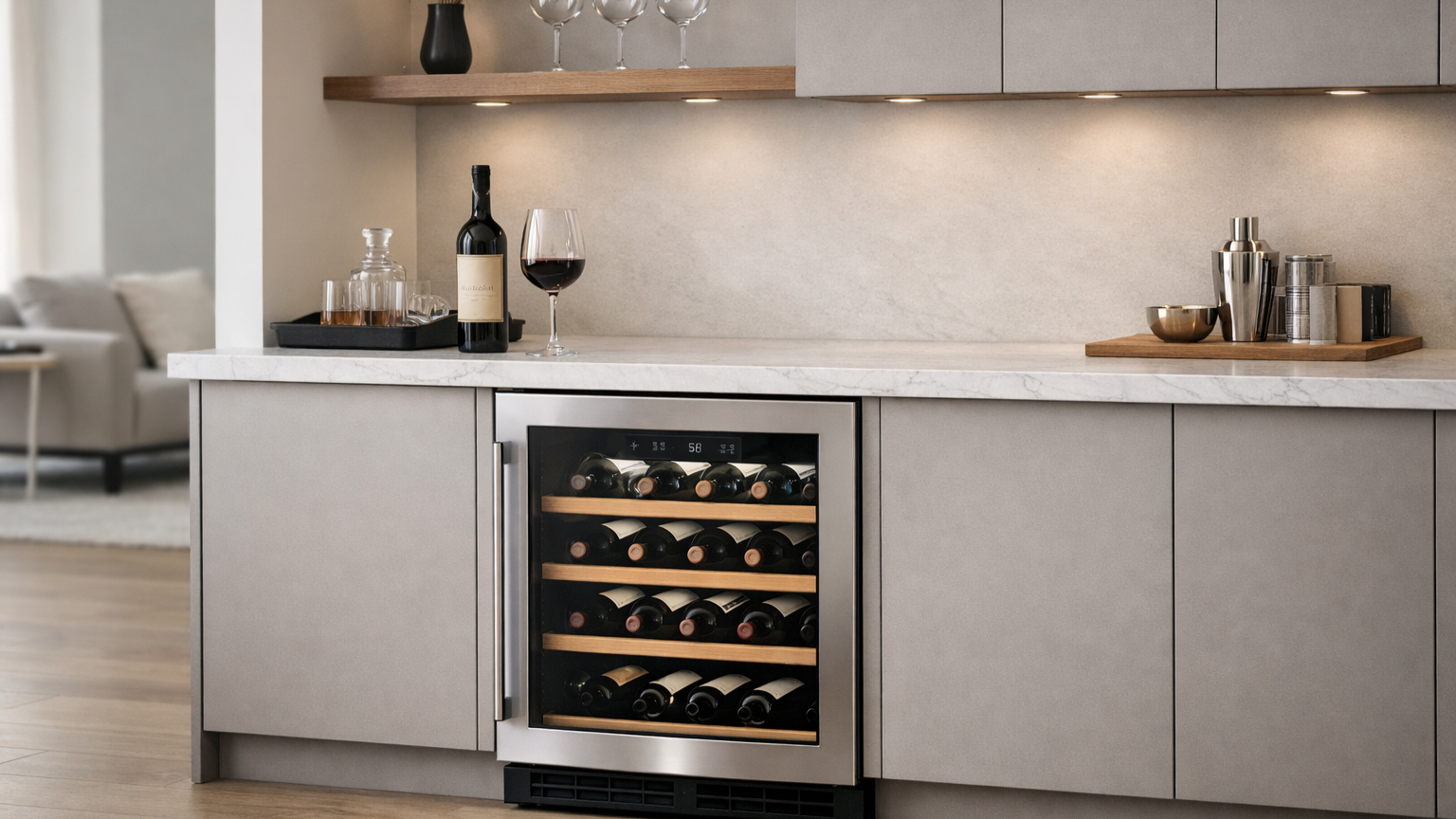
Not all wine fridges work the same way.
Most people assume they do. They pick one based on size or price and move on. Then not long after, the fridge struggles to hold temperature or the wine never feels quite right.
The difference usually comes down to one thing: thermoelectric vs compressor cooling.
Both have their place. But they are not interchangeable.
This guide breaks down how each system actually performs in real homes so you can choose the right one the first time.
Affiliate Disclosure: This post may contain affiliate links. As an Amazon Associate and through other affiliate programs, I earn from qualifying purchases at no additional cost to you.
In This Guide
What thermoelectric and compressor systems actually are
Which one performs better in real homes
When thermoelectric fridges make sense
When compressor fridges are the better investment
The most common mistake people make
Thermoelectric vs Compressor: The Core Difference
Thermoelectric Wine Fridges
Thermoelectric fridges use an electric cooling plate and internal fans instead of a traditional compressor.
They are:
quiet
lightweight
vibration free
But they rely heavily on ambient room temperature to function properly.
If the room gets warm, performance drops quickly.
Compressor Wine Fridges
Compressor systems work like a standard refrigerator.
They:
actively cool using refrigerant
maintain stable temperatures
perform consistently in a wide range of environments
They are slightly louder, but significantly more powerful.
Real World Performance (This Is What Actually Matters)
This is where the difference becomes obvious.
Kitchen Placement
Most people place wine fridges in the kitchen.
Kitchens get warm. Especially:
near ovens
near dishwashers
during cooking
Result:
thermoelectric struggles
compressor handles it easily
Warm Climates and Summer Heat
If your home regularly gets warm, thermoelectric units can’t keep up.
They don’t “cool down” a space. They only lower temperature relative to the room.
So if your room is:
75°F → fine
85°F → problem
Compressor units are not affected in the same way.
Temperature Stability (Quiet Winemaker Note)
Wine doesn’t just need the right temperature. It needs consistent temperature.
Small fluctuations:
dull aromatics
flatten structure
accelerate aging in the wrong way
Compressor systems hold temperature far more consistently.
Thermoelectric units tend to drift as the room changes.
Noise and Vibration
This is where thermoelectric fridges have a real advantage.
Thermoelectric
nearly silent
no vibration
Compressor
slight hum
minimal vibration (modern units are much better than older ones)
For most people, the noise difference is noticeable but not a dealbreaker.
Energy Use and Longevity
Thermoelectric units can be efficient in perfect conditions.
But:
they run constantly in warm rooms
performance drops over time
Compressor units:
cycle on and off
last longer
maintain performance over years
Price vs Value
This is where people often get it wrong.
Thermoelectric
lower upfront cost
better for casual use
Compressor
higher upfront cost
better long-term investment
If you’re storing more than a few bottles, compressor almost always makes more sense.
Quick Comparison
If you just want the short version:
Thermoelectric
nearly silent
works best in cool, stable rooms
struggles in kitchens and warm spaces
better for short-term storage
Compressor
consistent temperature control
works in real home environments
better for kitchens and warm climates
ideal for long-term storage
Here’s how this plays out in real products most people actually buy:
| Wine Fridge | Cooling Type | Best For | Kitchen Use | Key Strength | |
|---|---|---|---|---|---|
|
NewAir 12 Bottle Best Small Space Thermoelectric example |
Thermoelectric | Bedrooms, offices, light use | Risky | Silent and compact | View on Amazon |
| Wine Enthusiast 32 Bottle Dual Zone MAX Top Pick | Compressor | Most households, kitchen use | Reliable | Balanced and consistent | View on Amazon |
| NewAir 46 Bottle Dual Zone Built-In | Compressor | Built-in kitchens, larger collections | Ideal | Powerful and stable | View on Amazon |
Who Should Buy a Thermoelectric Wine Fridge
Thermoelectric can work well if:
you store fewer than ~12 bottles
your room stays consistently cool
you want something completely silent
you are storing wine short-term
Think:
apartment bedroom
office
low-use secondary storage
Who Should Buy a Compressor Wine Fridge
Compressor is the better choice if:
the fridge is in your kitchen
you live in a warm climate
you plan to store wine long-term
you want consistent performance
This is the right choice for most people.
The Most Common Mistake
Buying a thermoelectric fridge for a kitchen.
It seems like a good idea:
cheaper
quieter
smaller
But in a real kitchen environment, it often struggles to maintain temperature.
That leads to:
inconsistent wine quality
frustration
replacing the unit sooner than expected
Recommended Options
These three options represent the setups most people actually end up choosing.
Best Small Thermoelectric Option
NewAir 12 Bottle Thermoelectric Wine Fridge
This is a true thermoelectric unit, which makes it a good example of where this type of cooling system can work well.
It’s quiet, compact, and simple, but it depends heavily on a stable room temperature.
Best for:
bedrooms or offices
consistently cool spaces
short-term storage
Pros
nearly silent operation
vibration free
compact and lightweight
Cons
struggles in warm environments
limited cooling power
not ideal for kitchens
Verdict
This is a good fit for very specific situations. If your space stays cool and you only need light storage, it works well. For most kitchens, it’s not the right choice. This is a good example of where thermoelectric can work, but also where its limitations start to show.
Best Everyday Wine Fridge (Most People Should Buy This Type)
Wine Enthusiast 32 Bottle Dual Zone MAX
This is the category most people should be shopping in. It offers enough capacity, dual zone flexibility, and the kind of stability that actually protects wine.
Best for:
kitchen placement
mixed red and white storage
everyday use
Pros
dual zone temperature control
solid capacity
consistent cooling performance
Cons
takes up more space than compact units
not designed for built-in installation
Verdict
If you’re unsure what to buy, this is the safe choice. It covers most use cases and performs reliably in real home conditions.
Best Built-In Option (Serious Setup)
NewAir 46 Bottle Dual Zone Built-In Wine Fridge
This is where compressor systems really separate themselves. It’s designed for cabinetry, consistent cooling, and long-term use.
Best for:
built-in kitchen installs
larger collections
long-term storage
Pros
front venting for built-in use
strong and stable cooling
larger capacity
Cons
higher upfront cost
requires proper installation space
Verdict
If you’re designing a home bar or upgrading your kitchen, this is the level that actually feels permanent. It performs consistently and handles real-world conditions without issues.
FAQ
Are thermoelectric wine fridges bad?
Not necessarily. They work well in the right environment. The issue is that many people use them in conditions where they struggle.
Do compressor wine fridges damage wine with vibration?
No. Modern units have minimal vibration and are safe for wine storage.
Which lasts longer?
Compressor wine fridges generally last longer and maintain performance over time.
Can thermoelectric fridges cool in hot rooms?
Not effectively. Their cooling ability depends on the surrounding temperature.