What Wine Goes with Mexican Food? (Better Pairings Than You Think)
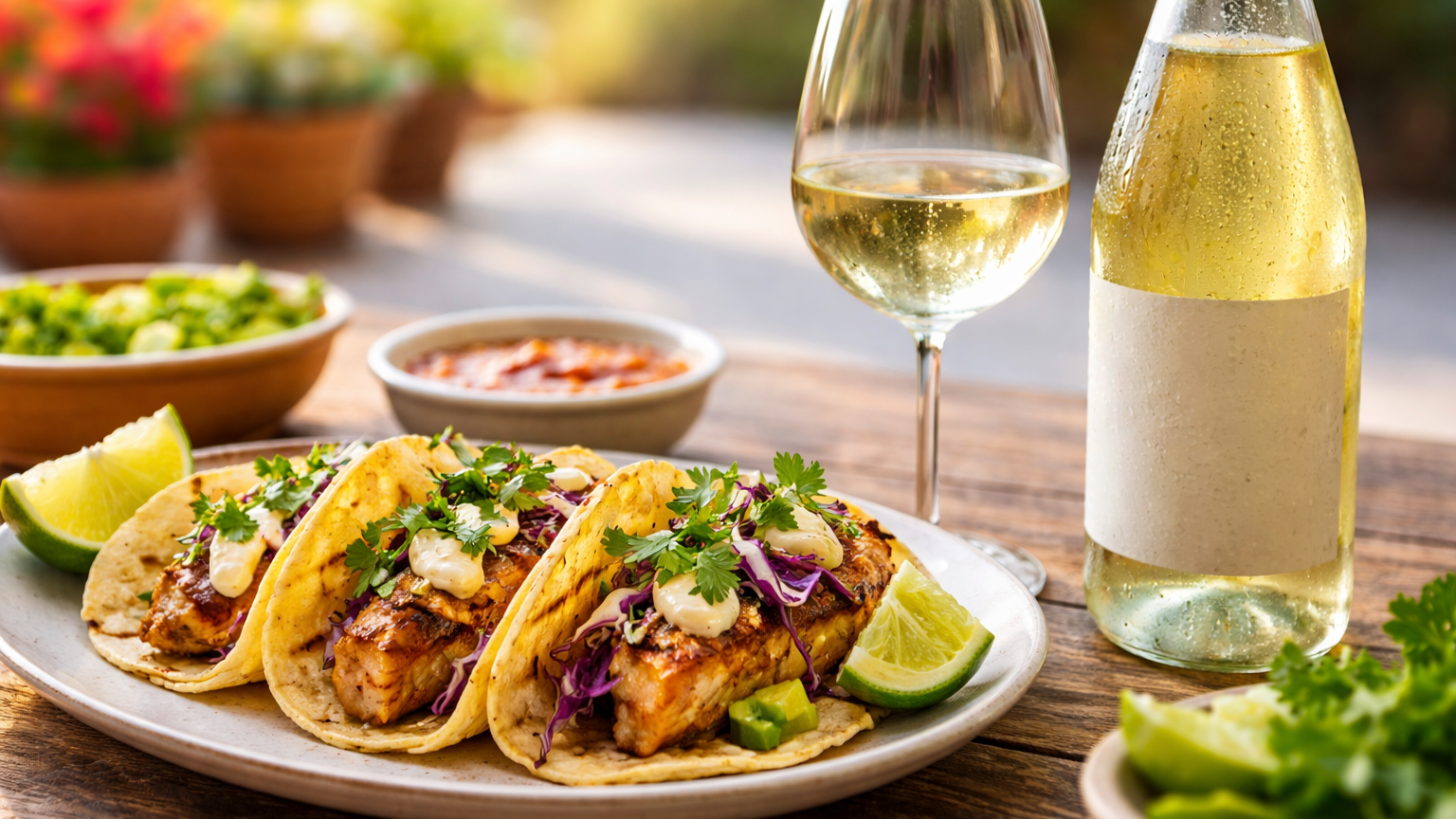
Cinco de Mayo tends to default to margaritas, beer, and maybe a second round of both.
But if you actually stop and think about it, wine works surprisingly well with Mexican food, often better than you’d expect.
The challenge is that most people approach it the wrong way.
Mexican cuisine isn’t one flavor profile. It’s a mix of acid, spice, herbs, smoke, and richness, which means pairing wine isn’t about memorizing rules, it’s about understanding what’s happening on the plate.
Once you get that, you can pair wine with tacos, mole, ceviche, and pretty much anything else without guessing.
Affiliate Disclosure: This post may contain affiliate links. As an Amazon Associate and through other affiliate programs, I earn from qualifying purchases at no additional cost to you.
In This Guide
Why Mexican food is tricky with wine
The 5 rules that actually matter
A quick pairing cheat sheet
Real dish pairings (with explanations)
Why margaritas work so well
Why Mexican Food Is Hard to Pair with Wine
Most cuisines lean in one direction.
Mexican food doesn’t.
In a single meal, you might have:
lime acidity
chili heat
rich fats
grilled smoke
fresh herbs
slow-cooked depth
That’s a lot for one glass of wine to handle.
The most common mistake is pairing based on the protein (chicken, beef, seafood).
That works sometimes.
But here, the sauce, acid, and cooking method matter more than the meat.
The 5 Rules That Actually Matter
If you understand these, you can pair almost anything.
1. Match the Acid
If the dish has lime, tomato, or tomatillo, the wine needs equal or higher acidity.
If it doesn’t:
→ the wine tastes dull
→ the food tastes sharper
→ everything feels disconnected
This is why wines like Albariño and Sauvignon Blanc work so well with Mexican food.
Acid isn’t optional. It’s structural.
2. Control Heat with Alcohol (Not Tannin)
Spicy food doesn’t pair well with:
→ high alcohol
→ heavy tannins (the drying, grippy feeling in red wine)
Both make heat feel more intense.
Instead, you want:
→ lower alcohol
→ fruit-forward wines
→ or slight sweetness
That’s why off-dry (slightly sweet) Riesling works better than a big Cabernet.
Alcohol amplifies heat more than anything else.
3. Use Texture, Not Just Flavor
Pairing isn’t just about taste. It’s about how things feel in your mouth.
→ Fatty food needs acidity or bubbles to cut through it
→ Fried food needs lift to avoid feeling heavy
→ Soft foods benefit from contrast and structure
This is why sparkling wine works so well with fried or creamy dishes.
Texture mismatch is why pairings feel “off,” even when flavors seem right.
4. Let Salt Do the Work
Salt is one of the most powerful pairing tools.
It makes wine taste:
→ smoother
→ less bitter
→ more expressive
That’s why simple foods like chips, tacos, and grilled meat often pair better with wine than overly complex dishes.
Salt improves the wine, not just the food.
5. Watch for Sweetness
Sweetness in food changes how wine tastes.
It can make dry wines feel:
→ sharper
→ more acidic
→ less balanced
To compensate, you need:
→ more fruit in the wine
→ more body
→ or slight residual sugar
This is why dishes like elote or mole need more generous, fruit-forward wines.
Sweetness in food makes wine feel drier than it actually is.
Quick Pairing Cheat Sheet
Instead of memorizing dishes, think in categories.
| Dish Style | What’s Happening | Best Wine Styles | Why It Works |
|---|---|---|---|
| Fresh & Acid-Driven | Citrus, lime, herbs, light seafood | Sauvignon Blanc, Albariño, Brut Sparkling | High-acid wines match the acidity so the wine doesn’t taste flat or disappear |
| Fat + Salt | Avocado, crema, cheese, fried elements | Champagne, Cava, Dry Rosé | Bubbles cut fat, acid refreshes, and salt makes wine taste brighter and smoother |
| Herbaceous & Green | Tomatillo, cilantro, green sauces | Sauvignon Blanc, Grüner Veltliner, Vermentino | Herbal wines mirror green flavors instead of clashing |
| Sweet + Rich | Corn, sauces with slight sweetness, creamy textures | Chardonnay, Viognier, Off-Dry Riesling | Fruit and body prevent the wine from tasting sharp next to sweetness |
| Light but Savory | Brothy dishes, fresh toppings | Dry Rosé, Grüner Veltliner, Light Pinot Noir | Keeps the pairing lifted without overpowering subtle flavors |
| Grilled & Charred | Smoke, char, fat, lime | Pinot Noir, Gamay, Grenache, Syrah (for heavier dishes) | Lower tannin avoids harshness with acid; structure can increase with intensity |
| Rich + Tangy | Pork, citrus marinades, pickled elements | Grenache, Zinfandel, Dry Rosé | Fruit-forward wines balance both acidity and richness |
| Soft & Dense | Masa, cheese, fried coatings | Chardonnay, Chenin Blanc, Sparkling Wine | Acidity and bubbles add lift to heavy textures |
| Heavy & Layered | Multiple fillings, starch + protein + fat | Zinfandel, Merlot, Syrah | Bold, fruit-forward wines hold up to competing flavors |
| Complex Sauces | Mole, layered spice, sweet + savory | Pinot Noir, GSM Blends, Lambrusco | Lower tannin and balance prevent clashes with complexity |
This is the framework. Everything below fits into it.
Real Pairings (And Why They Work)
Chips & Guacamole
What’s happening:
Fat (avocado) + salt + lime
Best wines:
Brut Champagne, Cava, Sauvignon Blanc, Dry Rosé
Why it works:
This is one of the most complete pairing examples.
• Fat from avocado coats your palate and dulls intensity
• Salt reduces bitterness, making wine taste fruitier
• Lime adds acid to keep everything fresh
Sparkling wine works especially well because the bubbles physically break through the fat, while high acidity resets the palate.
→ Salt and fat don’t just need wine. They actually make the wine taste better.
Ceviche
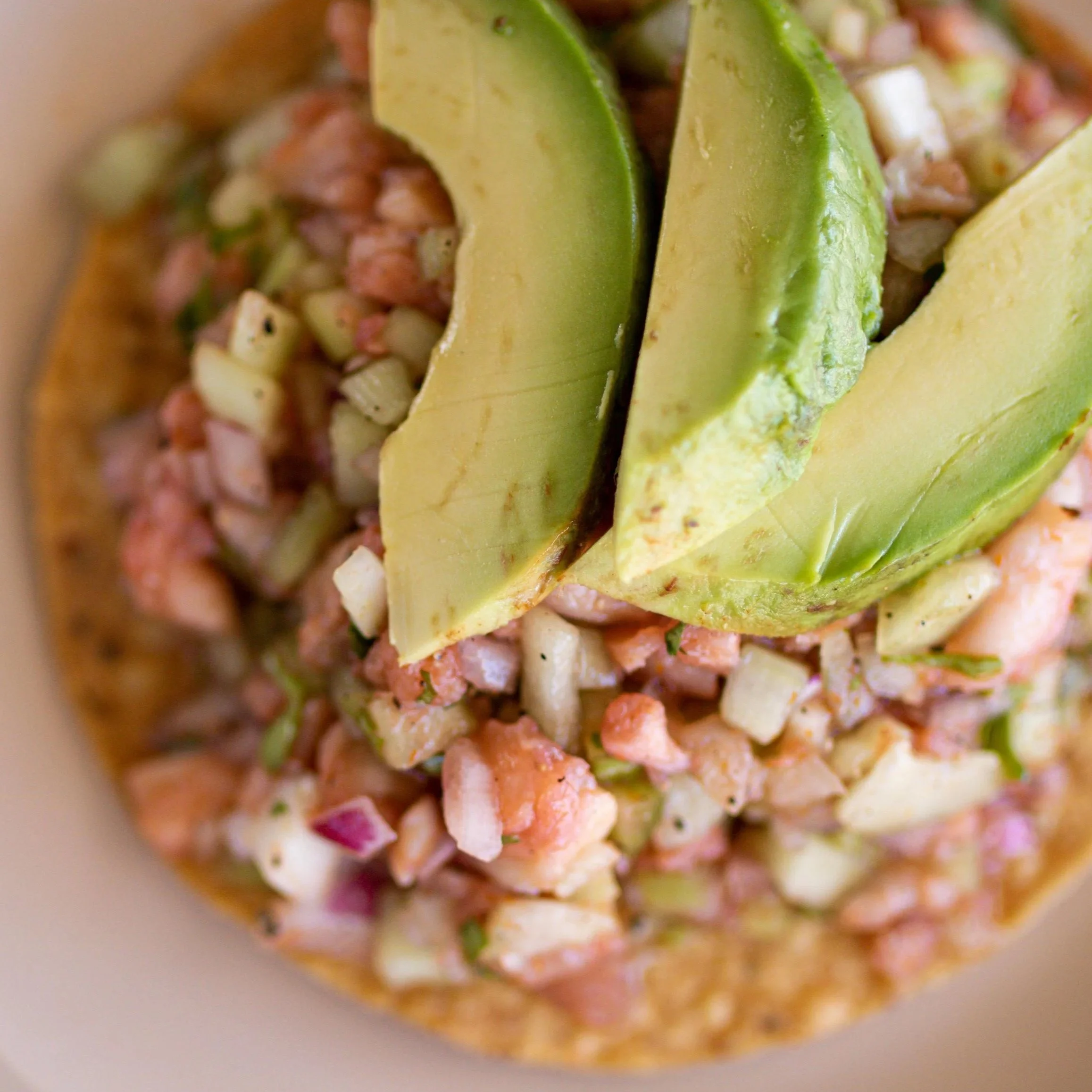
Fresh Ceviche
What’s happening:
High acid (lime) + delicate seafood + fresh herbs
Best wines:
Sauvignon Blanc, Albariño, Brut sparkling
Why it works:
Acid in food can make wine feel flat and stripped of fruit.
If the wine isn’t equally acidic, it disappears.
Sauvignon Blanc and Albariño work because they naturally have high acidity, so they stay bright alongside the lime instead of collapsing.
Sparkling adds lift, helping delicate flavors stand out.
→ Acid doesn’t just pair with acid. It keeps the wine from disappearing.
Fresh & Green Dishes (Fish Tacos, Salsa Verde, Enchiladas Verdes)
What’s happening:
Citrus + herbs + light protein
Best wines:
Sauvignon Blanc, Grüner Veltliner, Albariño, Dry Riesling
Why it works:
These dishes combine acidity with fresh, green flavors like cilantro, tomatillo, and lime.
Herb-driven foods can make wine taste bitter or metallic if the flavors don’t align.
Wines like Sauvignon Blanc and Grüner Veltliner naturally have herbal notes, so instead of clashing, they mirror and reinforce the dish.
You also need enough body to handle things like crema or sauce, which is where wines like dry Riesling come in.
→ When flavors match, they amplify. When they don’t, they fight.
Elote (Mexican Street Corn)
What’s happening:
Sweet corn + creamy sauce + salt + chili
Best wines:
Chardonnay (light oak), Viognier, off-dry Riesling
Why it works:
Sweetness in food makes dry wines taste sharper and more acidic.
If the wine is too lean, it will feel harsh and disconnected.
You need a wine with enough body and fruit to balance both the richness and the subtle sweetness.
Lightly oaked Chardonnay or Viognier works because they bring texture and softness without feeling heavy.
→ Sweet food makes dry wine taste harsher unless the wine has enough fruit or weight.
Pozole
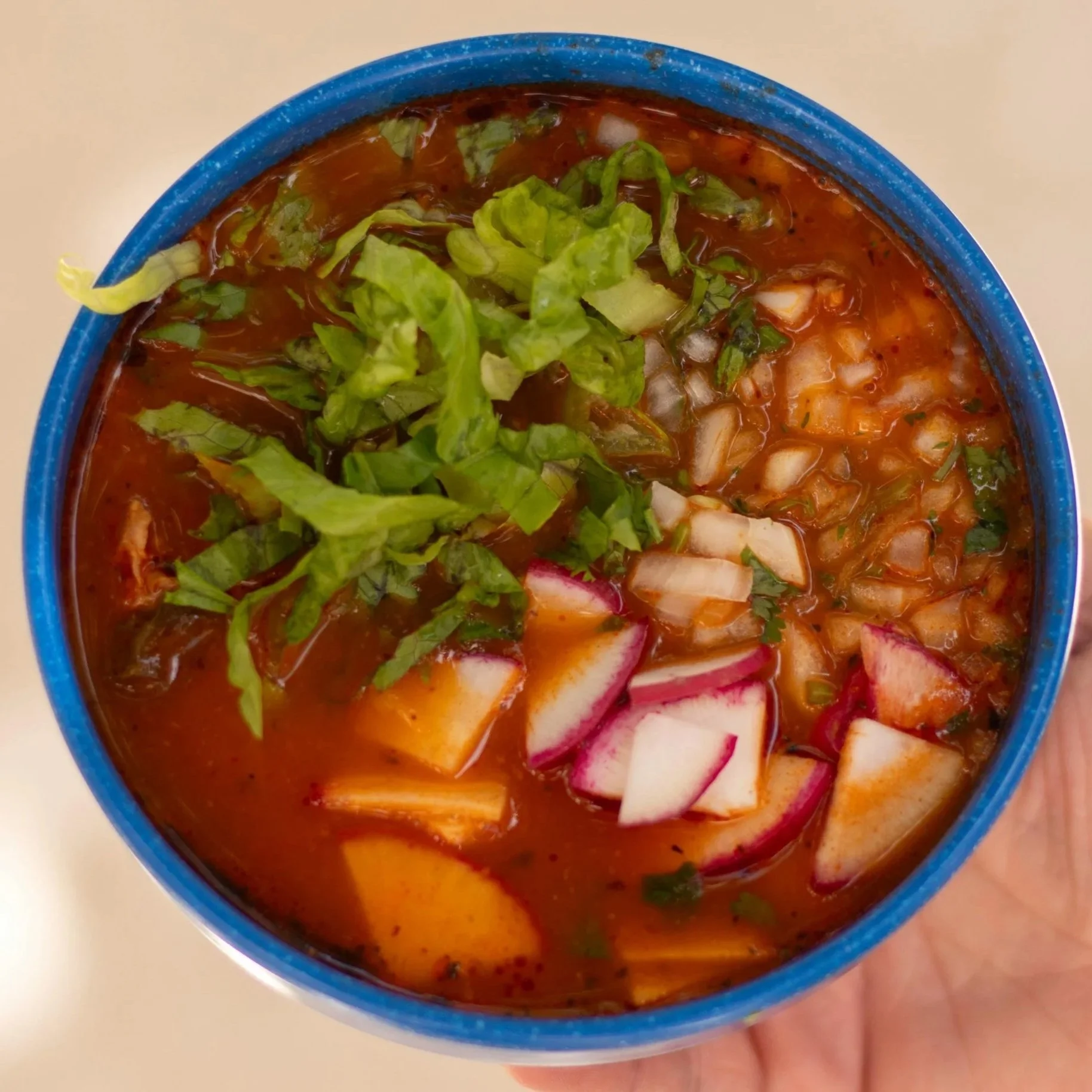
Pozole Rojo
What’s happening:
Savory broth + chili + fresh toppings
Best wines:
Dry Rosé, Grüner Veltliner, light Pinot Noir
Why it works:
Pozole looks rich, but it actually drinks light.
The broth is savory, and the toppings add freshness and brightness.
If you pair it with a heavy wine, it overwhelms the dish and flattens the contrast.
Lighter wines keep everything lifted and in balance.
→ The weight of a dish is about how it feels, not how it looks.
Soft & Rich Dishes (Tamales, Chile Rellenos)
What’s happening:
Soft textures + fat + mild flavors
Best wines:
Chardonnay, Chenin Blanc, Sparkling wine
Why it works:
These dishes are more about texture than intensity.
Soft, dense foods can make everything feel heavy on your palate.
Wine needs to add contrast and lift.
Sparkling wine works especially well because the bubbles lighten the experience, while wines like Chardonnay bring enough body to match the richness.
→ Soft, rich dishes need lift and contrast, not more weight.
Grilled & Charred Dishes (Carne Asada, Al Pastor, Fajitas, Street Tacos)
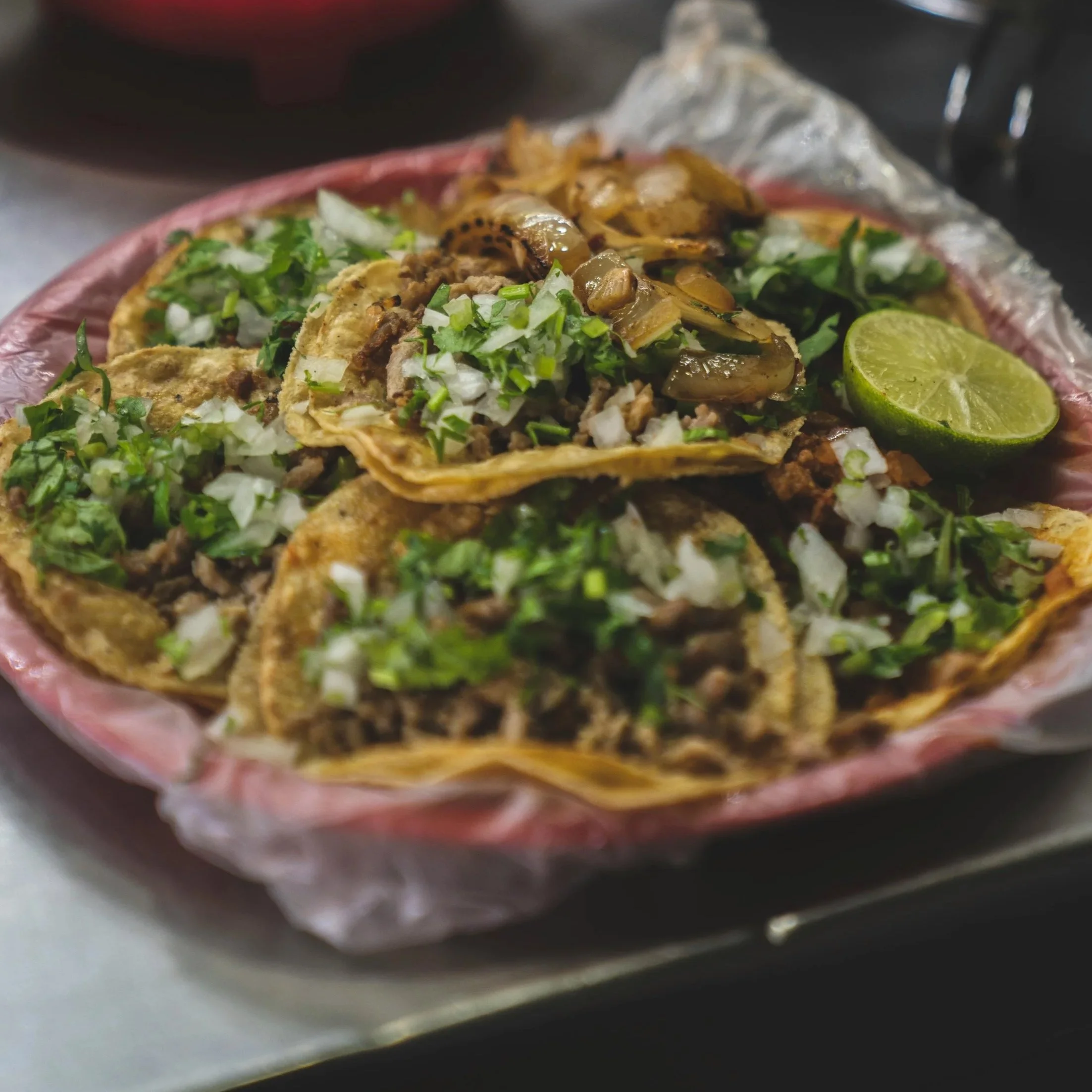
Carne Asada Steet Tacos
What’s happening:
Char + fat + varying levels of acidity (often from lime)
Best wines:
Pinot Noir, Gamay, Grenache, Syrah (for heavier versions)
Why it works:
Grilled meats introduce smoke, fat, and char, which usually suggest bold red wines.
But acidity from lime changes the equation.
Acid in food makes tannins (the drying compounds in red wine) feel more aggressive.
That’s why high tannin wines like Cabernet can feel harsh here.
Lower tannin reds like Pinot Noir or Grenache work better because they stay smooth even with acidity.
As the dish gets heavier (like fajitas), you can step up to wines like Syrah with more structure.
→ Acid in food makes tannins feel stronger, so lower tannin reds are often the better choice.
Burritos
What’s happening:
Dense + layered + multiple competing flavors
Best wines:
Zinfandel, Merlot, Syrah
Why it works:
Burritos combine a lot of elements at once: protein, fat, starch, acid, sometimes spice.
There’s no single dominant flavor to match.
This is not about precise pairing. It’s about choosing a wine that won’t get lost.
You want something bold, fruit-forward, and flexible enough to handle a mix of flavors.
→ When a dish is complex and layered, the goal isn’t perfection. It’s choosing a wine that holds up.
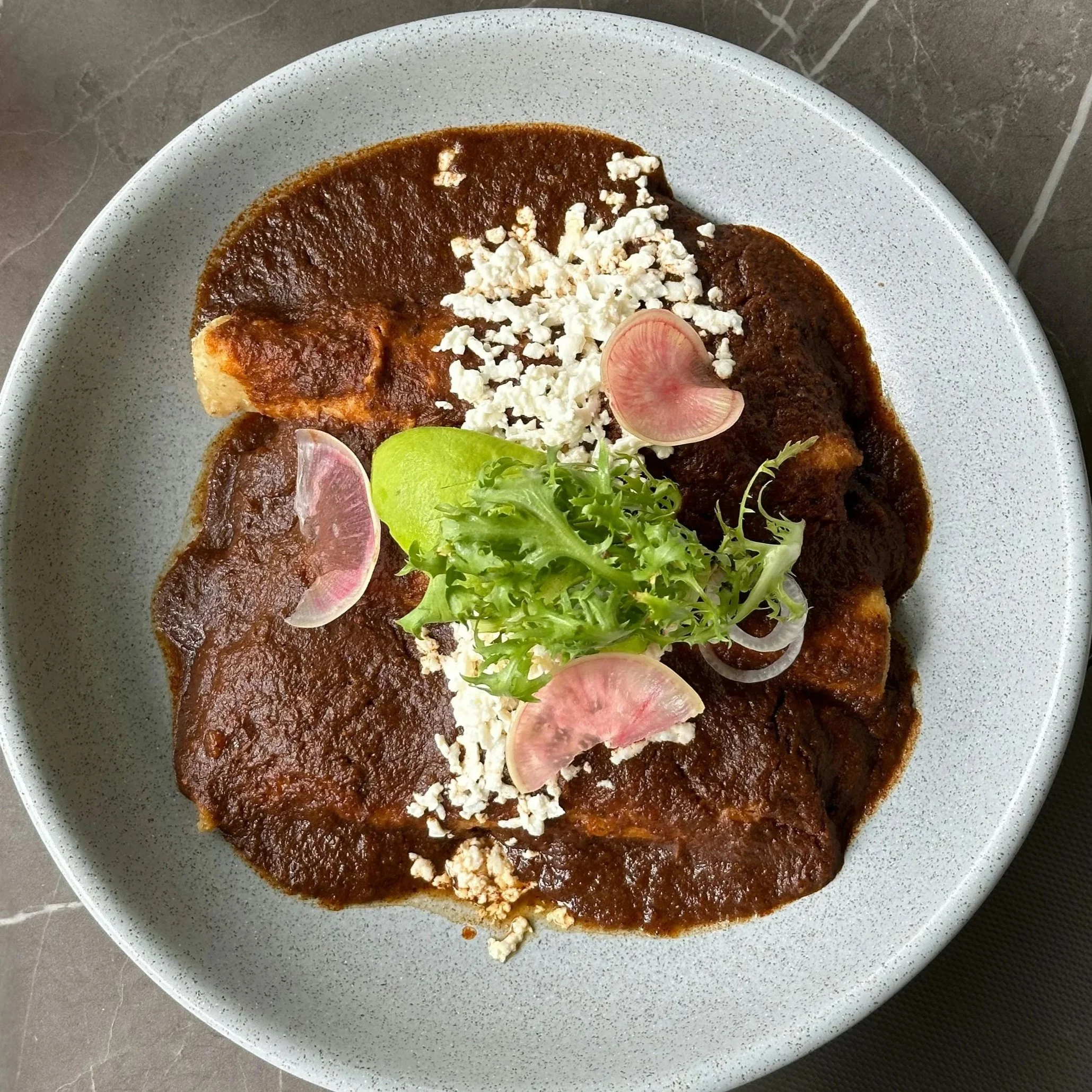
Mole con Pollo
Mole con Pollo
What’s happening:
Chili + chocolate + spice + deep, layered flavors
Best wines:
Pinot Noir, GSM blends (Grenache-Syrah-Mourvèdre), Lambrusco
Why it works:
Mole is complex, not heavy.
It combines sweet, savory, bitter, and spicy elements all at once.
High-tannin or heavily oaked wines can clash and make the dish feel muddy.
Lighter reds like Pinot Noir work because they stay balanced and let the sauce shine.
Lambrusco works surprisingly well because slight sweetness and bubbles add contrast and lift.
→ With complex dishes, restraint works better than power.
Why Margaritas Just Work
There’s a reason people default to margaritas.
They’re built for this cuisine.
lime → matches acidity
salt → enhances flavor
tequila → cuts through richness
Wine has to work to achieve that balance.
A margarita does it automatically.
Final Thoughts
Mexican food isn’t one flavor.
It’s a range:
bright and citrusy
smoky and grilled
rich and slow-cooked
complex and layered
That’s why wine pairings feel inconsistent.
But once you understand:
acid
heat
texture
…it becomes simple.
Instead of memorizing pairings, you start recognizing patterns.
And once you can do that, you can pair wine with almost anything.
FAQ
What is the best wine for spicy Mexican food?
Avoid high alcohol and heavy tannins. They amplify heat.
Go for lower alcohol, fruit-forward wines like Riesling, Grenache, or Rosé.
Can you pair red wine with Mexican food?
Yes, but choose lower tannin styles like Pinot Noir, Gamay, or Grenache.
Heavy reds like Cabernet Sauvignon are harder to pair.
Is white wine better than red with Mexican food?
Often, yes.
Because many dishes rely on acid, citrus, and herbs, which pair more naturally with white wines.
What wine goes best with tacos?
It depends on the taco, but generally:
fish tacos → Sauvignon Blanc
meat tacos → Pinot Noir or Grenache
Is Champagne actually good with Mexican food?
Yes. Especially with salty, fatty foods like chips and guacamole.
The acidity and bubbles make it one of the best pairings.