Is Wine Healthier Than Other Alcohol? What the Research Actually Shows
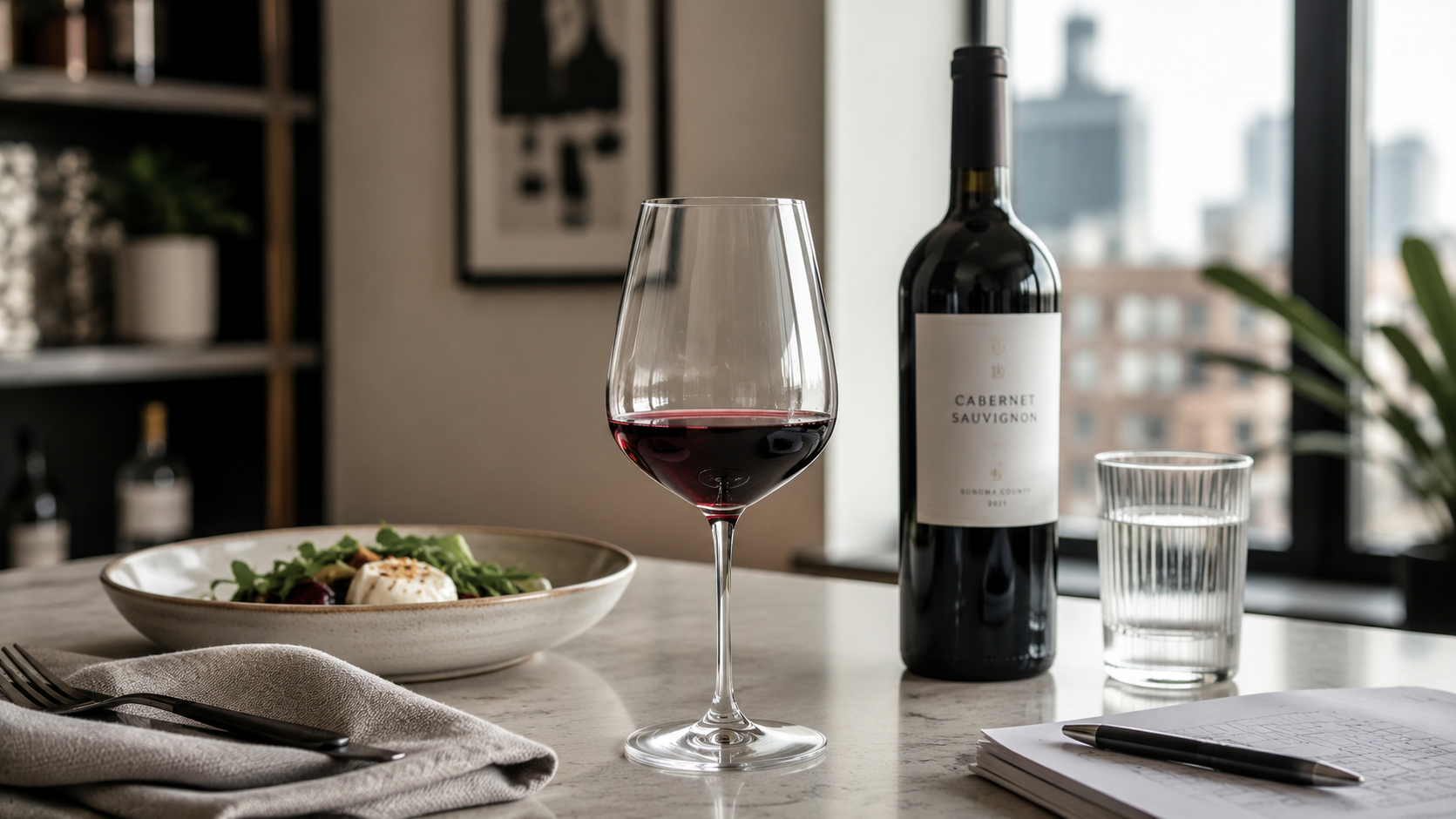
Wine has had a "heart-healthy" reputation for decades, attached to the Mediterranean diet, longevity studies, and dinner party justifications everywhere. The reality is more complicated, and worth understanding clearly if you drink wine or are thinking about it.
Wine is still alcohol. It is not a health food. But there are legitimate reasons it holds a slightly better position in the research compared to beer, cocktails, and spirits, and those reasons go deeper than marketing.
Affiliate Disclosure: This post may contain affiliate links. As an Amazon Associate and through other affiliate programs, I earn from qualifying purchases at no additional cost to you.
The Polyphenol Argument: Real, But Usually Overstated
Red wine contains a class of compounds called polyphenols, and this is where wine genuinely separates itself from most other alcoholic beverages.
Polyphenols are plant-derived molecules found in grape skins, seeds, and stems. The most studied ones in wine are resveratrol, quercetin, and catechins. In laboratory research, these compounds have shown antioxidant effects, meaning they can neutralize free radicals that damage cells, and anti-inflammatory properties that may reduce chronic inflammation at the cellular level.
Resveratrol in particular has attracted serious scientific attention. It has been studied in connection with cardiovascular protection, insulin sensitivity, and even longevity pathways in animal models. The mechanism is real. The translation to humans at drinking quantities is where things get complicated.
The honest limitation is dosing. The amounts used in clinical studies are far higher than what a normal glass of wine contains. You would need to drink dozens of glasses to approach the concentrations studied in isolation, which obviously creates more problems than it solves. So the compounds are genuinely present and genuinely studied. The leap from that to "drink wine for your health" does not hold up at normal consumption volumes.
What does hold up is this: among alcoholic beverages, red wine is one of the only ones that brings anything biologically interesting to the table beyond ethanol. Beer has some B vitamins and minerals. Spirits have essentially nothing. Red wine, particularly from thick-skinned grapes like Cabernet Sauvignon, Syrah, and Malbec, contains a meaningful concentration of compounds that no other common beverage matches.
How Wine Gets Consumed Matters More Than the Wine Itself
This is probably the most underappreciated factor in the wine-and-health conversation, and it has nothing to do with chemistry.
Wine tends to be sipped slowly, poured in smaller volumes, and consumed alongside food. That drinking pattern produces fundamentally different physiological outcomes than drinking the same amount of alcohol quickly on an empty stomach.
When you drink with food, alcohol absorption slows significantly. Peak blood alcohol concentration drops, and the liver has more time to metabolize ethanol before it accumulates. The social and dining context that wine typically occupies, a meal, a conversation, an experience, also means drinking tends to stop naturally rather than escalating.
Compare that to the environments where spirits and cocktails are typically consumed. Faster drinking, higher alcohol concentration per sip, often without food, and in contexts where another round is the default. The beverage is different, but so is everything around it.
Researchers call this the "drinking pattern" variable, and it consistently shows up as more predictive of health outcomes than the type of alcohol consumed. Wine happens to fit the favorable pattern more reliably than most alternatives. That is not an accident of culture. It reflects the way wine is produced and served: lower alcohol concentration, natural portion signals from the bottle and glass, and a tradition built around pairing with food.
The Mediterranean Diet Problem (And Why It Actually Supports Wine)
Most positive wine research comes with a caveat: wine drinkers in these studies also tend to eat more vegetables, use more olive oil, be more physically active, and have stronger social connections. Separating wine from that entire lifestyle pattern is statistically difficult, which is why skeptics correctly point out that the wine itself may not be doing much of the work.
That caveat is legitimate. But it cuts both ways.
The fact that wine consistently appears alongside the healthiest dietary pattern studied in modern nutritional research is not a coincidence. Wine, particularly at dinner, fits naturally into a food-forward, social, slower-paced approach to eating. It does not appear alongside fast food, binge drinking, or sedentary habits at the same rate that beer and spirits do.
So yes, confounding is a real methodological problem in this research. But the association itself is worth something. Wine belongs to a cultural and dietary context that produces good health outcomes. That is not a reason to start drinking. It is a reason to be honest that the drink and the lifestyle around it are not entirely separable.
What Actually Happened to the Heart Health Claims
For most of the 1990s and 2000s, moderate red wine consumption was discussed in near-clinical terms as cardioprotective. Cardiologists mentioned it. Major publications ran with it. The "French Paradox," the observation that French populations had relatively low rates of heart disease despite high saturated fat intake, became shorthand for red wine as medicine.
The science has since become more careful, for two reasons.
First, the early observational studies had a significant flaw: they often categorized former drinkers, many of whom quit due to illness, as non-drinkers. That made the non-drinking group look sicker than it actually was, inflating the apparent benefit of moderate drinking by comparison. When researchers corrected for this, the cardiovascular benefit shrank considerably.
Second, longer-term data on alcohol and cancer risk complicated the picture. Even moderate drinking is associated with a modest increase in risk for certain cancers, particularly breast cancer, colon cancer, and cancers of the upper digestive tract. The cardiovascular benefit, if it exists, has to be weighed against that.
Where does that leave things? Heavy drinking is clearly harmful across every metric. Moderate drinking, defined as roughly one drink per day for women and one to two for men, appears to be somewhere between neutral and mildly beneficial for cardiovascular outcomes in middle-aged and older adults, while carrying a small but real increase in certain cancer risks. Not drinking remains the lowest-risk baseline overall.
The nuanced but honest conclusion is that for people who already drink, moderate wine consumption is a reasonable choice with a defensible risk profile. For people who don't drink, no current evidence justifies starting for health reasons.
Wine vs. Beer, Cocktails, and Spirits: An Honest Comparison
This is worth making concrete rather than just directional.
A standard five-ounce pour of dry red wine contains roughly 125 calories, around 4 grams of carbohydrates, and 12 to 14 percent alcohol by volume. It also contains those polyphenols discussed earlier.
A 12-ounce regular beer runs 150 to 180 calories, 12 to 15 grams of carbohydrates, and 5 percent ABV. Light beer brings calories down to around 100 but strips most nutritional content. Neither contains meaningful polyphenol concentrations.
A margarita made with a standard recipe: roughly 250 to 300 calories, 20 to 30 grams of sugar depending on the mix, and often 15 to 20 percent effective ABV in the glass. Consumed quickly, on an empty stomach, frequently followed by another. The caloric and glycemic load is substantial before you factor in alcohol volume.
A double whiskey on the rocks is about 140 calories with no sugar, which looks clean on paper. The 40 percent ABV concentration means absorption is faster, and spirits are rarely consumed with food in the same way wine is.
Wine does not win every comparison cleanly, but across the full picture of calories, sugar, alcohol concentration, accompanying compounds, and typical consumption patterns, it holds up as the most moderate option in real-world drinking habits.
Tasting Wine Is More Cognitively Demanding Than It Looks
This section tends to get dismissed as a fun fact, but it is worth taking seriously.
When you actively taste wine rather than just drink it, you are running a surprisingly complex sensory and cognitive process. You are isolating individual aromas from a mixture of hundreds of volatile compounds. You are comparing what you detect against a library of sensory memories built over years. You are evaluating multiple structural elements simultaneously: acidity, tannin, alcohol heat, body, finish length. And you are translating all of that into language, which requires verbal processing on top of sensory processing.
Brain imaging studies on expert tasters have shown activation across regions associated with memory retrieval, emotional response, language production, and decision making, simultaneously. That is a meaningfully different cognitive load than passive consumption.
To put it concretely: identifying that a wine smells like blackcurrant, cedar, and dried herbs requires your brain to match a complex volatile compound mixture against stored olfactory memories, apply a label, and hold that alongside other sensory information in working memory. Doing that across multiple attributes at once, while also evaluating structure and balance, is closer to a cognitive exercise than most drinking experiences.
None of this makes wine a brain supplement. But it does mean that building a genuine tasting practice, learning to actually pay attention to what is in the glass, is more mentally engaging than virtually any other form of alcohol consumption. That attention also tends to slow you down, which connects back to the drinking pattern argument.
What Moderate Actually Means, Physiologically
The standard definition of moderate drinking is one drink per day for women and one to two for men. A standard drink is five ounces of wine at 12 percent ABV, which is smaller than the pour most people default to at home. A generous restaurant pour or a home glass filled to comfort is often closer to seven or eight ounces, meaning one glass can quietly become one and a half standard drinks.
The food timing point is worth explaining because it comes up repeatedly without much context. Alcohol is absorbed primarily through the small intestine. When your stomach contains food, particularly fat and protein, gastric emptying slows. That delays alcohol reaching the small intestine, which flattens the absorption curve, reduces peak blood alcohol concentration, and gives your liver more time to process ethanol before it accumulates in your bloodstream. Drinking on an empty stomach can produce peak BAC roughly 50 percent higher than the same amount consumed with a meal.
That is why "drink with food" is not just etiquette. It is a meaningful physiological variable.
Sleep is worth addressing directly because it is the health cost most wine drinkers underestimate. Alcohol is sedating, which is why it feels like it helps with sleep. But it suppresses REM sleep in the second half of the night and increases sleep fragmentation. Even one drink within a few hours of bedtime measurably affects sleep quality in most people. If you are drinking wine at dinner and sleeping well, that is great. If you are having a glass at ten pm and wondering why your sleep feels shallow, that is probably why.
The Honest Bottom Line
Wine is not a wellness product. But among the ways adults commonly consume alcohol, it holds a legitimate and defensible position as the most moderate option across most relevant measures.
The polyphenols are real, even if overhyped. The drinking pattern that surrounds wine is genuinely different from how most other alcohol is consumed. The cultural context it occupies, food, conversation, attention, tends to produce more intentional drinking. And for adults who already drink, moderate wine consumption fits within a risk profile that most mainstream health guidance considers reasonable.
The best version of wine drinking looks like this: a glass or two with dinner, a few nights a week, from a bottle you are actually paying attention to. Not as a health strategy. As a considered pleasure that fits into a life where food, sleep, and movement are also taken seriously.
That is a defensible way to drink. And wine, more than most options, lends itself to it.
Frequently Asked Questions
Is wine actually healthier than other types of alcohol?
Compared to beer, cocktails, and spirits, wine tends to come out slightly ahead on a few measures: lower sugar, lower alcohol concentration, and polyphenol content from grape skins. But the bigger factor is usually how wine gets consumed. Slower, smaller pours with food produce better outcomes than the beverage itself. No alcohol is healthy in any meaningful clinical sense.
Is red wine healthier than white wine?
Red wine contains significantly more polyphenols than white because the grape skins stay in contact with the juice during fermentation. That gives it a measurable nutritional edge. In practice, the difference is meaningful at the compound level but unlikely to change health outcomes at normal drinking volumes.
How many glasses of wine per week is considered healthy?
Most guidelines define moderation as up to one drink per day for women and one to two for men, with a standard pour being five ounces. Some more recent research suggests even that level carries trade-offs, so "healthy" is doing a lot of work here. Lower consumption is consistently lower risk.
Does red wine have heart health benefits?
Earlier research made strong claims about cardiovascular benefits from moderate red wine consumption. More recent analysis is more cautious. The current consensus leans toward moderate drinking being roughly neutral to marginally beneficial for some populations, with confounding lifestyle factors accounting for much of the positive signal. Not drinking remains the lowest-risk baseline.
Is natural wine or organic wine healthier?
No strong clinical evidence supports natural or organic wine being significantly healthier. The differences are primarily about production philosophy, additive use, and sulfite levels rather than outcomes that show up meaningfully in health research.
Is a glass of wine every night bad for you?
It depends on the individual, but daily drinking, even at low volumes, carries some risk of habituation and cumulative liver load. Sleep quality is also measurably affected by alcohol even at one drink. For most healthy adults it is not alarming, but "every night" is worth being honest with yourself about.
What are polyphenols in wine and why do they matter?
Polyphenols are plant-derived compounds, including resveratrol, flavonoids, and tannins, found primarily in grape skins and seeds. They have antioxidant and anti-inflammatory properties studied in isolation. The amounts present in a normal glass of wine are real but modest, and the doses used in clinical studies are not achievable through drinking alone.
Is wine better for weight loss than beer or cocktails?
Wine generally has fewer carbohydrates than beer and less sugar than most cocktails, which gives it a slight edge in that context. A five-ounce pour of dry wine runs roughly 120 to 130 calories. That is meaningfully lower than a large cocktail or several beers, though alcohol still contributes to caloric intake regardless of source.