Red Wine vs White Wine: What's the Real Difference?
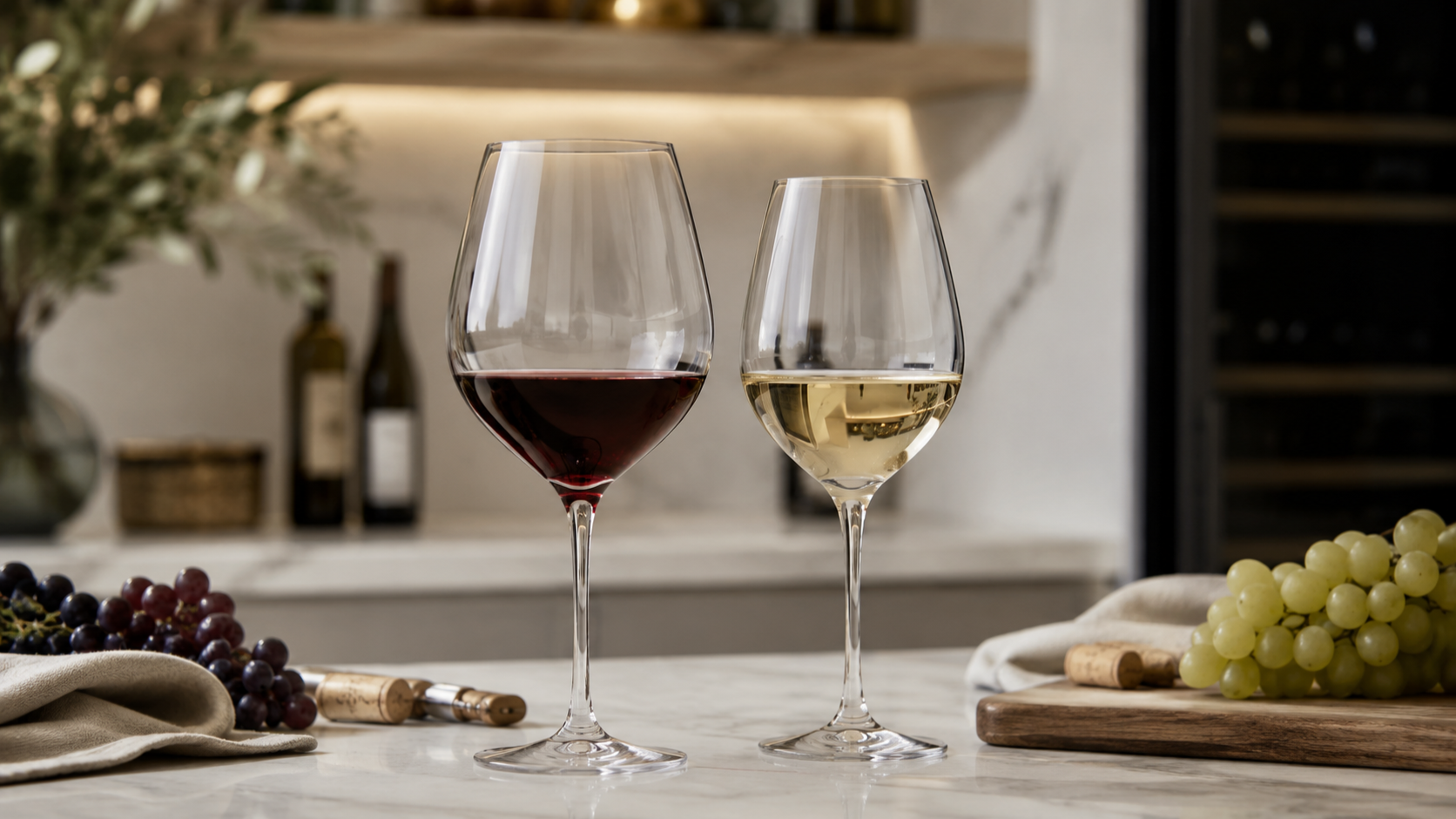
Wine gets divided into red and white before people even learn to swirl a glass. It's the first thing most drinkers use to navigate a wine list, and for good reason — the two styles taste genuinely different. But the explanation most people get stops at "reds are bolder, whites are crisper," which tells you almost nothing useful.
After thirteen years making wine across still, sparkling, fortified, and late harvest styles, I can tell you that the real story is more interesting than that — and understanding it actually changes how you drink.
The One Thing That Explains Almost Everything
If you want to understand why red and white wine taste so different, you only need to understand one concept: skin contact during fermentation.
After harvest, grapes get crushed to release their juice. Whether that juice ferments with the skins or without them isn't a decision made at crush — it's determined by the variety and the style of wine being made. For red wine, the crushed fruit goes into the fermentation vessel together: juice, skins, seeds, and sometimes stems. For white wine, the grapes are pressed immediately and the skins are separated before fermentation begins.
That's it. That's the fork in the road.
Red wine ferments with the skins
For red wine, the crushed fruit — juice, skins, seeds, and sometimes stems — all go into the fermentation vessel together. As fermentation progresses, the rising alcohol and heat act as solvents, pulling compounds out of the skins and into the liquid.
What comes out of the skins:
Anthocyanins — the pigments that make red wine red. Without them, the wine would be pale yellow.
Tannins — large polyphenolic molecules that bind to proteins, including the ones in your saliva. That drying sensation on your gums and teeth? That's tannin.
Flavor and texture compounds — procyanidins, resveratrol, and a range of phenolic compounds that contribute to structure, mouthfeel, and longevity.
The length of skin contact — anywhere from a few days to several weeks depending on the style — is one of the main levers a winemaker uses to control how much extraction happens. More time means more color, more tannin, more structure. Pull the skins early and you get something lighter and softer. Leave them longer and you're building architecture.
White wine ferments without the skins
For white wine, the grapes are pressed immediately after crushing, and the skins are separated from the juice before fermentation begins. The juice then ferments on its own, clean and undisturbed.
The result: no meaningful tannin pickup, lighter color, and a wine that's built primarily around acidity and aromatics rather than structure and extraction.
This is why white wine feels so different in your mouth. It's not just a matter of weight — it's a completely different structural profile.
The same grape can make both
This surprises a lot of people. The flesh inside most grape varieties — even deeply colored red grapes — is clear or pale yellow. Color lives almost entirely in the skins.
That means a red grape, pressed quickly and fermented without skin contact, will produce a white wine. This is exactly how Blanc de Noirs Champagne works. Pinot Noir and Pinot Meunier are both red grapes, but when pressed carefully and immediately, they yield a light, almost colorless juice that ferments into white sparkling wine.
Once you understand this, a lot of wine styles that seem confusing start making complete sense.
Why Red Wine Feels Heavy, Grippy, and Structured
The "boldness" people associate with red wine isn't one thing — it's several structural components arriving at the same time.
Tannin is the defining texture of red wine
Tannin comes from three main sources: grape skins, seeds, and oak barrels. In the winery, we think about tannin constantly — its quantity, its ripeness, its grain. Ripe tannin feels soft and velvety. Unripe tannin is harsh and angular. The difference comes down to when the grapes were picked and how carefully the winemaking was handled.
Here's the key thing most wine writing gets wrong about tannin: it doesn't just make wine dry. Tannin is a structure-builder. It's what allows certain red wines to age for decades and develop complexity over time. Without tannin, a wine has no scaffolding — nothing to hold it together as it evolves in the bottle.
Tannin also interacts directly with food. When you eat something high in fat or protein alongside a tannic red wine, those proteins bind to the tannins before the tannins can bind to your saliva proteins. The wine softens immediately — what felt aggressive on its own becomes round and generous with food. This is the actual reason steak and Cabernet Sauvignon work together. It's chemistry, not convention.
Alcohol weight versus acidity weight
Red wines are typically made from grapes harvested at higher sugar levels, which means higher potential alcohol. Alcohol has genuine physical weight — it's more viscous than water, and you feel it as richness and warmth in the back of your throat and chest.
White wines tend to carry lower alcohol and lean on acidity instead. Acid has almost no viscosity — it cuts through the palate rather than coating it. This is why the same "body" rating can feel very different across styles: a 14% Chardonnay with high acidity will feel lighter than a 14% Zinfandel with low acid, even though the alcohol is identical.
Oak does more than add flavor
You've probably read that oak adds vanilla, spice, toast, and smoke to wine. That's true but incomplete.
The more important thing oak does is manage micro-oxygenation. A barrel isn't airtight — it allows tiny, consistent amounts of oxygen to interact with the wine over months of aging. That slow oxygen exposure polymerizes tannins, linking them into longer chains that feel softer and smoother on the palate. It rounds out harsh edges, integrates structure, and builds the kind of textural complexity that stainless steel tanks simply can't replicate.
This is why barrel-aged reds often feel rounder and more complete than unoaked examples of the same variety. The oak flavor is almost secondary.
Why White Wine Tastes Bright, Fresh, and Aromatic
White wine's character is built almost entirely around two things: acidity and aromatics. Neither gets talked about as precisely as they deserve.
Acidity is structural, not just a flavor
When people call a wine "crisp" or "refreshing," they're almost always describing acidity — specifically the sensation of saliva rushing back into your mouth after a sip. That's your parotid glands responding to the drop in pH.
Wine acidity comes primarily from two organic acids: tartaric and malic. Tartaric is stable and firm; malic is sharper and more aggressive, the same acid you find in green apples. During malolactic fermentation — a secondary bacterial process where malic acid converts to the softer lactic acid — winemakers can deliberately reduce a wine's perceived sharpness and add a creamy, rounded texture. This is why many Chardonnays feel buttery and rich rather than tart, and why most Sauvignon Blancs don't go through it — you want to preserve that cutting edge.
Acidity also functions as a preservative and an aging mechanism. High-acid wines hold their freshness longer in the bottle. A Riesling Spätlese from the Mosel with 8% alcohol and blistering acidity can age 20 to 30 years. The acid keeps oxidation at bay and allows the wine to evolve slowly rather than collapsing.
Temperature changes more than you think
White wine is served cold for a real reason: lower temperatures suppress alcohol volatility and sharpen the perception of acidity and aromatics. The wine smells cleaner and tastes fresher at 45–50°F than it does at 65°F.
But most people serve white wine too cold. At refrigerator temperature — around 38°F — aromas are almost completely suppressed. The volatile compounds that carry a wine's bouquet simply don't evaporate at that temperature. You lose everything interesting about the wine and end up tasting cold water with vague fruit notes.
The sweet spot for most whites is 45–55°F depending on the style. Lighter, more aromatic wines like Riesling and Pinot Grigio want to be on the cooler end. Fuller-bodied whites like oaked Chardonnay show best at 50–55°F where their texture and aromatic complexity can actually express themselves.
Why white wine flavors are more immediately recognizable
Without tannin interrupting perception, white wines project their fruit and floral character more directly onto the palate. Tannin in red wine competes with aromatics for your sensory attention — it's part of why big reds often smell more complex but taste more austere. Whites don't have that competition happening, so the fruit reads more cleanly and immediately.
This isn't a quality statement. It's just a structural reality that makes white wines easier to identify and understand when you're learning.
Red vs. White Wine With Food: What Actually Matters
Pairing wine with food isn't about following rules. It's about understanding one principle: balance between the structure of the wine and the texture of the dish.
Why tannin loves fat and protein
I already touched on the chemistry above, but it's worth being explicit: tannin softens in the presence of fat and protein because those molecules interact directly. A wine that tastes harsh or drying on its own can taste smooth and integrated alongside a well-marbled steak or a plate of aged cheese. The food isn't masking the wine — it's chemically changing how the tannin registers on your palate.
This is also why tannic reds tend to fail with delicate fish dishes. There's not enough fat or protein to absorb the tannin, and you're left with a clash rather than a complement.
Why acidity makes white wine so versatile
High-acid wines do something useful at the table: they cut through fat, salt, and richness, resetting your palate between bites. This is why Sauvignon Blanc and fried food work. Why Champagne pairs with everything. Why Riesling handles spice better than almost any other wine.
The acidity doesn't fight the food — it functions like a squeeze of lemon, brightening and clarifying each bite so the next one tastes as good as the first.
Forget the color rule
"Red with meat, white with fish" is a heuristic from a time before most people had access to diverse wine. Texture and weight are what actually matter.
A lean, chilled Pinot Noir from Burgundy pairs beautifully with salmon. A rich lobster bisque with a cream base calls for a full-bodied, oaked Chardonnay. A delicate sole in white wine sauce would be overwhelmed by a Barolo.
The question to ask isn't "what color?" It's "how rich is the dish, and does the wine have the weight and structure to match it?"
Common Myths Worth Correcting
"Red wine should be served at room temperature." This comes from pre-central-heating Europe, where room temperature in a stone house was 58–62°F. Most modern rooms run 68–72°F, which is too warm for almost any red wine. At that temperature, alcohol becomes more volatile, the wine smells hot, and soft structure turns flabby. Most reds taste best between 60–65°F. Light reds like Beaujolais or lighter Pinot Noir can handle a slight chill down to 55°F.
"White wine can't age." Most white wines aren't built for aging and shouldn't be held — but that's a function of their structure, not their color. High-acid, high-extract whites age as well as any red. Grand Cru white Burgundy regularly improves for 15–20 years. Vintage Champagne can evolve for decades. Riesling from top German or Alsatian producers is arguably more age-worthy than most of the red wines people cellar. What matters is acidity, concentration, and how well the wine was made.
"Red wine is always drier than white wine." Dryness is about residual sugar, which has nothing to do with color. Plenty of red wines carry detectable sweetness — some Zinfandels, many entry-level red blends, and wines from warm vintages where fermentation was stopped early. Meanwhile, most Chardonnays and Sauvignon Blancs are completely dry. Check the winemaking notes if sweetness matters to you, not the color of the wine.
"White wine is always lighter." An oaked, full-malo Chardonnay at 14.5% alcohol with low acidity and residual glycerol can feel heavier than a 12.5% Pinot Noir with bright acidity and no oak. Body is a function of alcohol, acidity, oak, and winemaking — not color.
Which Should Beginners Start With?
Neither is objectively better, but they offer different entry points.
White wine tends to be more immediately approachable because the flavors are cleaner and more recognizable, and there's no tannin to navigate. Sauvignon Blanc, Pinot Grigio, and off-dry Riesling are common starting points for good reasons — they're expressive, forgiving, and easy to enjoy without much background knowledge.
Tannin is an acquired taste in the literal sense. Your palate needs exposure to start reading it as structure rather than just astringency. Most people who drink red wine regularly eventually find the tannin-acid-fruit balance in a good red to be more compelling and more food-friendly than white wine. But that appreciation tends to develop over time.
The most practical advice: start with what you enjoy, drink it with food whenever possible, and pay attention to what you're tasting. The rest follows naturally.
FAQ
Is red wine stronger than white wine? Not as a rule. Alcohol depends on grape ripeness and fermentation management. Warm-climate reds often run higher, but plenty of whites — oaked Chardonnay, white Burgundy, some Rhône whites — reach 14% or above.
Why does red wine dry out your mouth? Tannins bind to salivary proteins, reducing lubrication. The sensation is real — it's the same mechanism you experience with strong black tea.
Why is white wine served colder? Cold temperatures suppress alcohol volatility and sharpen the perception of acidity and aromatics, making the wine taste fresher and cleaner. Don't go too cold though — below 40°F and you lose most of the aroma.
Can white wine be full-bodied? Yes. Oaked Chardonnay, white Burgundy, Viognier, and white Rhône blends can all be genuinely full-bodied.
Which has more calories? Alcohol and residual sugar drive calories, not color. A high-alcohol dry red and a high-alcohol dry white are comparable in caloric content.
Why do some reds taste smoother than others? Riper tannins, longer bottle age, malolactic fermentation, and time in oak all contribute to a softer, rounder texture. Winemaking style matters as much as variety.
Final Thoughts
Red and white wine aren't just different colors — they're structurally different products built through fundamentally different processes. Skin contact determines tannin. Tannin determines texture, aging potential, and food pairing behavior. Acidity determines freshness, longevity, and versatility at the table.
Once you understand those relationships, you stop memorizing rules and start tasting with a framework. That's when wine gets genuinely interesting.