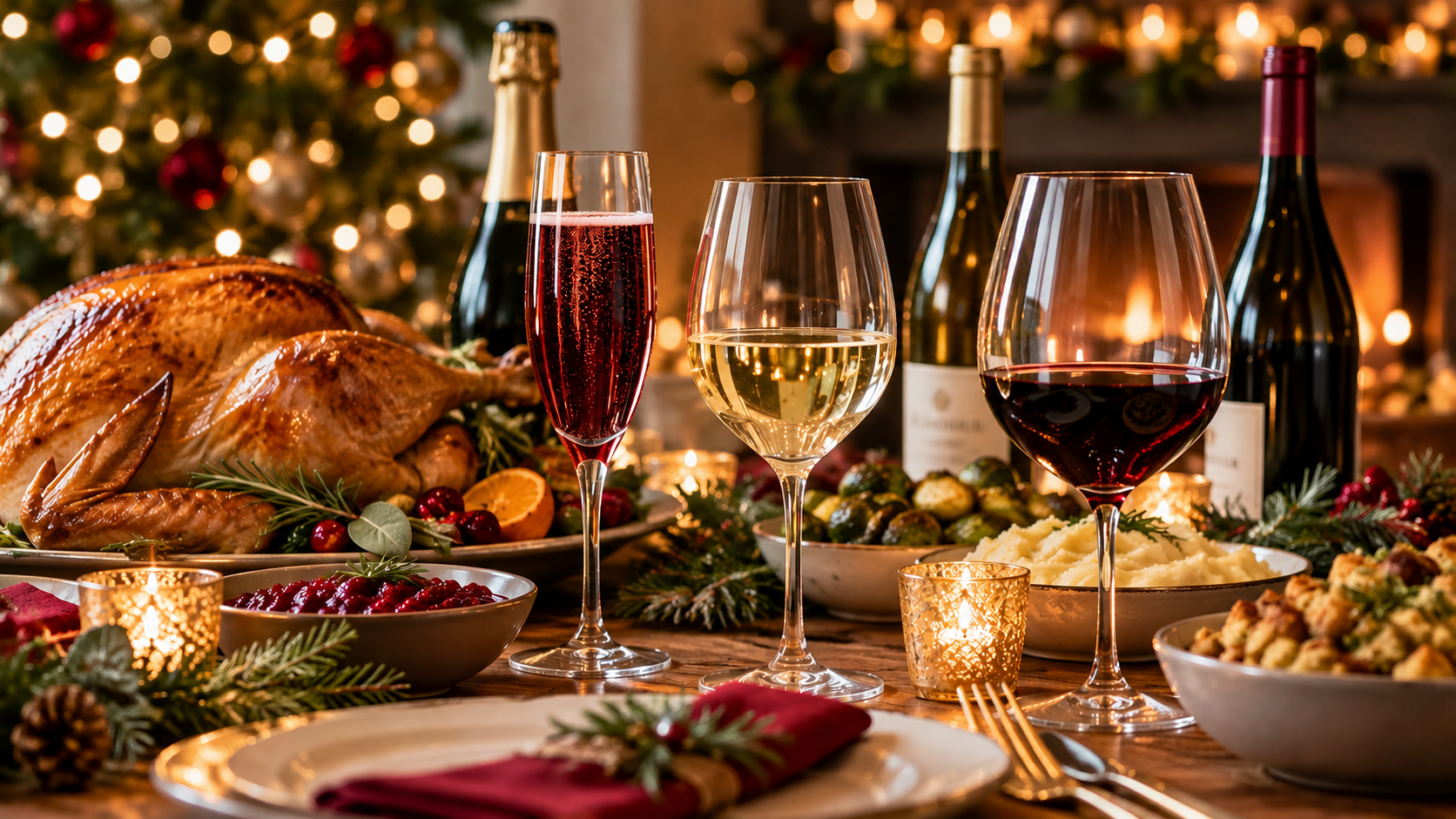
A holiday dinner asks a lot of a wine. Roasted meat, buttery potatoes, herbs, gravy, something sweet, something tart, something green, and likely at least one family recipe nobody is allowed to question, all on the same plate. Add appetizers and dessert and the idea of one perfect pairing falls apart.
You don't need one. Build a small lineup with enough contrast to cover the whole meal, and change it depending on what you're celebrating.
For Thanksgiving I go lighter and brighter, with wines that suit poultry but can still handle the rich sides. Christmas at my house means more red meat, so the wines get bigger. New Year's Eve can go anywhere, oysters to steak, so that's where I’ll stop prescribing and let you apply what you've picked up.
.
How to Choose Wine for a Holiday Dinner
Pairing can get complicated fast if you let it. You don't need every exception. A few principles get you most of the way.
Match the weight of the wine to the weight of the meal
Delicate fish and a heavily marbled prime rib don't land the same way on your palate, so the wines shouldn't either. A very light wine disappears next to a rich meal. A big, high-alcohol, tannic wine flattens delicate food.
That's why Thanksgiving and Christmas call for different wines even though they're a month apart. Turkey leaves room for lighter reds and fresher whites. Put prime rib or lamb in the middle of the table and you have the fat and flavor to support much more body and structure.
Don't memorize "turkey goes with this, beef goes with that." Just make sure neither the food nor the wine is shouting over the other.
Pair the whole plate, not just the protein
Nobody is eating a plain slice of turkey. There's mashed potatoes, stuffing, gravy, cranberry sauce, and usually all of it in one bite. The turkey is the centerpiece but rarely the strongest flavor on the fork.
Same at Christmas. Plain beef tenderloin is one pairing. Prime rib with au jus, horseradish, creamy potatoes, and roasted mushrooms is a different one. Sauces, sides, seasoning, richness, sweetness, and acidity can matter as much as the meat.
If you want more detailed mechanics, see our How to Pair Wine With Food (Simple Beginner Guide).
Acidity does a lot of work
Holiday food is rich. Acidity keeps it from feeling that way. After butter, gravy, cheese, or fatty meat, a fresh wine resets your palate and makes you want another bite.
It's a big reason sparkling wine earns its spot. The acidity cuts richness and the bubbles add another round of refreshment. It's also why I don't reach for the biggest, richest bottle just because it's a special occasion. Plenty of body is fine, but without freshness the wine gets tiring by the second helping.
Tannin needs something to chew on
Tannin is the drying, grippy feeling you get from a young Cabernet. With the right food that's a plus. Fat and protein soften it, which is why structured reds work so well with beef and lamb. The food makes the wine feel smoother, and the wine has enough backbone to stand up to the food.
Put the same tannic red next to turkey or seafood and there's nothing to balance it, so it comes across harsh. You don't need to rate tannin levels. Just know that the richer and meatier the meal, the more structure you can handle.
If acidity, tannin, body, and sweetness still feel abstract, How Wine Actually Tastes: Acidity, Tannins, Body & Sweetness Explained covers it.
Texture matters more than color
Red versus white tells you less than you'd think. Two Chardonnays can be nothing alike. One is lean, citrusy, barely touched by oak. The other is ripe, creamy, and shaped by barrel aging and malolactic fermentation. Same grape, different dinner.
Reds work the same way. Pinot Noir and Cabernet are both red and sit in completely different pairing territory. This comes up again, because Chardonnay shows up at two of these three tables for different reasons.
Versatile beats perfect
You're not trying to win a pairing competition. A sommelier matches one wine to one carefully built dish. At Thanksgiving, someone just put turkey, sausage stuffing, cranberry sauce, sweet potatoes, and green bean casserole on the same plate. Different job.
A holiday wine just needs to work pleasantly with most of what's going on. For a bigger meal I like a simple three-wine setup: a sparkling, a white, and a red. Guests get options and the table doesn't turn into a tasting room.
Thanksgiving Wine Pairings: Keep It Bright, Flexible and Food-Friendly
Turkey is fairly delicate. Almost nothing else on the plate is. Gravy, butter, herbs, stuffing, cranberry, roasted vegetables, mashed potatoes, plus whatever your family adds.
So I avoid heavy or tannic wines here. There's plenty of richness already and the centerpiece is still poultry. I want acidity to keep things fresh, enough flavor to hold up to the sides, and wines that move between very different bites.
My table almost always has Brut Rouge, Chardonnay, and Pinot Noir.
Brut Rouge, my wild card
If I could get one wine onto more Thanksgiving tables, it's a dry sparkling red. You get the bubbles and freshness that help with a rich meal, plus the red fruit and extra structure that make it work with savory food. It's also fun. Guests love it because it's unexpected, since it's not a common pour, and the color adds a festive pop to the table along with the bubbles. It's a good way to welcome in the holiday season.
It earns its place, too. The acidity and carbonation clear your palate after gravy, potatoes, or stuffing. Like most red wines, it has red berry notes that are a great match for cranberry sauce, a key part of the Thanksgiving table, without the wine itself being sweet. And it has more weight than a delicate sparkling white, so it doesn't vanish when the food turns savory. One bite is turkey and gravy, the next is cranberry, then stuffing, then vegetables. It doesn't have to be perfect with each, it just has to keep up.
When shopping, to be clear, I mean a true sparkling red, not a brut rosé. The word that matters is dry. Sparkling reds range from bone dry to quite sweet, and for dinner you want the dry end. Labels vary by region and style, so don't hunt for the exact words "Brut Rouge." Asking a good wine shop for a dry sparkling red will get you there.
Chardonnay: balanced, not a butter bomb
Chardonnay or a white Burgundy gives you more body and texture than most light whites without getting heavy. But the grape name alone doesn't tell you much.
For Thanksgiving I want one with real freshness. Some oak and some of the roundness from malolactic is good, since a little texture works with turkey, gravy, and potatoes. I just don't want either turned all the way up. A ripe, high-alcohol, heavily oaked, buttery Chardonnay gets tiring next to food that's already rich.
Look for good acidity, moderate body, some texture, and oak that supports the wine instead of running it. A very lean white can feel slight once gravy, stuffing, and butter show up. Chardonnay bridges that gap and still lets the turkey taste like turkey.
If you love a richer style, you don't have to give it up. Just keep in mind that the richer the wine, the more the meal has to be able to match it. Christmas gives us more room for that.
Pinot Noir: the red that stays out of the way
For a still red at Thanksgiving, Pinot Noir is hard to beat. It's not that Pinot "goes with turkey." It has what this meal needs: good acidity, moderate body, and gentle tannin. Red fruit works with cranberry, and earthier bottles are good with mushrooms, herbs, roasted vegetables, and stuffing. Red-wine drinkers get something that actually makes sense with poultry.
Resist pulling the biggest Cabernet from the cellar just because it's a big day. A great bottle can still be the wrong one. Cabernet's structure makes sense when there's fat and protein to meet it, and that's Christmas.
Cranberry sauce and sweet sides
Cranberry, glazed sweet potatoes, and candied yams make a fully dry wine taste sharper and thinner by comparison. Sweet food generally wants a wine with enough fruit, and sometimes a little residual sugar, to keep up.
That doesn't mean everything you pour should be sweet. It's one more reason bright, fruity, fresh wines do so well here: Pinot's red fruit, a dry sparkling red, a Chardonnay with real fruit. All of them handle the plate better than something austere and tannic. If your menu runs especially sweet, an off-dry white is worth having open.
Other good Thanksgiving options
You don't have to use my three. Gamay, especially Beaujolais, is the obvious Pinot alternative. It's light to medium bodied, bright, fruity, and low in tannin, so it's easy with poultry and a crowded plate.
Riesling is great if your table leans sweet or spicy. A dry or slightly off-dry bottle brings high acidity, and a touch of residual sugar helps with cranberry sauce, glazed dishes, or anything with a little heat.
Grenache is the move if you want a red with more warmth and body than Pinot without jumping to Cabernet.
Traditional sparkling wine is still one of the safest picks on the table. Champagne, another traditional-method sparkler, or something simpler and fruitier all work, because acidity and bubbles are useful with food.
You don't need all of them. Look for freshness, versatility, moderate structure, and enough flavor to survive the sides without bulldozing the turkey.
Thanksgiving Wine Pairing at a Glance
Standing in a wine shop the day before Thanksgiving and not in the mood to think about tannin and turkey? Here's the short version.
| Thanksgiving Food | Try This | Why It Works |
|---|---|---|
| Turkey + the full Thanksgiving plate | Brut Rouge / dry sparkling red | Acidity and bubbles refresh the palate, while red fruit and added structure handle savory and sweet sides. |
| Turkey, gravy + creamy sides | Balanced Chardonnay | Enough body for the richer dishes, with acidity to keep the combination fresh. |
| Turkey, stuffing, mushrooms + herbs | Pinot Noir | Moderate body, bright acidity and restrained tannin complement poultry and savory flavors. |
| Sweeter or spicier Thanksgiving dishes | Riesling | High acidity keeps things lively, while an off-dry version can handle sweetness and spice. |
| Guests who want a lighter red | Gamay / Beaujolais | Juicy fruit, freshness and lower tannin make it easy to move around the table. |
If you only open three bottles, keep it simple: Brut Rouge, Chardonnay, and Pinot Noir. One brings bubbles, one gives white wine drinkers real texture, and one gives red wine drinkers some complexity without burying the bird.
Then Christmas shows up, the prime rib comes out, and we get to break some of these rules.
Christmas Wine Pairings: Turn Up the Weight
Thanksgiving is about versatility. Christmas lets you bring more power.
There's no single Christmas dinner. Some families do turkey again, others do ham, pork, lamb, tenderloin, or a full prime rib. At my house it's usually more red meat than Thanksgiving, so the wines move up with it. The principles haven't changed, the meal has.
More fat, deeper roasted flavors, and heavier sauces can support more body, tannin, oak, and concentration. Wines that would have been too much at Thanksgiving finally fit.
My basic Christmas lineup is Blanc de Blancs, a richer Chardonnay, and a fuller, structured red chosen around the main course.
Start with Blanc de Blancs
Christmas calls for bubbles, and Blanc de Blancs is a good place to start. It means "white from whites," sparkling wine made entirely from white grapes. In Champagne that's Chardonnay, which gives you bright acidity, citrus, and often a mineral edge.
It's an easy pour while people arrive, but it's not just an aperitif. Sparkling wine is a genuinely good food wine. The acidity cuts richness, the bubbles refresh your palate, and with some age a Blanc de Blancs can pick up real depth. I love a late disgorged one for the extra weight and complexity, which gives it the presence to stay with you well past the appetizers. It's especially good if dinner opens with oysters, shellfish, smoked salmon, or cheese before moving to something heavier. If you like it with the main course, keep pouring it. Nobody's checking.
Chardonnay again
Yes, Chardonnay was at Thanksgiving. It's here too, and this is a good example of why buying by grape alone can mislead you. The Chardonnay I want with turkey isn't the one I want with prime rib. Same grape, different job.
At Thanksgiving we wanted balance. At Christmas, with richer food, you can push further: fuller body, more oak, more ripeness, a creamier texture, more obvious malolactic character. Traits that felt excessive next to turkey now have something to push against. I usually go with a bolder Napa or Sonoma Chardonnay at Christmas. Those tend to be weightier, which suits the creamy, buttery, or rich dishes on the table.
It's handy if you're serving beef but have guests who just prefer white. Red meat doesn't mean everyone has to switch to red. A substantial Chardonnay won't act like Cabernet, but it has enough weight to stay present next to tenderloin, creamy potatoes, mushrooms, and richer sauces.
It's also where winemaking shows up in the glass. Oak adds toast, spice, vanilla, and breadth. Malolactic softens acidity and adds a creamy roundness. Lees aging adds texture. Ripeness changes the fruit, alcohol, and body. Mix those differently and two bottles labeled Chardonnay can taste like different categories of wine.
You don't need to know how a bottle was made. Read the producer's description, ask at the shop, or look for words like rich, full-bodied, creamy, barrel-aged, or toasty. Christmas is one of the few times I let Chardonnay show off.
Now the bigger reds
These are the wines we held back at Thanksgiving. Cabernet Sauvignon, Bordeaux-style blends, Syrah, and other structured reds make sense when the centerpiece gives them something to work with.
The classic is Cabernet with beef. On my Christmas table it's always a silky, velvety, aged Napa Cab, and it's just as good on its own by the fire after dinner. "Red wine with red meat" doesn't explain why it works. Cabernet brings significant tannin, body, and concentration. Fatty beef softens those tannins so the wine feels smoother, and the wine is intense enough not to get lost. Each side can handle the other.
That's why prime rib gives you so much more freedom than turkey. Its fat can support a wine that would've been needlessly aggressive at Thanksgiving. Bordeaux-style blends work on the same principle, pairing Cabernet's structure with the softer fruit and texture of Merlot and others.
Syrah is another strong Christmas red, especially with savory, peppery, smoky, or herbal food. The dark fruit, spice, and structure are great with roasted meat.
Bigger isn't automatically better. A very alcoholic, very tannic wine can overwhelm a meal just as a delicate one can disappear. Christmas just gives you more room at the fuller end.
If dinner is ham
Ham changes things. It's rich, but also salty and often sweet, especially with a brown sugar, honey, maple, or fruit glaze. A massive tannic Cabernet doesn't love that.
Go back toward acidity, generous fruit, and softer tannin. Pinot Noir works well. Grenache is good if you want something fuller and warmer. For white drinkers, Riesling is very useful. The acidity handles the richness and a little residual sugar is friendly to a sweet glaze.
Prime rib and glazed ham are both big Christmas centerpieces, and they're completely different pairing problems.
If dinner is lamb
Lamb also calls for structure, but its savory character shifts things from beef. Syrah is great here. Its dark fruit, pepper, and savory notes echo roasted lamb, especially with rosemary and garlic. Cabernet and Bordeaux blends work too, particularly with richer preparations.
Look at the full dish. Herb-crusted lamb with roasted vegetables behaves differently from lamb with a sweet fruit sauce. The protein points you in a direction and the preparation picks the bottle.
If it's turkey again
Then you already know what to do. You don't need to graduate to Cabernet because it's December 25.
Pinot Noir, Chardonnay, and sparkling all still work. If the sides are heavier, go a little richer on the Chardonnay or a bit more substantial on the Pinot. Pair the wine with the food, not the holiday. Christmas lets you pour bigger wines, it doesn't require it.
Christmas Wine Pairings by Main Course
| Christmas Main | White / Sparkling Direction | Red Direction | Why It Works |
|---|---|---|---|
| Prime rib or Beef Tenderloin | Fuller Chardonnay | Cabernet Sauvignon, Bordeaux-style blend, Syrah | The richness and fat of the beef can handle greater body, concentration, and tannin. |
| Lamb | Textural, fuller-bodied white | Syrah, Cabernet Sauvignon, Bordeaux-style blend | Savory, structured wines work particularly well with lamb's richer flavor and herb-driven preparations. |
| Glazed ham | Riesling or Blanc de Blancs | Pinot Noir or Grenache | Fresh acidity and fruit work better with ham's salty-sweet character than extremely tannic reds. |
| Roast pork | Chardonnay or Riesling | Pinot Noir or Grenache | Moderate body and good acidity complement pork without overpowering it. |
| Turkey | Balanced Chardonnay or sparkling wine | Pinot Noir | The lighter structure that worked at Thanksgiving still makes sense because the protein hasn't changed. |
The Christmas lineup
For a dinner built around beef or lamb, I'd go Blanc de Blancs, then a richer Chardonnay, then Cabernet (for me, always an aged Napa Cab but as a winemaker in Napa, I use what I have a lot of), a Bordeaux-style blend, or Syrah. The Blanc de Blancs carries appetizers and lighter bites. The Chardonnay gives white drinkers something with enough body to stay at the table. The structured red gets its turn when the heavy centerpiece lands.
The lineup matters less than what it shows. Thanksgiving had a delicate centerpiece, so we kept the wines brighter, lighter, and lower in tannin. Christmas added fat, protein, and intensity, so the wines gained weight and structure too.
Which means that by New Year's Eve, you know enough to start making these calls yourself.
New Year's Eve Wine Pairings: Now You Choose
By New Year's Eve the rulebook loosens. Thanksgiving has turkey, Christmas usually has a traditional roast. New Year's could be filet mignon, or oysters, caviar, and shrimp standing in for dinner, or lobster, salmon, duck, a seafood tower, or just Champagne and fried food until midnight. All valid.
So I won't hand you another fixed lineup. You already know a delicate protein wants a lighter wine, acidity helps with rich food, tannin needs fat and protein, and sauces and sides count as much as the main. This is where you use that.
Start with something sparkling, of course
Some traditions earn their place. Sparkling wine is nearly mandatory on New Year's, and it does more than the midnight toast. If your menu is appetizers, seafood, salty snacks, or fried food, it may be the hardest working bottle you open. Acidity cuts richness, bubbles refresh, and salt makes a crisp sparkling wine even better. With oysters and shellfish you can lean into the bright, mineral styles.
Champagne is the obvious pick, but traditional-method sparkling from other regions does the same job well. Unlike Christmas, there's no reason to specify Blanc de Blancs. Pick whatever you actually want to celebrate with. You'll need a bottle for midnight anyway.
For the white, have some fun
Chardonnay has had enough attention. For New Year's I want something that isn't Chardonnay or Sauvignon Blanc and works with oysters and seafood, the classic New Year's fare. The menu changes every year, so I don't have one set bottle, but Vinho Verde is a good place to start.
If you only know it as a cheap summer patio wine, give it another look. It comes from northwestern Portugal, and the name means "green wine." That refers to its youthful, fresh style, not the color. Many examples have exactly what a seafood-heavy spread wants: bright acidity, citrus and green fruit, light body, and sometimes a slight spritz.
That's great with salty, briny food. Oysters, shrimp, crab, lighter fish, salty appetizers, and fried bites all give the acidity something to do. It refreshes instead of weighing things down, which is welcome after weeks of rich eating. It's also a bit unexpected, but you don't need a wine education to enjoy it. Put a cold bottle next to a seafood platter and it makes sense.
One note: Vinho Verde is a wine, but not a grape. Loureiro, Arinto, Avesso, and Alvarinho are among the varieties used, so bottles vary. You're shopping for a style: fresh, crisp, lively, built for food.
Going further
If the menu leans seafood, other whites are worth a look.
Albariño: bright acidity, citrus and stone fruit, often a saline edge that suits shellfish. A bit more presence than Vinho Verde without losing the coastal freshness.
Vermentino: good with herbs, citrus, grilled seafood, and richer appetizers. A little more texture, useful when the food isn't quite so delicate.
Grüner Veltliner: worth considering for vegetables, herbs, and other awkward-with-wine foods. Bright acidity with a savory, peppery edge.
Txakoli: light, tart, very fresh, sometimes gently spritzy. Great as an aperitif and fun with oysters and salty snacks. If Vinho Verde is the approachable curveball, this is the more adventurous one.
Dry Chenin Blanc: for a richer meal. High acidity keeps it fresh, and the more textural versions have the substance for richer seafood, poultry, pork, and creamy dishes.
I'm not collecting obscure grapes to seem interesting. These wines share the traits you need: acidity, freshness, the right weight, and enough flavor for what's on the table. The grape changes, the logic doesn't.
What red?
I'm not giving you one. Choose the red based on dinner, not the date.
If it's beef, think Christmas, since rich meat gives you room for tannin. If it's duck, pork, or salmon, think Thanksgiving, with less tannin and nothing that overpowers the protein. If dinner is oysters, crab, shrimp, and caviar, you may not need a red at all. There's no prize for having sparkling, white, and red open just because it looks like a complete lineup.
Holiday Dessert Wine Pairings: Port, Late Harvest, and Sweet Wines
Dessert wine is a good way to close a holiday meal, and the same logic applies: match the weight and sweetness. The wine should be at least as sweet as the dessert, or it will taste thin and sour next to it.
Thanksgiving: A tawny port is a natural with pie. Its nutty, caramel, dried-fruit character suits pecan, pumpkin, and apple. A late harvest wine also works with fruit-based desserts.
Christmas: Red port is the pick for chocolate desserts. The dark, ripe fruit and sweetness stand up to the richness of chocolate. Tawny still works if pie is on the table.
New Year's Eve: A Sauternes-style or botrytized wine. The honeyed sweetness with bright acidity is lovely after a long evening, with lighter desserts, fruit, or cheese.
The Simple Formula for Choosing Holiday Wine
You don't need a dozen wines. Something sparkling, a white, and a red covers it, with a dessert wine if you want one. What changes is the style.
The progression is deliberate. Thanksgiving stays bright and flexible because the wines have to move around a complicated plate built on poultry. Christmas gets richer because the food does. New Year's throws out the script so you can use what you've learned. That's more useful than memorizing which grape supposedly "goes with New Years meals."
How to Build Your Own Holiday Wine Lineup
If your holiday table looks nothing like mine, that's fine. Start with what's actually being served.
Look at the centerpiece. Delicate or rich? Turkey and oysters start somewhere very different from prime rib or lamb.
Look at what's around it. Creamy, salty, herby, sweet, spicy? A rich sauce can matter more than the protein under it.
Check the overall weight. Lighter meals want lighter wines. The richer the food, the more room for body, alcohol, tannin, and concentration.
Make sure there's acidity. Freshness keeps people reaching for another sip and another bite.
Don't add tannin just because it's a special occasion. A prestigious structured red needs enough fat and protein to work with.
Don't underestimate sparkling. It's one of the most versatile food wines on the table.
How Much Wine Should You Buy for a Holiday Dinner?
A 750 mL bottle holds about five standard 5-ounce glasses. If wine is the main drink, plan on about half a bottle per drinking adult, roughly two to three glasses over the evening.
Of course, holiday math is never that tidy. If you're also serving cocktails or beer, you'll need less. If dinner runs for hours or everyone loves wine, buy extra. I'd rather end the night with a couple of unopened bottles than run out of Pinot Noir halfway through dinner.
Also think about who's drinking what. If eight of your ten guests want red, don't buy equal amounts of sparkling, white, and red for symmetry. Use the three-wine formula as a style guide, not a shopping equation.
For additional dinner party tips, see our guide How to Host a Wine Night at Home.
What If You Open Several Bottles and Don't Finish Them?
Then you have wine for tomorrow. Still wine doesn't go bad the moment the cork comes out, though oxygen starts changing it. Refrigeration slows that, and a good preservation system can extend a bottle's life considerably. If you open several bottles at a dinner party, see The Best Wine Preservation Systems That Actually Work in 2026.
Sparkling wine is its own case. A proper sparkling stopper works far better than forcing the original closure back in, and yes, leftover bubbles can last until the next day. A perfectly fine New Year's Day problem. See Best Champagne Stoppers That Keep Bubbles Fresh.
What Order Should You Serve Holiday Wines?
You don't need to choreograph it. A natural order works: sparkling while people arrive or with appetizers, white as dinner starts, red with the main if the food calls for it. It's not a rule. If Brut Rouge is working across your whole Thanksgiving plate, keep pouring it. If guests want Blanc de Blancs with prime rib, let them. The point of an order is to keep one wine from making the next taste off. Generally, lighter and fresher first, richer and more structured later.
Don't Serve Everything at the Same Temperature
Temperature can make a good wine taste dull or harsh. Sparkling should be properly cold. Whites benefit from being cool, but a richer Chardonnay doesn't need to be ice cold, since that mutes the aromas and texture you bought it for. And "room temperature" for red doesn't mean a 75°F house all afternoon. Slightly cool is usually better, especially for Pinot Noir. No thermometer needed. Too cold hides flavor, too warm makes the alcohol stand out.
My general rule of thumb, if you dont have a dual zone wine fridge in you kitchen, is sparkling wine direct from the fridge or stored on ice, chardonnay comes out of the fridge 20 minutes before serving, and reds go in the fridge 20 minutes before they are opened if they are slightly too warm.
Should You Decant the Red Wine?
Sometimes. A young, structured Cabernet, Bordeaux blend, or Syrah can benefit from air before dinner. Older wines are more delicate, so decanting isn't automatically better just because the bottle is special. For when it matters and when it doesn't, see Best Wine Decanters for Everyday Use.
Holiday Wine FAQ
What is the best wine for Thanksgiving dinner?
No single bottle, but wines with good acidity, moderate weight, and restrained tannin work best across the table. Mine are Brut Rouge, a balanced Chardonnay, and Pinot Noir. They contrast enough to give guests choices and stay versatile with turkey and the sides.
Should I serve red or white wine with Thanksgiving dinner?
Both. The table has too many flavors for just one. Chardonnay has the body for richer sides and Pinot Noir gives you a red that won't overwhelm the turkey. A dry sparkling red splits the difference, which is why it's my favorite wildcard.
What red wine goes best with turkey?
Pinot Noir is the easy answer: good acidity, moderate body, and less tannin than bigger reds like Cabernet. Gamay is another good option, and Grenache works if you want something a little fuller.
What wine goes with Christmas ham?
Look for fruit, acidity, and restrained tannin, especially with a sweet glaze. Riesling is a great white. For red, Pinot Noir or Grenache. Very tannic reds are less useful here than with beef or lamb.
What wine goes with prime rib?
Plenty of room for structured reds. Cabernet, Bordeaux-style blends, and Syrah all work because the beef's fat and richness can stand up to their body and tannin. For white drinkers, a richer, more textural Chardonnay holds its own.
Is Champagne good with dinner?
Yes. Sparkling wine isn't limited to toasts and aperitifs. The acidity and carbonation make it very useful with rich, salty, fried, and seafood dishes. If it's working with dinner, don't put it away just because the appetizers are done.
What wine should I bring to a holiday dinner?
Don't overthink the pairing. Unless the host asked you to bring wine for the meal, treat it as a gift, not an assignment. They probably have dinner covered, and your bottle might get opened that night, saved, or enjoyed after the holidays. Pick something thoughtful within your budget instead of reverse-engineering the menu. Our How to Bring Wine as a Host Gift (Without Overthinking It) covers what to choose, what to spend, and the main etiquette point: don't expect the host to open what you brought.
More Holiday & Seasonal Wine Guides
The pairing principles stay the same after the decorations come down. Only the food changes.
Spring Wine Pairings That Actually Work (Brunch, Easter & Beyond): Easter, brunch, spring vegetables, and lighter seasonal meals.
Memorial Day BBQ Wine Pairing: when dinner moves outside and smoke, char, ribs, and barbecue sauce enter the picture.
And if you're holiday shopping for a wine lover or looking for a thank you gift for the host, start with Best Wine Gifts for Wine Lovers or Wine Accessories Every Wine Lover Should Own.
The Best Holiday Wine Is the One That Makes Sense on Your Table
There will always be another pairing rule to learn. There will also be an aunt who brings something unexpected to Thanksgiving, a Christmas recipe unchanged in 30 years, and a New Year's menu decided by whatever sounded good that afternoon. That's part of it.
Pairing isn't about finding the one bottle that makes every bite behave. It's understanding the basic relationship between the food and the glass well enough to make a sound choice. Look at the weight of the meal, watch acidity, give tannin something substantial to work with, think about sauces and sides, and when in doubt, start with bubbles.
Thanksgiving might be Brut Rouge, Chardonnay, and Pinot Noir. Christmas might be Blanc de Blancs, a richer Chardonnay, and a big structured red. New Year's might be Champagne only. The bottles change because the table does.
Now pour the wine. The cranberry sauce doesn't need any more analysis.