How Winemakers Decide When to Harvest (And Why Napa's 2026 Harvest is Starting So Early)
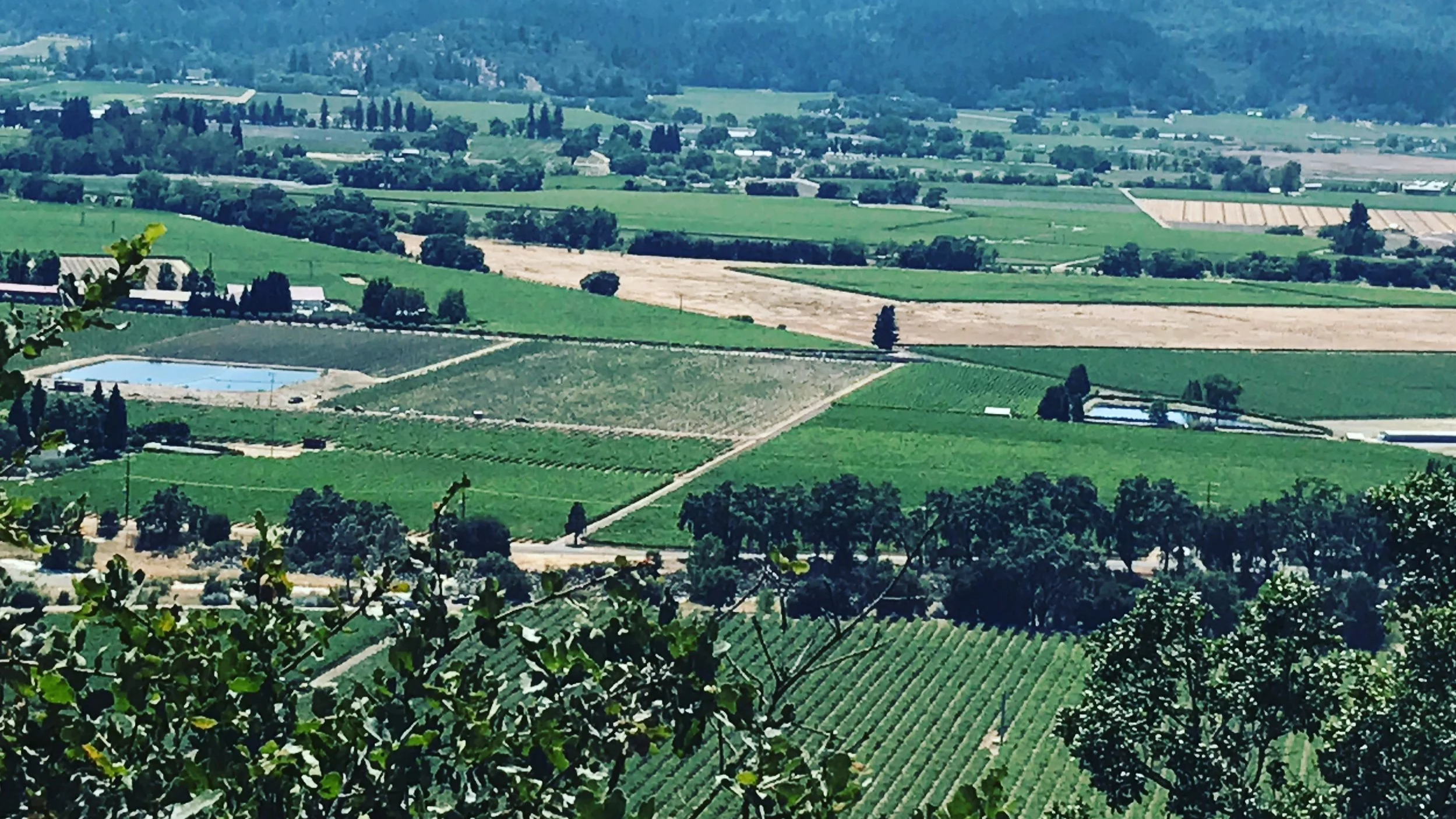
Rutherford, Napa Valley
Harvest is one of the busiest and most exciting times of the year in wine country. Across Napa Valley, Sonoma County, and other wine regions around the world, vineyards suddenly come alive before sunrise with tractors, harvest crews, winery trucks, and the glow of headlamps moving through the vines.
This year, many wineries in Napa and Sonoma began harvesting earlier than usual. Periods of warm weather throughout the growing season accelerated grape development, allowing some vineyards to reach their target ripeness weeks ahead of what many people expect from a "typical" vintage.
If you saw headlines about an early harvest, you may have wondered: how do winemakers actually know when grapes are ready?
It's a fair question, because the answer is a lot more complicated than waiting until the grapes taste sweet.
Most people picture harvest like picking fruit from a backyard tree. Once it's ripe, you pick it. Wine grapes don't work that way. There isn't a universal harvest date, there isn't a single lab number that tells you it's time, and there's rarely one perfect day when a vineyard suddenly becomes ready.
Harvest is a series of decisions made over several weeks, balancing vineyard observations, lab data, weather forecasts, crew schedules, tank space, and the style of wine you're trying to make. And the biggest surprise for people outside the industry is usually this: harvest isn't about where the grapes are today. It's about predicting where they'll be several days from now.
Affiliate Disclosure: This post may contain affiliate links. As an Amazon Associate and through other affiliate programs, I earn from qualifying purchases at no additional cost to you.
There Isn't a "Perfect Harvest Date"
One of the biggest misconceptions about wine is that harvest happens on a specific date every year. In reality, vineyards don't care what the calendar says.
Grapes respond to temperature, sunlight, water availability, and a long list of other conditions across the growing season. A cooler year can push harvest back by weeks. A warmer one, like this year, moves it up.
Even within the same region, harvest doesn't start all at once. Different varieties ripen at different speeds, and there's a rhythm to it that most winemakers can predict, until a season breaks that rhythm entirely.
Normally, Burgundian varieties like Chardonnay and Pinot Noir come in first. They're picked for freshness and moderate sugar, and they tend to hit their window before the Bordeaux varieties, Cabernet Sauvignon in particular, are anywhere close.
2024 didn't play by that rule. A hot stretch compressed the whole season, and Pinot and Cabernet were ripe at essentially the same time, with nowhere near enough tank space to take both. Pinot is more delicate and less forgiving of extra hang time, so it got priority. The Cabernet had to sit and wait for tanks to open up later in the week. Nobody wants to make that call, but when everything's ripe at once, something has to wait, and it's usually the fruit that can tolerate waiting the best.
Even within one variety, two neighboring Cabernet blocks might come in a week apart because one gets more afternoon sun, sits on a warmer hillside, or has different soil. Sometimes a single vineyard gets split into multiple picks because one section is simply ahead of another.
So the real question isn't "when does harvest start." It's "which fruit is ready now, and which fruit will be ready next." Everything else follows from that.
What Does "Ripe" Actually Mean?
Ask most people what makes fruit ripe and they'll say it's sweet. That's part of it. As grapes mature, they accumulate sugar through photosynthesis, and that sugar becomes alcohol during fermentation.
But sweetness alone doesn't make good wine. A perfectly sweet peach with no freshness left just tastes sugary, not exciting. Wine works the same way. Winemakers aren't chasing the sweetest grapes possible, they're chasing balance, and that balance comes from sugar, acidity, pH, flavor development, and tannin development moving together. No single one of those tells you when to pick.
Read more detail in our comprehensive guide on How Wine Actually Tastes
Sugar (Brix): Measuring Future Alcohol
Brix measures how much sugar is dissolved in the juice. As grapes ripen, the vine converts sunlight into sugar and the berries get sweeter, and since yeast converts most of that sugar into alcohol during fermentation, Brix is a rough preview of the finished wine's alcohol level.
A higher Brix reading isn't automatically better. If sugar keeps climbing while everything else falls out of balance, you end up with a wine that's hot and flabby instead of one with any energy. The goal isn't the biggest number, it's the number that lines up with everything else happening in the fruit.
Read more detail in our guide on Common Wine Terminology Explained (without the Snobbery)
Acidity: What Makes Wine Feel Fresh
Acidity is why wine tastes bright instead of heavy, the same way a squeeze of lemon wakes up grilled fish. As grapes ripen, natural acidity steadily drops. Pick too early and the wine can taste lean or sharp. Wait too long and it loses the brightness that keeps it alive in the glass. Balancing sugar against acidity is one of the central harvest decisions.
Read more detail in our guide on How to Taste Wine Like a Pro (Beginners Guide)
pH: The Number You Don't Taste Directly
pH isn't something you taste on its own, but it tells you how the juice is going to behave, influencing perceived freshness, color stability in reds, and microbial stability during fermentation. It's one more data point winemakers weigh alongside everything else, never in isolation.
Some Parts of Ripeness Can't Be Measured
This is where flavor ripeness and tannin development (phenolic ripeness) come in, and no instrument measures either one well. If harvest decisions came purely from a lab printout, you could run the whole season from a desk. Instead you're walking vineyards, picking berries, chewing skins, checking seeds, comparing block to block, and doing it again every few days, then daily as harvest closes in.
You're evaluating the fruit itself: seeds shifting from green to brown, skins softening, bitterness fading, herbal notes giving way to actual fruit character, color compounds building in reds.
For me, tasting comes down to one question more than any other: is the acid still coming into balance with the sugar, or has the sugar climbed without the acid actually easing off the way it should? And separately, are the ripe flavors actually there. It's common to have a block that's dead-on for sugar and acid on paper but still tastes green or underdeveloped, the flavors just haven't caught up yet. That distinction matters more than people think, because you can correct high sugar or low acid in the cellar with technique. You cannot manufacture complexity or ripe fruit character that isn't in the grape to begin with. If the numbers are right but the flavor isn't there, I wait.
As a general range across varieties for the Napa style I work in, I'm usually looking for something in the neighborhood of 24 to 26 Brix, 5.5-8.0 g/L Titratable Acidity (TA), and a pH range of 3.1-3.6, alongside flavors that have moved past anything green or vegetal. Every variety and every block shifts that target somewhat, but that's the rough window I'm working toward before I even start thinking about logistics.
Lab numbers tell you how ripe the grapes are. Walking the vineyard tells you what kind of wine they're capable of becoming. Two experienced winemakers can taste through the same block and land on different harvest dates, not because one of them is wrong, but because they're not making the same wine.
Read more detail in our guide on Old World vs New World Wine
How Winemakers Predict Ripeness Before Harvest
Deciding a vineyard is ready is only step one. Crews get scheduled days out, trucks need coordinating, the winery needs enough hands to receive fruit, and there has to be tank space waiting for it. Depending on how busy the winery is, fruit is usually picked one to three days after the call gets made.
That gap changes the question entirely. You're not asking whether the grapes are perfect today, you're asking where they'll be when the crew actually shows up.
The Vineyard Doesn't Stop Ripening While You're Waiting
Sugar keeps climbing, acidity keeps dropping, tannins keep softening, flavors keep shifting, all while you wait for a truck. A block that tastes balanced on Monday can taste different by Wednesday, sometimes noticeably. Every vineyard has its own pace, some drifting gradually over weeks, others jumping almost overnight once real heat arrives. Lab work tells you where a block is today. Predicting where it'll be in three days comes only from walking the same sites year after year and learning how each one behaves under different conditions, some hold acid well through heat, others fall apart after a few hot afternoons, and that's not something a data sheet teaches you.
Every Harvest Decision Starts With the Forecast
During harvest, the weather app gets checked more than anything else on my phone. Not because today's forecast matters, but because tomorrow's forecast determines what tomorrow's vineyard looks like.
Heat is the trickier of the two extremes, and it doesn't always behave the way you'd expect. I called in a Zinfandel block earlier than I'd planned because Brix was climbing fast during a heat wave, and the forecast had an even hotter weekend coming. The assumption was that sugar would keep climbing right through it. Instead, the vines hit a point where the heat pushed them into shutdown, and ripening essentially stalled instead of accelerating. The fruit came in a touch short of where I wanted it. Not a disaster, the wine turned out fine, but with the benefit of hindsight, another half week on the vine before that heat wave hit would have gotten me closer to target. Extreme heat doesn't always mean "riper faster." Sometimes it means the vine shuts the whole process down.
Rain creates the opposite problem: temporarily diluted sugar and flavor as berries take on water, higher disease pressure (such as mildew or rot) if it lingers, and vineyard rows too saturated for equipment. Every forecast forces the same set of questions. Come in before the heat? Before the rain? Can it wait? Does waiting change the wine you're trying to make?
Harvest Is as Much About the Winery as the Vineyard
Half the real work during harvest happens back at the winery, not in the rows. Fresh fruit starts changing the moment it arrives, so the winery needs enough people, enough equipment, enough cooling, enough lab support, and enough fermentation space ready to go. A perfectly ripe vineyard can still be harmed by bringing it in if the winery isn't actually prepared to receive it.
Every Tank Already Has Another Job Waiting
Tanks look like static steel containers, but during harvest they're the tightest resource in the building. Some are mid-fermentation, some are waiting to be pressed, some just got emptied and need cleaning and sanitizing before the next fruit arrives, and some are already earmarked for grapes that haven't even been picked yet.
2024 is the clearest example I've got. A hot stretch compressed the season so that Chardonnay and Pinot, which normally have a comfortable head start on Cabernet, were ripe at nearly the same time as the Cabernet, with only a handful of open tanks between them. Pinot doesn't forgive extra hang time the way Cabernet does, so it got the tanks first. The Cabernet sat on the vine and waited for space to open up later in the week. It worked out, but it meant recalculating the entire week's schedule around which fruit could afford to wait and which couldn't.
Wineries build a rough production schedule ahead of harvest estimating when blocks will ripen and which tanks they'll need, I love/hatingly refer to it as tank tetris. That plan almost never survives contact with the actual season, and it can get reworked more than once a day once things get moving.
Sometimes the Decision Isn't About the Grapes At All
Not every harvest call is about ripeness. Some are about whether the wine survives to see fermentation at all.
In 2020, the year of the bad Napa fires, we had a block of Pinot Noir picked for sparkling wine headed to one of our more rural facilities, out near where one of the fires had started. By the time the truck arrived at the winery to deliver the grapes, I could see smoke from a small fire in the distance. That facility loses power easily even under normal conditions, so I made the call to cancel intake there and reroute the truck, grapes already on board, to our more central facility instead.
The driver thought I'd lost it. He said I'd just given the grapes "an expensive sightseeing tour of Napa County." At the time, the fire looked small. It went on to become one of the worst fires in modern Napa history. The rural facility lost power and road access for over a week.
Had those grapes stayed put, we would have lost the lot. Worst case for moving them for nothing was a few hundred extra dollars in trucking. Best case, which is what actually happened, was saving one of our only sparkling wine lots that vintage. Once the fires spread far enough, nearly everything else that year came in smoke tainted, and sparkling wine ended up being essentially the only wine we made in 2020.
That's the side of harvest that doesn't make it into most write-ups. Sometimes the biggest call of the season has nothing to do with Brix or acid. It's a gut decision about infrastructure, made on incomplete information, that you don't get proven right or wrong until a week later.
Every Pick Influences Every Pick That Follows
Picture three Cabernet blocks: one ready today, one two days out, one ready by the weekend, and exactly one tank opening tomorrow. Take today's fruit now and you fill that tank right as tomorrow's block hits its window too. Wait a day and both blocks might land closer to ideal, but now you're compressing everything behind them.
Neither choice is clean. You're not asking "what's ready," you're asking how harvesting this block today reshapes everything you need to pick over the next week. That's what a morning during harvest actually looks like: which block moved the most overnight, whether the forecast shifted, whether there's tank space coming, and whether yesterday's plan is still the right one. Harvest doesn't run on a calendar, it runs on whatever information showed up that morning.Harvest Plans Get Rewritten Every Morning
No harvest schedule survives untouched. The forecast shifts, a block ripens faster than expected, a fermentation wraps early or runs long, a crew frees up sooner than planned, a piece of equipment needs attention. Every morning starts the same way: which block changed the most overnight, has the forecast moved, is there enough tank space coming, is yesterday's plan still the right plan. Harvest doesn't run on a calendar. It runs on whatever information showed up that morning, which is a big part of why no two harvests ever feel the same.
Winemaker's Perspective
People ask if harvest is stressful. Yes, but dynamic is the better word.
Walking a block, I'm not just tasting what's in front of me, I'm thinking about what it'll taste like by the time it's actually picked, what the weather's doing between now and then, whether the cellar has room, and which block needs my attention next.
Harvest isn't about landing on the perfect day. It's about making the best decision you can before that day has already come and gone, and you don't always find out which kind of call you made until later. The Zinfandel in the heat wave is the version where the instinct worked against me a little, the fruit came in a touch short of target. Rerouting a truck of Pinot away from a facility near an approaching wildfire in 2020 is the other side of that same coin, a decision made on incomplete information that ended up saving one of the only wine lots we made that vintage. Both were the right call with what I knew at the time. Only one of them looked right a week later.
How Harvest Timing Shapes the Wine in Your Glass
If the grapes are ready, why wouldn't every winemaker pick on the same day? Because there's no single correct wine to make. Harvest isn't chasing a universal ripeness target, it's choosing the ripeness that matches the wine you want.
Two winemakers can taste the same fruit, agree on every lab number, and still pick different days. Neither is wrong. They're making different wines.
Every Harvest Decision Is a Stylistic Decision
Think of it like adjusting exposure before a photo. Same subject, different settings, different image. Picking a few days early tends to preserve brighter acid and fresher fruit for a lighter style. Waiting longer tends to build riper flavor and softer tannin for something fuller. Neither is automatically better, they're different expressions of the same vineyard, which is part of why two wineries buying fruit off neighboring vineyards can end up with wines that taste nothing alike.
Earlier Doesn't Mean Better. Later Doesn't Mean Better.
Every extra day on the vine is a trade. The upside: more developed flavor, softer tannin, deeper color in reds. The downside: dropping acidity, rising alcohol potential, dehydration, sunburn, rain risk, disease pressure, birds and wildlife helping themselves. Winemakers are constantly weighing what another day might add against what it might cost, and the answer isn't always obvious, even to someone who's done this for over a decade.
Why This Year's Early Harvest Doesn't Predict the Vintage
Whenever harvest starts early, people ask if it's a good year. Honestly, it's too soon to say. An early harvest doesn't guarantee a great vintage any more than a late one guarantees a bad one. Vintage quality comes from the whole growing season, flowering, fruit set, veraison, ripening, and harvest itself, not just the calendar date harvest began. That's why most winemakers hold off on sweeping predictions before fermentation is even underway.
Frequently Asked Questions
Do winemakers harvest grapes as soon as they're sweet enough?
No. Sugar is one input among several. Acidity, pH, tannin development, and flavor all have to line up too, and the intended wine style shapes the target as much as any single number.
Does every vineyard in a region harvest at the same time?
No. Harvest in a single region can span two to three months. Variety, elevation, sun exposure, and even individual blocks within one vineyard often ripen weeks apart.
Can lab numbers alone tell you when to harvest the grapes?
Not reliably. Sugar, acid, and pH can hit target while the fruit still tastes green or underdeveloped. Flavor and tannin ripeness only show up by tasting the fruit directly, not on a lab printout.
Why are grapes often picked at night?
Cooler nighttime temperatures reduce oxidation and mean the fruit arrives at the winery already cold, which cuts down on the cooling load before fermentation starts.
Is there a single perfect day to harvest a block?
Rarely. Most blocks have a workable window of several days to a couple weeks. The decision is where in that window the fruit matches the wine being made, not hitting one exact date.
Does an early harvest mean the wine will have more alcohol?
Not necessarily. An early start refers to timing in the calendar, not sugar level. Alcohol tracks Brix at the moment of picking, which depends on the vineyard and target style regardless of when harvest begins.
Does a rainy stretch during harvest ruin the fruit?
Not automatically. A short rain event mostly dilutes sugar and flavor temporarily, and that often rebounds within a day or two of dry weather. Extended wet conditions are the real risk, since they raise disease pressure like mildew and rot and can keep equipment out of saturated rows.
Does an early harvest predict the quality of the vintage?
No. Vintage quality depends on the entire growing season, flowering, fruit set, veraison, and ripening, not just when picking starts. An early start says the season ran warm, not whether the wine will be good.
Final Thoughts
Harvest gets called the most exciting time of year in a winery. It's also the most demanding. Every morning starts with new information: a shifted forecast, a vineyard that moved faster than expected, a tank schedule that no longer works, a plan that needs rebuilding before 7am.
What looks like a simple decision from the outside is actually the result of a lot of tasting, prediction, and juggling happening at once, and sometimes getting it slightly wrong anyway. Winemakers aren't waiting for grapes to become perfect. They're deciding when the vineyard, the weather, the tank space, and the wine they're trying to make are aligned closely enough to pull the trigger.
Next time you open a bottle, remember one of its most important decisions was made long before fermentation, standing in a vineyard, tasting fruit that wasn't quite finished changing, and deciding exactly where that journey should end.
Related Guides
Best Walkable Wine Towns for a Weekend Visit (US Version)
Exceptional Wine Hotels & Stays Around the World (Bucket List Edition)
Highest Rated Travel Bags for Bringing Wine Home
Best Wine/Bar Cabinets for a Home Wine Bar
Best Champagne Stoppers That Keep Bubbles Fresh